Ingredient Guide · Floral
Floral Family · Perfumery Note

Mignonette

Delicate freshness capturing spring blooms

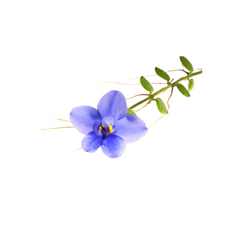
Mignonette, derived from Reseda odorata, is a heart note in perfumery known for its sweet, green, and violet-like scent. Extracted mainly by solvent methods, it is used at concentrations below 3%.

Mignonette
Ingredient Profile

Mignonette

Floral Family
Family Floral
Note Position Heart Note
Usage Level 2–3%
Key Origins France, United Kingdom, United States
Iconic In Private Collection, L’Eau d’Issey Pour Homme
The Ingredient

What does Mignonette smell like and why is it cherished?

Mignonette, botanically known as Reseda odorata, is a flowering plant prized in perfumery for its aromatic green and floral heady fragrance. Its scent profile is characterized by a sweet, fresh greenness intertwined with grassy notes and a subtle violet-raspberry undertone, reminiscent of freshly mowed fields in spring. This unique combination is primarily due to complex natural compounds including ionones and theaspirones, which contribute to its violet and fruity nuances. In perfumery, Mignonette functions predominantly as a heart note, used at concentrations typically below 3%. It provides a charming greenness that softens and balances bolder floral or woody compositions. Its moderate volatility allows it to last between 4 to 6 hours on skin, with longevity influenced by the perfume’s complementary notes and the wearer’s skin chemistry. Mignonette’s scent interacts with skin pH and moisture, often revealing its honey-like and herbal facets more distinctly on warmer, slightly acidic skin. Notable fragrances featuring Mignonette include Issey Miyake’s L’Eau d’Issey Pour Homme (1994), where it adds a fresh, green floral heart, and Estée Lauder’s Private Collection (1973), which uses Mignonette to impart a soft, sweet floral complexity. These examples illustrate Mignonette’s role in creating uplifting, naturalistic floral accords that evoke warmth and optimism, making it a sought-after ingredient in contemporary niche and designer perfumery.

2–3%
Typical concentration range of Mignonette absolute in fragrance formulations to achieve a balanced green floral heart without overpowering.
4–6 Hours
Average longevity of Mignonette fragrances on skin, influenced by formulation and complementary notes.
$3,000–6,000/kg
Approximate cost range for natural Mignonette absolute, reflecting labor-intensive extraction and limited supply.
Origin & Extraction

Where Mignonette Comes From — Origin & Extraction

Mignonette’s scent character is shaped by its cultivation environment. Rich, fertile soils with ample sun exposure and irrigation promote the development of its sweet, green floral aroma. Temperate climates with moderate humidity favor the production of aromatic compounds responsible for its violet and honey nuances.

Mignonette is derived from the flowering plant Reseda odorata, belonging to the family Resedaceae. Native to Northern Africa and Asia Minor, it has been cultivated extensively in temperate regions such as southern France, the United Kingdom, and parts of the United States. France, particularly the Grasse region, is historically renowned for commercial cultivation, where the rich soil and Mediterranean climate enhance the flower’s delicate aromatic profile. Extraction of Mignonette for perfumery primarily employs solvent extraction methods, including hexane or ethanol solvent extraction and supercritical CO2 extraction, to produce the absolute. Steam distillation is generally avoided due to the low yield and thermal sensitivity of key odorants. Typical yields range from 0.07% to 0.26% concrete from fresh flowers, with the absolute yield approximately 30-35% of the concrete. The absolute is a yellow-brown viscous liquid with a complex, variable scent character. Natural Mignonette absolute is costly, priced between $3,000 and $6,000 per kilogram due to labor-intensive harvesting and low extraction yields. Sustainability concerns arise from limited cultivation and the delicate nature of the flowers, which require fertile, well-irrigated soil and careful harvesting to preserve aromatic integrity. Synthetic analogues have been developed to supplement supply and reduce environmental impact.

FR

France

Southern France, especially the Grasse region, is a historic center for Mignonette cultivation. The Mediterranean climate and rich soil produce a delicate, complex aroma. France remains a key supplier of Mignonette absolute, though production is limited and artisanal.

GB

United Kingdom

In the UK, Mignonette is cultivated in garden settings, imparting a fresh, pastoral scent profile. The cooler climate yields a greener, slightly more herbaceous character favored in elegant floral perfumes.

US

United States

Various regions in the US cultivate Mignonette, benefiting from diverse climates. The adaptability of the plant allows for production with a balance of floral sweetness and green freshness, supporting local niche perfumery.

Chemistry

Natural vs Synthetic Mignonette in Perfumery

Natural Mignonette absolute is extracted from Reseda odorata flowers via solvent or CO2 extraction, yielding a complex and variable aroma profile rich in ionones, theaspirones, and phenylacetic acid derivatives. It is prized for its authentic green-sweet floral character but is expensive ($3,000–6,000/kg) and limited in availability due to low extraction yields and delicate flower harvesting. Synthetic Mignonette compounds primarily consist of safranal (CAS 116-26-7) and related analogues, which replicate the green, violet-like, and honeyed facets of the natural note with greater consistency and stability. These synthetics cost significantly less ($50–200/kg) and offer perfumers reliable performance in longevity and diffusion. Synthetic blends often include rose alcohols, ionones, and phenylacetaldehyde derivatives to mimic the complexity of the natural absolute. Famous fragrances such as Estée Lauder’s Private Collection historically used natural Mignonette absolute, while modern compositions like Issey Miyake’s L’Eau d’Issey Pour Homme utilize synthetic reconstructions for consistency. The HumanSafe™ platform supports transparency in ingredient sourcing, and CA Perfume emphasizes ethical use of both natural and synthetic Mignonette to balance authenticity with sustainability.

Natural
Mignonette Absolute
Cost $3,000–6,000/kg
Method Solvent / CO₂
Character Complex, variable
vs
Synthetic
Safranal & Analogues
Cost $50–200/kg
Method Lab synthesis
Character Consistent, stable
Hall of Fame

Famous Fragrances That Define Mignonette in Perfumery

1973
heart note

Private Collection

Estée Lauder
by James Krivda
aldehydesjasminerose
1994
heart note

L’Eau d’Issey Pour Homme

Issey Miyake
by Jacques Cavallier
citrusaquatic notesflorals
1997
accent

Weekend for Women

Burberry
by Jean-Marc Chaillan
fruity noteswoody accords
1991
supporting note

Dune Pour Homme

Dior
by Jean-Louis Sieuzac
aromatic noteswoody notes
dominant note

Mignonette

Voluspa
lavenderraspberryvanilla

Mignonette has been employed in several landmark fragrances, often as a heart note contributing fresh, green, and violet-like floral nuances. Estée Lauder’s Private Collection (1973), composed by perfumer James Krivda, uses natural Mignonette absolute to impart a soft, sweet floral complexity that balances the aldehydic and jasmine notes. Issey Miyake’s L’Eau d’Issey Pour Homme (1994), crafted by Jacques Cavallier, integrates Mignonette to provide a fresh, green floral heart that complements aquatic and citrus top notes, enhancing the fragrance’s airy and uplifting character. Burberry’s Weekend for Women (1997), by perfumer Jean-Marc Chaillan, features Mignonette as a subtle green floral accent, blending with fruity and woody accords to evoke casual elegance. Dior’s Dune Pour Homme (1991), by Jean-Louis Sieuzac, uses Mignonette to soften the aromatic and woody facets, adding a naturalistic green freshness. Voluspa’s Mignonette (launch year not specified) showcases the note prominently in a floral fruity gourmand context, paired with lavender, raspberry, and vanilla to create a modern interpretation. CA Perfume’s collection respects this lineage by incorporating Mignonette in compositions that highlight its delicate green floral character, emphasizing freshness and nuanced complexity without overwhelming intensity.

The Accord

How is a captivating Mignonette accord crafted?

A balanced Mignonette accord typically comprises 25-30% Mignonette absolute to provide the signature green-sweet floral heart. Complementary ingredients include 20-25% Violet Leaf for its ionone-driven violet nuances that enhance floral sophistication. Around 20-25% Phenylacetic Acid or Honey Notes add a subtle sweetness and warmth, bridging the floral and green facets. Finally, 20-25% Musk (light white musk) provides a soft, clean base that supports diffusion and longevity without overpowering the delicate floral character.

30%

Mignonette Absolute

25–30% of blend

Provides the core green-sweet floral character with complex natural molecules like ionones and theaspirones.

25%

Violet Leaf

20–25% of blend

Contributes ionone derivatives for violet nuance and enhances floral sophistication.

25%

Phenylacetic Acid

20–25% of blend

Adds a honey-like sweetness that bridges green and floral notes at a molecular level.

25%

White Musk

20–25% of blend

Softens and fixes the accord, enhancing longevity and diffusion without masking delicate floral nuances.

The Olfactory Layers

How Mignonette Evolves on Skin

Mignonette’s olfactory evolution begins with a fresh, green floral impression that emerges within the first 15 minutes, dominated by volatile ionones and light aldehydes. The heart phase, lasting 20 to 60 minutes, reveals the full complexity of the sweet, honeyed, and violet-like facets as less volatile molecules like phenylacetic acid and theaspirones unfold. The base notes, persisting for several hours, are supported by soft musks and subtle woody undertones that fix the delicate floral character.

I
Top notes
0–15 min
Fresh Green Opening

Initial impression is fresh and green, with high-volatility ionones and aldehydes creating a crisp, grassy aroma reminiscent of spring fields.

FreshGreenCrisp
II
Heart notes
20–60 min
Sweet Floral Heart

The heart reveals the sweet, honeyed floral character with violet-like nuances from ionones and theaspirones, providing depth and complexity.

SweetFloralViolet-like
III
Base notes
Several hours
Soft Musky Finish

Soft musks and light woody notes provide a subtle, clean foundation that prolongs the scent’s presence without overpowering the delicate floral heart.

MuskySoftWoody
TOP NOTES Fresh Green Opening 0–15 minutes HEART NOTES Sweet Floral Heart 20–60 minutes BASE NOTES Soft Musky Finish Several hours
Through the Ages

The Story of Mignonette in Perfumery

Mignonette’s history in perfumery spans centuries, from ancient medicinal uses to modern niche applications, reflecting evolving extraction technologies and fragrance trends.

Antiquity

Ancient Use of Reseda

Romans used Reseda (Mignonette) as a charm against ailments, appreciating its aromatic and healing properties, marking early recognition of its fragrance.

18th Century

Popularity in European Gardens

Mignonette became a staple in European gardens, especially in France, symbolizing freshness and warmth, and inspiring perfumers to capture its scent.

Mid-19th Century

Commercial Cultivation in France

Grasse emerged as a key production center for Mignonette absolute, using solvent extraction and maceration techniques to produce perfumery-grade materials.

Early 20th Century

Synthetic Reseda Compounds Developed

Due to low natural yields, synthetic analogues replicating Mignonette’s green-floral profile were introduced, expanding its use in perfumery.

1990s–Present

Modern Niche and Designer Use

Fragrances like Issey Miyake’s L’Eau d’Issey Pour Homme and Estée Lauder’s Private Collection showcase Mignonette’s versatile heart note role in contemporary perfumery.

The Art of Layering

How to Layer Mignonette

Understanding how to layer Mignonette involves molecular compatibility and olfactory synergy, enhancing its green floral character without overpowering.

01

Enhance Sweetness

Layering Mignonette with vanilla softens its green edge through olfactory masking, where vanillin’s sweet threshold suppresses sharper notes. This combination is exemplified in Voluspa’s Mignonette, blending vanilla and raspberry for a gourmand floral accord.

02

Add Depth

Pairing with light musks extends longevity and adds a clean base that supports Mignonette’s delicate floral facets. Musks interact at the molecular level by stabilizing volatile compounds, as seen in Estée Lauder’s Private Collection.

03

Lighten the Glow

Combining Mignonette with citrus notes like bergamot introduces bright, high-volatility aldehydes that lift the composition. The shared aldehydic and green compounds create a harmonious transition, demonstrated in Issey Miyake’s L’Eau d’Issey Pour Homme.

Wear It Right

How to Wear Mignonette Like a Pro

Seasonal Guide

Fall & Winter

Cooler temperatures slow molecular diffusion, softening Mignonette’s top notes and emphasizing its honeyed and musky base. Layer with warm woods or spices to enhance warmth and sillage.

Spring

Ideal season for Mignonette’s fresh floral heart. Moderate temperatures allow full expression of green and violet nuances, perfect for daytime wear.

Summer

Heat increases volatility, intensifying fresh and green top notes but shortening longevity. Use lighter applications or pair with aquatic notes for a refreshing effect.

Year-Round Tip

Apply Mignonette to pulse points to maximize warmth-driven diffusion. Layer with complementary florals or musks to tailor intensity and duration.

Application Points

Strategic application enhances Mignonette’s delicate scent profile and longevity.

1

Neck

Pulse points on the neck provide warmth that activates Mignonette’s volatile floral and green molecules, enhancing projection.

2

Behind the Ears

This area offers subtle warmth and air circulation, allowing the scent to diffuse gently and linger softly.

3

Inner Wrists

Wrists are classic pulse points; applying here ensures the fresh top notes are noticeable during movement.

4

Hair

Hair holds fragrance molecules longer and releases them slowly, providing a soft, enveloping scent trail.

Pro Tip

Moisturize skin before application to enhance scent adherence and longevity, especially for lighter Mignonette compositions.

Mood Architecture™

Top Mignonette Fragrances by Mood Score

These Mignonette-based fragrances scored highest on the MEI™ Mood Architecture Framework — measuring how a scent may influence your emotional state.

Highest MEI Score
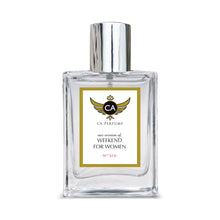
Weekend For Women — Weekend Alternative Perfume
7.14
MEI™
Primary Fresh
Secondary Romantic
Confidence
6.7
Presence
6.61
Mood Lift
7.94
Identity
6.56
Warmth
7.48
Social Ease
7.44
Energy
4.3
" I am radiant.
View full mood profile →
HumanSafe™

Top Mignonette Fragrances by HumanSafe™ Score

These Mignonette-based fragrances have the highest product-level HumanSafe™ scores in this ingredient collection.

Highest HumanSafe™ Score
Weekend For Women — Weekend Alternative Perfume
A-
HumanSafe™ Score Generally Safe
Safest Evaluated Ingredients EDP
AQUA Solvent / Carrier ISS 10.0
2(3H)-FURANONE, 5-HEPTYLDIHYDRO- Evaluated ingredient ISS 10.0
BENZYL SALICYLATE EYE IRRITATION - CAT.2B [H320] Evaluated ingredient ISS 9.0
1H-3A,7-METHANOAZULENE, OCTAHYDRO-6-METHOXY- Evaluated ingredient ISS 9.0
(2,5-DIMETHYL-2,3-DIHYDRO-1H-INDEN-2-YL)METHANOL CAT. 3 Evaluated ingredient ISS 9.0
3-BUTEN-2-ONE, 3-METHYL-4-(2,6,6-TRIMETHYL-2- Evaluated ingredient ISS 8.0
View full safety profile →
Expert Voices

What Masters Say About Mignonette

Mignonette’s green floral character is uniquely complex, combining ionone-driven violet nuances with honeyed sweetness, making it a subtle yet distinctive heart note in fine perfumery.
CA Perfume Editorial
The delicate nature of Mignonette absolute requires careful extraction and formulation, but its ability to evoke fresh spring gardens and soft floral warmth is unparalleled.
CA Perfume Editorial
Common Questions

Frequently Asked Questions

Common questions about Mignonette answered with detailed perfumery insights.

Mignonette in perfume smells sweet, green, and violet-like with a fresh floral heart. Its scent combines grassy notes reminiscent of freshly mowed fields with honeyed and raspberry undertones. It is typically used as a heart note at concentrations of 2-3%, providing a delicate, uplifting aroma lasting 4 to 6 hours. Notable fragrances featuring Mignonette include Issey Miyake’s L’Eau d’Issey Pour Homme and Estée Lauder’s Private Collection.

Mignonette is primarily used as a heart note in perfumery. Its moderate volatility allows it to bridge fresh top notes and longer-lasting base notes, contributing green floral complexity and softness to the fragrance’s core.

Mignonette’s complex green floral scent with violet and honey nuances offers a unique freshness and sophistication that niche perfumers value for creating naturalistic, airy compositions. Its rarity and nuanced aroma provide an exclusive character that distinguishes niche fragrances.

Mignonette fragrance uses include pairing with violet leaf for floral depth, vanilla for sweetness and softness, musk for longevity, and citrus notes like bergamot to lift the composition. These combinations enhance Mignonette’s green floral character while balancing its delicate nuances.

Yes, Mignonette’s light, fresh, and airy scent profile makes it ideal for summer and hot weather. Its green and floral notes provide a revitalizing and uplifting experience without overwhelming heat, especially when paired with citrus or aquatic accords.

Mignonette fragrances typically last between 4 to 6 hours on skin. Longevity depends on the concentration of the absolute and complementary notes used in the formulation, as well as individual skin chemistry.

Absolutely. How to layer Mignonette involves combining it with complementary notes such as vanilla, green tea, or musk to enhance its refreshing qualities and create personalized scent experiences. Layering can also balance its delicate floral character with richer or lighter accords.

Beginners should start with lighter Mignonette fragrances that blend its fresh green character with floral or fruity notes, such as Burberry’s Weekend for Women or Issey Miyake’s L’Eau d’Issey Pour Homme. These are approachable and suitable for daily wear.

When selecting a Mignonette fragrance at CA Perfume, consider the concentration, complementary notes, and occasion. Look for compositions that balance Mignonette’s green floral heart with supporting accords to suit your personal style and desired scent intensity.

Mignonette smells predominantly sweet and green with floral and violet-like undertones. It is not spicy but offers a complex sweetness reminiscent of honey and raspberry, contributing a fresh and uplifting character to fragrances.

Floral Collection

Explore Our Top Mignonette Fragrances

Discover a curated selection of fragrances featuring Mignonette’s fresh green floral heart, perfect for those seeking delicate and uplifting scents.

Shop all mignonette fragrances at CA Perfume →

Where Mignonette Comes From — Origin & Extraction

Mignonette is derived from the flowering plant Reseda odorata, belonging to the family Resedaceae. Native to Northern Africa and Asia Minor, it has been cultivated extensively in temperate regions such as southern France, the United Kingdom, and parts of the United States. France, particularly the Grasse region, is historically renowned for commercial cultivation, where the rich soil and Mediterranean climate enhance the flower’s delicate aromatic profile. Extraction of Mignonette for perfumery primarily employs solvent extraction methods, including hexane or ethanol solvent extraction and supercritical CO2 extraction, to produce the absolute. Steam distillation is generally avoided due to the low yield and thermal sensitivity of key odorants. Typical yields range from 0.07% to 0.26% concrete from fresh flowers, with the absolute yield approximately 30-35% of the concrete. The absolute is a yellow-brown viscous liquid with a complex, variable scent character. Natural Mignonette absolute is costly, priced between $3,000 and $6,000 per kilogram due to labor-intensive harvesting and low extraction yields. Sustainability concerns arise from limited cultivation and the delicate nature of the flowers, which require fertile, well-irrigated soil and careful harvesting to preserve aromatic integrity. Synthetic analogues have been developed to supplement supply and reduce environmental impact.

Famous Fragrances That Define Mignonette in Perfumery

Mignonette has been employed in several landmark fragrances, often as a heart note contributing fresh, green, and violet-like floral nuances. Estée Lauder’s Private Collection (1973), composed by perfumer James Krivda, uses natural Mignonette absolute to impart a soft, sweet floral complexity that balances the aldehydic and jasmine notes. Issey Miyake’s L’Eau d’Issey Pour Homme (1994), crafted by Jacques Cavallier, integrates Mignonette to provide a fresh, green floral heart that complements aquatic and citrus top notes, enhancing the fragrance’s airy and uplifting character. Burberry’s Weekend for Women (1997), by perfumer Jean-Marc Chaillan, features Mignonette as a subtle green floral accent, blending with fruity and woody accords to evoke casual elegance. Dior’s Dune Pour Homme (1991), by Jean-Louis Sieuzac, uses Mignonette to soften the aromatic and woody facets, adding a naturalistic green freshness. Voluspa’s Mignonette (launch year not specified) showcases the note prominently in a floral fruity gourmand context, paired with lavender, raspberry, and vanilla to create a modern interpretation. CA Perfume’s collection respects this lineage by incorporating Mignonette in compositions that highlight its delicate green floral character, emphasizing freshness and nuanced complexity without overwhelming intensity.

Natural vs Synthetic Mignonette in Perfumery

Natural Mignonette absolute is extracted from Reseda odorata flowers via solvent or CO2 extraction, yielding a complex and variable aroma profile rich in ionones, theaspirones, and phenylacetic acid derivatives. It is prized for its authentic green-sweet floral character but is expensive ($3,000–6,000/kg) and limited in availability due to low extraction yields and delicate flower harvesting. Synthetic Mignonette compounds primarily consist of safranal (CAS 116-26-7) and related analogues, which replicate the green, violet-like, and honeyed facets of the natural note with greater consistency and stability. These synthetics cost significantly less ($50–200/kg) and offer perfumers reliable performance in longevity and diffusion. Synthetic blends often include rose alcohols, ionones, and phenylacetaldehyde derivatives to mimic the complexity of the natural absolute. Famous fragrances such as Estée Lauder’s Private Collection historically used natural Mignonette absolute, while modern compositions like Issey Miyake’s L’Eau d’Issey Pour Homme utilize synthetic reconstructions for consistency. The HumanSafe™ platform supports transparency in ingredient sourcing, and CA Perfume emphasizes ethical use of both natural and synthetic Mignonette to balance authenticity with sustainability.