Where Honeysuckle Comes From — Origin & Extraction
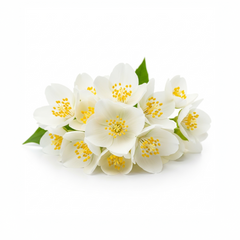
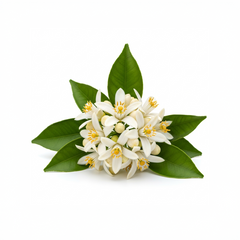
Honeysuckle refers to several species within the genus Lonicera, most notably Lonicera japonica (Japanese honeysuckle), Lonicera caprifolium (Italian honeysuckle), and Lonicera periclymenum (European woodbine). These species are native to temperate regions of the Northern Hemisphere, with primary origins in China, Japan, and Europe. The most aromatic varieties, such as L. japonica and L. caprifolium, are widely cultivated for ornamental and perfumery purposes. China is a major grower, but honeysuckle is also found in wild or cultivated forms throughout Europe and North America. Despite its abundance, the extraction of honeysuckle essential oil or absolute is not commercially viable due to extremely low yields—less than 0.01% by weight—and rapid degradation of key aroma compounds during processing.
In perfumery, the honeysuckle note is not obtained directly from the flower. Instead, it is reconstructed using headspace analysis, which captures the volatile aroma compounds emitted by living blossoms. These compounds are then recreated in the laboratory using a blend of synthetic molecules (such as linalool, hotrienol, methyl jasmonate, cis-jasmone, and methyl benzoate) and natural isolates from other white florals. Attempts at enfleurage or solvent extraction have proven impractical for large-scale production, as the resulting extracts lack the true olfactory character of the living flower. The cost of producing a natural honeysuckle absolute, if available, would exceed $20,000 per kg, compared to $50–200 per kg for a high-quality synthetic honeysuckle base.
Sustainability considerations favor the synthetic approach, as wild harvesting of honeysuckle can disrupt local ecosystems, particularly in regions where L. japonica is considered invasive. Synthetic honeysuckle accords offer consistency, lower environmental impact, and allergen control. The note’s modern perfumery use dates to the mid-20th century, following advances in headspace technology and aroma chemical synthesis. There is no CAS number for natural honeysuckle oil, but key synthetic components include linalool (CAS 78-70-6), methyl jasmonate (CAS 39924-52-2), and muguet alcohol (CAS 103-05-9).
Famous Fragrances That Define Honeysuckle in Perfumery
Honeysuckle has inspired a range of landmark fragrances, typically as a luminous heart note or as part of a broader white floral bouquet. In Jo Malone London Honeysuckle & Davana (2018, Anne Flipo), honeysuckle is paired with rose and moss, creating a radiant, modern floral with a green undertone. Goutal Paris Le Chèvrefeuille (1998, Isabelle Doyen and Annick Goutal) is a classic soliflore interpretation, blending honeysuckle with narcissus and petitgrain for a fresh, dewy effect. Aerin Mediterranean Honeysuckle (2015, Firmenich) uses honeysuckle alongside grapefruit, bergamot, and gardenia to evoke a sunlit Mediterranean landscape. Diptyque Olene (1988, Serge Kalouguine) features honeysuckle entwined with wisteria and narcissus, highlighting its creamy, pollen-rich character. Yardley English Honeysuckle (2020) presents a more traditional, powdery take, with honeysuckle as the dominant note supported by jasmine and musk. These fragrances demonstrate the versatility of honeysuckle as both a dominant and supporting note, often paired with other white florals, green notes, and citrus for added brightness. CA Perfume’s collection draws on this lineage, offering honeysuckle-forward compositions that honor both classic and contemporary interpretations.
Natural vs Synthetic Honeysuckle in Perfumery
Natural honeysuckle absolute is virtually absent from the global fragrance market due to extremely low extraction yields and rapid degradation of key volatiles. Historical records (Arctander, 1960s) indicate that commercial honeysuckle absolute has not been produced since the 1930s. Modern perfumery relies on synthetic reconstructions, using molecules such as linalool (CAS 78-70-6), methyl jasmonate (CAS 39924-52-2), and muguet alcohol (2,2-dimethyl-3-phenylpropan-1-ol, CAS 103-05-9). These synthetics replicate the floral, honeyed, and green facets of the living flower with high fidelity.
Synthetic honeysuckle bases offer superior stability, batch-to-batch consistency, and greater longevity compared to any natural extract. They are also more cost-effective, with prices typically ranging from $50 to $200 per kg, versus the hypothetical $20,000+ per kg for a true honeysuckle absolute. Iconic fragrances such as Jo Malone London Honeysuckle & Davana (2018) and Goutal Paris Le Chèvrefeuille (1998) use synthetic honeysuckle accords, often blended with natural white floral isolates for added complexity. Sustainability is a key advantage: synthetic production avoids ecosystem disruption and supports allergen management. The HumanSafe™ platform at CA Perfume ensures full transparency of all aroma chemicals used in honeysuckle accords, with IFRA compliance and allergen disclosure. In summary, virtually all honeysuckle in perfumery is synthetic, with a blend of key molecules providing the signature scent profile.