Where Orange Blossom Comes From — Origin & Extraction
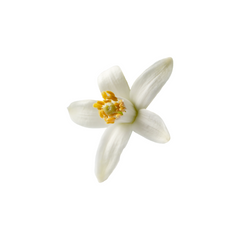
Orange blossom is harvested from the bitter orange tree (Citrus aurantium), specifically the subspecies known as Bigaradier. The tree is native to Southeast Asia but has been cultivated in the Mediterranean since the 9th century. Today, the primary producing countries are Tunisia (notably Cap Bon and Nabeul regions), Egypt (southern Nile), and Morocco (Rabat and Fez regions). Tunisia is the world’s leading producer, with orange blossom cultivated on approximately 600 hectares.
Extraction of orange blossom for perfumery yields several distinct products: orange blossom absolute (via solvent extraction), neroli essential oil (via steam distillation), and orange flower water (hydrosol). Solvent extraction is the preferred method for producing orange blossom absolute, as the delicate flowers yield only 1.2–1.4 kg of absolute per ton of fresh blossoms. The process involves volatile solvents at low temperatures (below 40°C) to preserve the fragile aromatic compounds, followed by alcohol washing to obtain the absolute. Neroli oil, in contrast, is obtained by steam distillation, producing a lighter, greener, and more citrusy oil. The yield for neroli is similarly low, about 1.1–1.3 kg per ton of flowers. Petitgrain oil, another product of the bitter orange tree, is distilled from the leaves and twigs.
The cost of natural orange blossom absolute is high, ranging from $4,000–6,000 per kg, while neroli oil is slightly less expensive at $3,000–5,000 per kg. Synthetic substitutes (e.g., Aurantiol, CAS 65405-70-1; methyl anthranilate, CAS 134-20-3; nerolidol, CAS 7212-44-4) are used to reduce costs and ensure batch-to-batch consistency, with prices typically $50–200 per kg. Sustainability concerns include the labor-intensive hand-harvesting process and the environmental impact of solvent use, though many producers now use food-grade or green solvents. The longevity of bitter orange trees (up to 90 years) and their resistance to disease contribute to sustainable cultivation, but climate change and land use pressures remain ongoing challenges.
Famous Fragrances That Define Orange Blossom in Perfumery
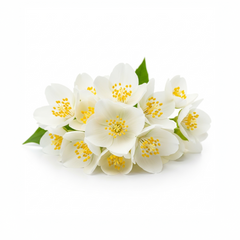
Orange blossom has been a cornerstone of perfumery for centuries, featured in both classic and modern compositions. Serge Lutens Fleurs d'Oranger (2003, perfumer Christopher Sheldrake) is a benchmark soliflore, emphasizing the narcotic, spicy, and honeyed facets of orange blossom absolute, paired with tuberose and cumin for a heady, sensual effect. Elie Saab Le Parfum (2011, Francis Kurkdjian) places orange blossom at the heart, blending it with jasmine and patchouli to create a luminous, modern floral signature. Jo Malone Orange Blossom Cologne (2003, Jean Claude Delville) offers a fresh, photorealistic interpretation, with green clementine and water lily accentuating the note’s dewy, spring-like quality.
Maison Francis Kurkdjian APOM (2009, Francis Kurkdjian) uses orange blossom as a bridge note, linking citrus top notes with musky and woody bases. L'Artisan Parfumeur Seville à l’Aube (2012, Bertrand Duchaufour) explores the note’s indolic and spicy facets, pairing it with lavender, beeswax, and incense for a complex, atmospheric composition. Tom Ford Neroli Portofino (2011, Rodrigo Flores-Roux) highlights the citrus-green side of orange blossom, blending it with neroli, bergamot, and amber for a Mediterranean cologne effect. These fragrances demonstrate the versatility of orange blossom as a dominant note, bridge, or accent, and illustrate its enduring appeal in both feminine and unisex perfumery. CA Perfume’s collection draws inspiration from this lineage, offering orange blossom-centered scents that honor both tradition and innovation.
Natural vs Synthetic Orange Blossom in Perfumery
Natural orange blossom absolute is a complex mixture of over 100 volatile compounds, including linalool, indole, methyl anthranilate, and nerolidol. Its extraction is labor-intensive and costly, with yields of only 1.2–1.4 kg per ton of flowers. Synthetic orange blossom accords are constructed using aroma chemicals such as Aurantiol (CAS 65405-70-1), methyl anthranilate (CAS 134-20-3), and nerolidol (CAS 7212-44-4). These synthetics offer greater stability, batch consistency, and cost efficiency—Aurantiol, for example, is widely used to impart the characteristic sweet-floral facet of orange blossom at a fraction of the cost of the natural absolute.
Performance-wise, synthetics provide enhanced longevity and diffusion, as natural orange blossom can be volatile and less persistent on skin. However, natural extracts are prized for their depth and complexity, with subtle indolic and honeyed nuances that are difficult to fully replicate. Many modern fragrances blend both natural and synthetic components to balance authenticity with performance. For example, Elie Saab Le Parfum (2011, Francis Kurkdjian) uses both natural orange blossom and synthetic boosters, while Jo Malone Orange Blossom Cologne (2003, Jean Claude Delville) relies more heavily on natural extracts for a photorealistic effect.
Sustainability and safety are key considerations. Natural orange blossom production is limited by climate and agricultural constraints, while synthetics are less resource-intensive and can be produced with lower environmental impact. The HumanSafe™ platform at CA Perfume ensures full transparency regarding the sourcing and safety of both natural and synthetic orange blossom ingredients, with all materials IFRA-compliant and batch-tested for allergens. Overall, the choice between natural and synthetic is driven by cost, performance, and the desired olfactory profile.