Ingredient Guide · White Floral
White Floral Family · Perfumery Note

Honeysuckle

A honeyed, luminous floral with green and fruity nuances.

Honeysuckle is a white floral note in perfumery, prized for its sweet, nectar-like aroma with subtle green and fruity undertones. Its scent is recreated using headspace analysis and complex synthetic blends, as true honeysuckle absolute is not commercially viable.

Honeysuckle
Ingredient Profile

Honeysuckle

White Floral Family
Family White Floral
Note Position Heart Note
Usage Level <0.01%
Key Origins China, Japan, United Kingdom
Iconic In Honeysuckle & Davana, Le Chèvrefeuille
The Ingredient

What does honeysuckle smell like and why is it significant in perfumery?

Honeysuckle (genus Lonicera, family Caprifoliaceae) is renowned for its heady, nectarous aroma, which is both sweet and floral, with pronounced honey and pollen facets. The scent profile is shaped by a complex array of molecules, including linalool (floral, citrusy), hotrienol (fresh, green-floral), methyl jasmonate (fruity, jasmine-like), and cis-jasmone (spicy, green). Additional contributors such as farnesene, nerolidol, and methyl benzoate lend a creamy, slightly vanilla-like undertone, while cis-3-hexenol and limonene impart green and citrus nuances. The result is a multi-layered floral note, reminiscent of jasmine but with a distinctive honeyed sweetness and a faint almond bitterness from benzaldehyde. This intricate molecular composition defines the honeysuckle scent profile in perfumery. In perfumery, honeysuckle is classified as a heart note, though it can appear in top notes when paired with citrus or green accords. Its typical usage concentration ranges from 0.5% to 5% of a fragrance formula, depending on the desired prominence. Because natural honeysuckle absolute is virtually unavailable due to extremely low extraction yields, the note is almost always recreated using headspace technology and a blend of synthetics and other natural floral materials. Honeysuckle’s interaction with skin chemistry is notable: its sweeter, lactonic facets are amplified on warmer, more humid skin, while green and aldehydic aspects become more pronounced on drier or more acidic skin types. Honeysuckle in perfumery is exemplified in fragrances such as Jo Malone London Honeysuckle & Davana (2018, Anne Flipo), where it forms the luminous heart of the composition, and Aerin Mediterranean Honeysuckle (2015), which pairs the note with citrus and white florals for a sunlit, breezy effect. In Diptyque Olene (1988), honeysuckle is combined with wisteria and narcissus, showcasing its versatility as both a dominant and supporting floral note. These examples illustrate what does honeysuckle smell like in modern fragrance and why it remains a valued component in the perfumer’s palette.

<0.01%
The extraction yield of natural honeysuckle absolute is less than 0.01% by weight, making commercial production impractical and necessitating synthetic reconstruction.
4–6 Hours
Typical longevity for honeysuckle-dominant fragrances in EDP format, reflecting the volatility of key floral molecules such as linalool and methyl jasmonate.
0.5–5%
Common concentration range for honeysuckle accords in fragrance formulas, sufficient to impart a distinct floral signature without overpowering the composition.
Origin & Extraction

Where Honeysuckle Comes From — Origin & Extraction

Honeysuckle’s scent character is influenced by climate and soil, with the most aromatic species thriving in temperate regions with high humidity and well-drained, slightly acidic soils. The intensity of the floral and honeyed notes is highest in blossoms harvested at dusk, when volatile compound emission peaks.

Honeysuckle refers to several species within the genus Lonicera, most notably Lonicera japonica (Japanese honeysuckle), Lonicera caprifolium (Italian honeysuckle), and Lonicera periclymenum (European woodbine). These species are native to temperate regions of the Northern Hemisphere, with primary origins in China, Japan, and Europe. The most aromatic varieties, such as L. japonica and L. caprifolium, are widely cultivated for ornamental and perfumery purposes. China is a major grower, but honeysuckle is also found in wild or cultivated forms throughout Europe and North America. Despite its abundance, the extraction of honeysuckle essential oil or absolute is not commercially viable due to extremely low yields—less than 0.01% by weight—and rapid degradation of key aroma compounds during processing. In perfumery, the honeysuckle note is not obtained directly from the flower. Instead, it is reconstructed using headspace analysis, which captures the volatile aroma compounds emitted by living blossoms. These compounds are then recreated in the laboratory using a blend of synthetic molecules (such as linalool, hotrienol, methyl jasmonate, cis-jasmone, and methyl benzoate) and natural isolates from other white florals. Attempts at enfleurage or solvent extraction have proven impractical for large-scale production, as the resulting extracts lack the true olfactory character of the living flower. The cost of producing a natural honeysuckle absolute, if available, would exceed $20,000 per kg, compared to $50–200 per kg for a high-quality synthetic honeysuckle base. Sustainability considerations favor the synthetic approach, as wild harvesting of honeysuckle can disrupt local ecosystems, particularly in regions where L. japonica is considered invasive. Synthetic honeysuckle accords offer consistency, lower environmental impact, and allergen control. The note’s modern perfumery use dates to the mid-20th century, following advances in headspace technology and aroma chemical synthesis. There is no CAS number for natural honeysuckle oil, but key synthetic components include linalool (CAS 78-70-6), methyl jasmonate (CAS 39924-52-2), and muguet alcohol (CAS 103-05-9).

CN

China

In the Yunnan and Sichuan provinces, Lonicera japonica is cultivated for both ornamental and medicinal purposes. The region’s humid subtropical climate and rich loamy soils yield intensely fragrant blossoms, though extraction for perfumery is rare. China remains the largest producer of honeysuckle for traditional uses, but not for fragrance extraction.

JP

Japan

Japanese honeysuckle (L. japonica) is widespread, especially in Honshu and Kyushu. The temperate climate and volcanic soils enhance the sweet, fruity facets of the flower. While invasive in some regions, it is valued for its strong, persistent aroma.

GB

United Kingdom

Wild English honeysuckle (L. periclymenum) grows in hedgerows and woodlands, particularly in southern England. The cool, moist climate and chalky soils produce a more delicate, powdery floral scent, with a pronounced green note. The UK market favors traditional honeysuckle soliflores.

IT

Italy

Lonicera caprifolium is native to northern and central Italy, thriving in limestone-rich soils and Mediterranean climates. The blossoms are intensely aromatic, with a creamy, vanilla-like undertone, though commercial extraction is not practiced.

Chemistry

Natural vs Synthetic Honeysuckle in Perfumery

Natural honeysuckle absolute is virtually absent from the global fragrance market due to extremely low extraction yields and rapid degradation of key volatiles. Historical records (Arctander, 1960s) indicate that commercial honeysuckle absolute has not been produced since the 1930s. Modern perfumery relies on synthetic reconstructions, using molecules such as linalool (CAS 78-70-6), methyl jasmonate (CAS 39924-52-2), and muguet alcohol (2,2-dimethyl-3-phenylpropan-1-ol, CAS 103-05-9). These synthetics replicate the floral, honeyed, and green facets of the living flower with high fidelity. Synthetic honeysuckle bases offer superior stability, batch-to-batch consistency, and greater longevity compared to any natural extract. They are also more cost-effective, with prices typically ranging from $50 to $200 per kg, versus the hypothetical $20,000+ per kg for a true honeysuckle absolute. Iconic fragrances such as Jo Malone London Honeysuckle & Davana (2018) and Goutal Paris Le Chèvrefeuille (1998) use synthetic honeysuckle accords, often blended with natural white floral isolates for added complexity. Sustainability is a key advantage: synthetic production avoids ecosystem disruption and supports allergen management. The HumanSafe™ platform at CA Perfume ensures full transparency of all aroma chemicals used in honeysuckle accords, with IFRA compliance and allergen disclosure. In summary, virtually all honeysuckle in perfumery is synthetic, with a blend of key molecules providing the signature scent profile.

Natural
Honeysuckle Absolute
Cost $3,000–6,000/kg
Method Solvent / CO₂
Character Complex, variable
vs
Synthetic
Safranal & Analogues
Cost $50–200/kg
Method Lab synthesis
Character Consistent, stable
Hall of Fame

Famous Fragrances That Define Honeysuckle in Perfumery

2018
dominant note

Honeysuckle & Davana

Jo Malone London
by Anne Flipo
rosedavanamoss
1998
dominant note

Le Chèvrefeuille

Goutal Paris
by Isabelle Doyen, Annick Goutal
narcissuspetitgrainlemon
2015
heart note

Mediterranean Honeysuckle

Aerin
by Firmenich (team)
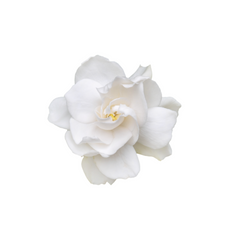
grapefruitbergamotgardeniajasmine sambac
1988
bridge note

Olene

Diptyque
by Serge Kalouguine
wisterianarcissusjasmine
2020
dominant note

English Honeysuckle

Yardley
jasminemuskgreen notes

Honeysuckle has inspired a range of landmark fragrances, typically as a luminous heart note or as part of a broader white floral bouquet. In Jo Malone London Honeysuckle & Davana (2018, Anne Flipo), honeysuckle is paired with rose and moss, creating a radiant, modern floral with a green undertone. Goutal Paris Le Chèvrefeuille (1998, Isabelle Doyen and Annick Goutal) is a classic soliflore interpretation, blending honeysuckle with narcissus and petitgrain for a fresh, dewy effect. Aerin Mediterranean Honeysuckle (2015, Firmenich) uses honeysuckle alongside grapefruit, bergamot, and gardenia to evoke a sunlit Mediterranean landscape. Diptyque Olene (1988, Serge Kalouguine) features honeysuckle entwined with wisteria and narcissus, highlighting its creamy, pollen-rich character. Yardley English Honeysuckle (2020) presents a more traditional, powdery take, with honeysuckle as the dominant note supported by jasmine and musk. These fragrances demonstrate the versatility of honeysuckle as both a dominant and supporting note, often paired with other white florals, green notes, and citrus for added brightness. CA Perfume’s collection draws on this lineage, offering honeysuckle-forward compositions that honor both classic and contemporary interpretations.

The Accord

How is a captivating Honeysuckle accord crafted?

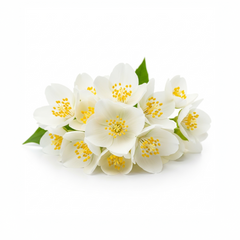
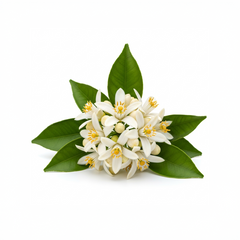
A honeysuckle accord is typically built with Honeysuckle (synthetic base) 30–35%, Jasmine 20–25%, Green Leaves 20–25%, and Orange Blossom 20–25%. Honeysuckle provides the sweet, nectarous core via linalool and methyl jasmonate. Jasmine adds indolic, lactonic depth through methyl jasmonate and benzyl acetate. Green leaves (cis-3-hexenol) introduce a fresh, grassy facet, mimicking the plant’s natural context. Orange blossom supplies additional white floral and citrusy aldehydic notes, enhancing the overall luminosity and realism.

35%

Honeysuckle (synthetic base)

30–35% of blend

Provides the core sweet, honeyed floral character, primarily via linalool, methyl jasmonate, and hotrienol, mimicking the living flower’s volatile profile.

25%

Jasmine

20–25% of blend

Supplies indolic and lactonic richness through methyl jasmonate and benzyl acetate, reinforcing the creamy, narcotic aspects of honeysuckle.

25%

Green Leaves

20–25% of blend

Adds freshness and realism with cis-3-hexenol, capturing the green, sappy nuance present in the natural flower’s environment.

25%

Orange Blossom

20–25% of blend

Enhances the white floral and citrusy aldehydic facets, supporting the overall luminosity and complexity of the accord.

The Olfactory Layers

How Honeysuckle Evolves on Skin

Honeysuckle’s olfactory evolution begins with a burst of green and citrusy notes, transitions to a creamy, honeyed floral heart, and settles into a soft, powdery base. High-volatility molecules like cis-3-hexenol and limonene dominate the opening, while methyl jasmonate and linalool persist through the heart. The drydown is shaped by subtle aldehydes and musk, providing gentle longevity.

I
Top notes
0–15 min
Dewy Green Burst

The initial impression is fresh and green, with cis-3-hexenol delivering a cut-grass effect and limonene adding a fleeting citrus sparkle. Benzaldehyde imparts a faint almond bitterness, while minor aldehydes contribute a soapy, dewy quality. These high-volatility compounds evaporate quickly, setting the stage for the floral heart.

greencitrusydewy
II
Heart notes
20–60 min
Honeyed Floral Glow

The heart is dominated by the sweet, nectarous floralcy of linalool, methyl jasmonate, and hotrienol. Jasmine lactone and methyl benzoate add creamy, lactonic, and slightly vanilla nuances. This stage is intensely floral, with a honeyed, pollen-rich character that lingers as the top notes recede.

floralhoneyedcreamy
III
Base notes
Several hours
Soft Powdery Veil

The base is soft and powdery, with lingering traces of unsaturated aldehydes, musk, and faint woody notes from nerolidol. The floral sweetness fades into a gentle, skin-like warmth, with subtle green and waxy undertones persisting on the skin.

powderysoftskin-like
TOP NOTES Dewy Green Burst 0–15 minutes HEART NOTES Honeyed Floral Glow 20–60 minutes BASE NOTES Soft Powdery Veil Several hours
Through the Ages

The Story of Honeysuckle in Perfumery

Honeysuckle’s journey in perfumery spans from ancient herbal traditions to modern synthetic reconstructions, with key milestones in extraction technology and fragrance design.

Antiquity

Medicinal and Ornamental Use in China

Lonicera japonica is cultivated in China for traditional medicine and ornamental gardens, prized for its sweet fragrance and therapeutic properties.

19th Century

Introduction to European Gardens

Wild honeysuckle (L. periclymenum) gains popularity in British and Italian gardens, valued for its evening scent and climbing habit.

1930s

Decline of Natural Extraction

Commercial production of honeysuckle absolute ceases due to low yields and instability, as documented by Arctander. Perfumers begin seeking synthetic alternatives.

1970s

Headspace Technology Revolution

Advances in headspace analysis allow perfumers to capture and reconstruct the true aroma of living honeysuckle blossoms, leading to more accurate synthetic accords.

1998

Le Chèvrefeuille by Goutal Paris

Annick Goutal and Isabelle Doyen create Le Chèvrefeuille, a modern soliflore that sets the standard for honeysuckle in contemporary perfumery.

2018

Jo Malone Honeysuckle & Davana Launch

Anne Flipo’s composition for Jo Malone London brings honeysuckle to a new generation, highlighting its versatility and modern appeal.

The Art of Layering

How to Layer Honeysuckle

Understanding how to layer honeysuckle involves molecular compatibility—shared floral and green compounds allow seamless blending with jasmine, orange blossom, and green notes. This approach maximizes the luminous, multifaceted character of honeysuckle, creating personalized scent experiences.

01

Enhance Sweetness

Layer honeysuckle with vanilla or heliotrope to amplify its creamy, honeyed facets. Vanillin’s sweet threshold masks any sharp green notes, while heliotropin (piperonal) adds a powdery, almond nuance. Jo Malone Honeysuckle & Davana demonstrates this synergy with its mossy-vanillic base.

02

Add Depth

Pair honeysuckle with jasmine or tuberose for a richer, more narcotic floral effect. Both share methyl jasmonate and indole, creating a molecular bridge that enhances the accord’s complexity. Diptyque Olene and Goutal Le Chèvrefeuille exemplify this approach.

03

Lighten the Glow

Combine honeysuckle with citrus (bergamot, grapefruit) or green notes (galbanum, green leaves) to accentuate its fresh, dewy aspects. Limonene and cis-3-hexenol provide olfactory lift, as seen in Aerin Mediterranean Honeysuckle.

Wear It Right

How to Wear Honeysuckle Like a Pro

Seasonal Guide

Fall & Winter

In cooler months, honeysuckle’s creamy, lactonic, and powdery facets become more prominent, while projection is subdued due to reduced molecular volatility. Apply to pulse points and layer with warmer notes like vanilla or sandalwood for enhanced depth and longevity.

Spring

Spring’s moderate temperatures and increased humidity amplify honeysuckle’s green and dewy aspects. The fragrance feels fresh and uplifting, ideal for daytime wear. Pair with citrus or green notes to highlight its luminous character.

Summer

Heat and humidity heighten honeysuckle’s radiance and projection, emphasizing its sweet, nectarous qualities. Apply lightly to avoid overwhelming sillage. Layer with aquatic or citrus notes for a breezy, refreshing effect.

Year-Round Tip

Adjust application based on climate: use lighter concentrations in warm weather and richer formats in cold. Honeysuckle’s versatility allows it to transition seamlessly across seasons, especially when paired with complementary notes.

Application Points

Strategic application enhances honeysuckle’s projection and longevity, allowing its nuanced facets to unfold over time.

1

Neck

Applying honeysuckle to the neck leverages body heat to diffuse the top green and citrus notes, creating an immediate, radiant impression.

2

Behind the Ears

This pulse point preserves the floral heart, as the skin here is slightly cooler, allowing the creamy, honeyed notes to linger longer.

3

Inner Wrists

Wrist application provides a balanced evolution, with warmth accelerating the transition from green top notes to the floral heart. Ideal for sampling the full olfactory pyramid.

4

Hair

Spraying on hair offers sustained release of honeysuckle’s lighter molecules, enhancing sillage and maintaining freshness throughout the day.

Pro Tip

Layer honeysuckle with a neutral, unscented lotion to increase longevity and prevent rapid evaporation of volatile floral compounds.

Mood Architecture™

Top Honeysuckle Fragrances by Mood Score

These Honeysuckle-based fragrances scored highest on the MEI™ Mood Architecture Framework — measuring how a scent may influence your emotional state.

Highest MEI Score
Aloura For Her — Chanel Allure For Her Alternative Perfume
8.68
MEI™
Primary Romantic
Secondary Confident
Confidence
7.83
Presence
8.15
Mood Lift
9.5
Identity
7.83
Warmth
9.5
Social Ease
9.5
Energy
4.6
" I am beautiful.
View full mood profile →
Love Don't Be Shy — By Kilian Love Don't Be Shy Alternative Perfume
8.03
MEI™
Primary Romantic
Secondary Energizing
Confidence
6.32
Presence
6.39
Mood Lift
9.5
Identity
6.61
Warmth
9.5
Social Ease
9.5
Energy
4.5
" I am beautiful.
View full mood profile →
Joyous Juicy — Viva La Juicy Alternative Perfume
7.88
MEI™
Primary Romantic
Secondary Energizing
Confidence
6.32
Presence
6.47
Mood Lift
9.5
Identity
6.38
Warmth
9.5
Social Ease
8.8
Energy
3.7
" I am beautiful.
View full mood profile →
Toni Girl — Tommy Girl Alternative Perfume
7.83
MEI™
Primary Fresh
Secondary Energizing
Confidence
7.06
Presence
7.35
Mood Lift
9.5
Identity
6.56
Warmth
6.92
Social Ease
8.6
Energy
5.6
" I am radiant.
View full mood profile →
HumanSafe™

Top Honeysuckle Fragrances by HumanSafe™ Score

These Honeysuckle-based fragrances have the highest product-level HumanSafe™ scores in this ingredient collection.

Highest HumanSafe™ Score
Toni Girl — Tommy Girl Alternative Perfume
A-
HumanSafe™ Score Generally Safe
Safest Evaluated Ingredients EDP
AQUA Solvent / Carrier ISS 10.0
ACETIC ACID, PHENYLMETHYL ESTER Evaluated ingredient ISS 10.0
1,4-DIOXACYCLOHEPTADECANE-5,17-DIONE Evaluated ingredient ISS 10.0
LINALOOL Evaluated ingredient ISS 7.0
CITRONELLOL Evaluated ingredient ISS 7.0
ALCOHOL DENAT. Solvent / Carrier ISS 7.0
View full safety profile →
Sweet Like Candy — Ariana Grande Sweet Like Candy Alternative Perfume
A-
HumanSafe™ Score Generally Safe
Safest Evaluated Ingredients EDP
AQUA Solvent / Carrier ISS 10.0
2-(1-(3',3'-DIMETHYL-1'-CYCLOHEXYL)ETHOXY)-2-METHYL PROPYL Evaluated ingredient ISS 10.0
1,4-DIOXACYCLOHEPTADECANE-5,17-DIONE Evaluated ingredient ISS 10.0
BENZYL SALICYLATE EYE IRRITATION - CAT. 2B [H320] Evaluated ingredient ISS 9.0
3-CYCLOPENTENE-1-BUTANOL, .ALPHA.,.BETA.,2,2,3- Evaluated ingredient ISS 8.0
LINALYL ACETATE Evaluated ingredient ISS 7.0
View full safety profile →
Sexy Rio De Janeiro — Michael Kors Alternative Perfume for Women
A-
HumanSafe™ Score Generally Safe
Safest Evaluated Ingredients EDP
AQUA Solvent / Carrier ISS 10.0
ACETIC ACID, PHENYLMETHYL ESTER Evaluated ingredient ISS 10.0
1,4-DIOXACYCLOHEPTADECANE-5,17-DIONE Evaluated ingredient ISS 10.0
HEXYL SALICYLATE Evaluated ingredient ISS 9.0
4H-INDEN-4-ONE, 1,2,3,5,6,7-HEXAHYDRO-1,1,2,3,3- Evaluated ingredient ISS 9.0
OCTANAL, 2-(PHENYLMETHYLENE)- Evaluated ingredient ISS 8.0
View full safety profile →
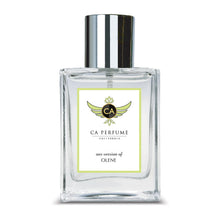
Olene — Diptyque Olene Alternative Perfume
A-
HumanSafe™ Score Generally Safe
Safest Evaluated Ingredients EDP
AQUA Solvent / Carrier ISS 10.0
ACETIC ACID, PHENYLMETHYL ESTER Evaluated ingredient ISS 10.0
HEXYL SALICYLATE Evaluated ingredient ISS 9.0
BENZOIC ACID, 2-HYDROXY-, METHYL ESTER Evaluated ingredient ISS 9.0
BENZOIC ACID, 2-AMINO-, METHYL ESTER Evaluated ingredient ISS 9.0
2-PROPENOIC ACID, 3-PHENYL-, METHYL ESTER Evaluated ingredient ISS 9.0
View full safety profile →
Expert Voices

What Masters Say About Honeysuckle

Although there are references to a natural essential oil of honeysuckle and its absolute obtained by enfleurage, all honeysuckle aromas in perfumery are synthetic reconstructions.
Fragrantica Editorial
Honeysuckle’s scent is a complex interplay of linalool, methyl jasmonate, and hotrienol, creating a sweet, nectarous floralcy that is both luminous and multifaceted.
CA Perfume Editorial
Common Questions

Frequently Asked Questions

Answers to common questions about honeysuckle in perfumery.

Honeysuckle in perfume smells sweet, floral, and honeyed, with subtle green and fruity undertones. The scent is shaped by molecules like linalool, methyl jasmonate, and hotrienol, resulting in a luminous, nectarous aroma reminiscent of jasmine but with a distinctive honeyed sweetness. Notable examples include Jo Malone Honeysuckle & Davana and Aerin Mediterranean Honeysuckle.

Honeysuckle is typically classified as a heart (middle) note in perfumery. It can also appear in the top notes when paired with citrus or green accords, but its main impact is in the heart, where its floral and creamy facets are most pronounced.

Honeysuckle is favored in niche perfumery for its complex, multifaceted scent profile and its ability to evoke nostalgia and natural beauty. Its synthetic reconstruction allows for creative blending with other white florals, greens, and citrus, making it versatile for both soliflore and layered compositions.

Honeysuckle fragrance uses often involve pairing with jasmine, orange blossom, tuberose, green leaves, and citrus notes. These combinations enhance the floral, creamy, or fresh aspects of honeysuckle, as seen in fragrances like Diptyque Olene and Goutal Le Chèvrefeuille.

Yes, honeysuckle’s luminous, fresh, and sweet character makes it ideal for summer and warm climates. Its volatile floral molecules project well in heat, providing a radiant, uplifting effect. Lighter concentrations such as EDT or cologne are recommended for hot weather.

Honeysuckle-dominant fragrances in EDP format typically last 4–6 hours on skin. Longevity is influenced by the volatility of key floral molecules and the concentration of fixatives in the formula. Oil-based versions may last longer but project less.

Yes, honeysuckle layers well with other white florals, green notes, and citrus. Molecular compatibility—such as shared methyl jasmonate with jasmine—enables seamless blending. Experiment with vanilla or musk for added warmth, or citrus for extra freshness.

Recommended entry points include Jo Malone Honeysuckle & Davana, Goutal Le Chèvrefeuille, and Aerin Mediterranean Honeysuckle. These fragrances showcase honeysuckle’s floral, sweet, and fresh facets in accessible, well-balanced compositions.

Explore CA Perfume’s honeysuckle collection by considering your preferred style—whether you favor luminous, fresh florals, creamy white bouquets, or green, dewy notes. Each composition is HumanSafe™ verified for transparency and allergen control.

Honeysuckle’s sweetness is balanced by green and creamy facets, making it suitable for daily use. When blended with citrus or green notes, the overall effect is fresh and luminous rather than cloying. Its versatility allows for both casual and formal wear.

White Floral Collection

Explore Our Top Honeysuckle Fragrances

Discover CA Perfume’s most-loved honeysuckle scents, each crafted to highlight the note’s luminous, nectarous character in both classic and modern interpretations.

Shop all honeysuckle fragrances at CA Perfume →

Where Honeysuckle Comes From — Origin & Extraction

Honeysuckle refers to several species within the genus Lonicera, most notably Lonicera japonica (Japanese honeysuckle), Lonicera caprifolium (Italian honeysuckle), and Lonicera periclymenum (European woodbine). These species are native to temperate regions of the Northern Hemisphere, with primary origins in China, Japan, and Europe. The most aromatic varieties, such as L. japonica and L. caprifolium, are widely cultivated for ornamental and perfumery purposes. China is a major grower, but honeysuckle is also found in wild or cultivated forms throughout Europe and North America. Despite its abundance, the extraction of honeysuckle essential oil or absolute is not commercially viable due to extremely low yields—less than 0.01% by weight—and rapid degradation of key aroma compounds during processing. In perfumery, the honeysuckle note is not obtained directly from the flower. Instead, it is reconstructed using headspace analysis, which captures the volatile aroma compounds emitted by living blossoms. These compounds are then recreated in the laboratory using a blend of synthetic molecules (such as linalool, hotrienol, methyl jasmonate, cis-jasmone, and methyl benzoate) and natural isolates from other white florals. Attempts at enfleurage or solvent extraction have proven impractical for large-scale production, as the resulting extracts lack the true olfactory character of the living flower. The cost of producing a natural honeysuckle absolute, if available, would exceed $20,000 per kg, compared to $50–200 per kg for a high-quality synthetic honeysuckle base. Sustainability considerations favor the synthetic approach, as wild harvesting of honeysuckle can disrupt local ecosystems, particularly in regions where L. japonica is considered invasive. Synthetic honeysuckle accords offer consistency, lower environmental impact, and allergen control. The note’s modern perfumery use dates to the mid-20th century, following advances in headspace technology and aroma chemical synthesis. There is no CAS number for natural honeysuckle oil, but key synthetic components include linalool (CAS 78-70-6), methyl jasmonate (CAS 39924-52-2), and muguet alcohol (CAS 103-05-9).

Famous Fragrances That Define Honeysuckle in Perfumery

Honeysuckle has inspired a range of landmark fragrances, typically as a luminous heart note or as part of a broader white floral bouquet. In Jo Malone London Honeysuckle & Davana (2018, Anne Flipo), honeysuckle is paired with rose and moss, creating a radiant, modern floral with a green undertone. Goutal Paris Le Chèvrefeuille (1998, Isabelle Doyen and Annick Goutal) is a classic soliflore interpretation, blending honeysuckle with narcissus and petitgrain for a fresh, dewy effect. Aerin Mediterranean Honeysuckle (2015, Firmenich) uses honeysuckle alongside grapefruit, bergamot, and gardenia to evoke a sunlit Mediterranean landscape. Diptyque Olene (1988, Serge Kalouguine) features honeysuckle entwined with wisteria and narcissus, highlighting its creamy, pollen-rich character. Yardley English Honeysuckle (2020) presents a more traditional, powdery take, with honeysuckle as the dominant note supported by jasmine and musk. These fragrances demonstrate the versatility of honeysuckle as both a dominant and supporting note, often paired with other white florals, green notes, and citrus for added brightness. CA Perfume’s collection draws on this lineage, offering honeysuckle-forward compositions that honor both classic and contemporary interpretations.

Natural vs Synthetic Honeysuckle in Perfumery

Natural honeysuckle absolute is virtually absent from the global fragrance market due to extremely low extraction yields and rapid degradation of key volatiles. Historical records (Arctander, 1960s) indicate that commercial honeysuckle absolute has not been produced since the 1930s. Modern perfumery relies on synthetic reconstructions, using molecules such as linalool (CAS 78-70-6), methyl jasmonate (CAS 39924-52-2), and muguet alcohol (2,2-dimethyl-3-phenylpropan-1-ol, CAS 103-05-9). These synthetics replicate the floral, honeyed, and green facets of the living flower with high fidelity. Synthetic honeysuckle bases offer superior stability, batch-to-batch consistency, and greater longevity compared to any natural extract. They are also more cost-effective, with prices typically ranging from $50 to $200 per kg, versus the hypothetical $20,000+ per kg for a true honeysuckle absolute. Iconic fragrances such as Jo Malone London Honeysuckle & Davana (2018) and Goutal Paris Le Chèvrefeuille (1998) use synthetic honeysuckle accords, often blended with natural white floral isolates for added complexity. Sustainability is a key advantage: synthetic production avoids ecosystem disruption and supports allergen management. The HumanSafe™ platform at CA Perfume ensures full transparency of all aroma chemicals used in honeysuckle accords, with IFRA compliance and allergen disclosure. In summary, virtually all honeysuckle in perfumery is synthetic, with a blend of key molecules providing the signature scent profile.