Where Yellow Freesia Comes From — Origin & Extraction
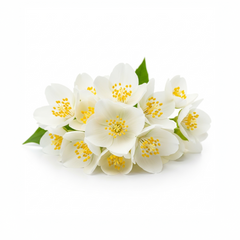
Yellow Freesia (Freesia refracta) originates from the Cape region of South Africa, where it grows wild in rugged landscapes. It belongs to the Iridaceae family and is cultivated extensively in South Africa, the Netherlands, and the United States (notably California). South Africa is renowned for producing aromatic freesias with bright, fruity qualities due to its abundant sunlight and rich soils. The Netherlands maintains a strong tradition of freesia cultivation, with farms dedicated to producing highly fragrant blooms. The United States contributes through diverse climates that support freesia growth in gardens and commercial production.
Extraction of natural freesia fragrance is challenging due to negligible yield and the fragility of the scent compounds. Industrial extraction of essential oils or absolutes is not viable. Instead, perfumers rely on synthetic reconstruction based on headspace technology, which captures the volatile compounds emitted by living flowers without damaging them. This method, developed in the 1980s, allows for the analysis and replication of freesia's complex aroma profile.
Natural freesia absolute, when available, is extracted via solvent extraction or supercritical CO2 extraction, yielding a pale yellow to colorless liquid with a complex and variable character. The cost ranges from $3,000 to $6,000 per kilogram. Synthetic freesia accords are produced in laboratories using aroma chemicals such as linalool, safrole analogues, and ionone derivatives, costing approximately $50 to $200 per kilogram. Synthetic production offers greater consistency, stability, and sustainability, reducing environmental impact and ensuring supply chain reliability.
Famous Fragrances That Define Yellow Freesia in Perfumery
Yellow Freesia has been featured prominently in numerous notable fragrances, often as a heart note that contributes fresh, floral brightness and subtle fruitiness. Jo Malone's English Pear & Freesia (2010), crafted by perfumer Jean-Christophe Hérault, uses yellow freesia to bridge the crispness of pear with a lush floral heart, creating a fresh and elegant scent. Versace Pour Femme Dylan Purple (2022) incorporates yellow freesia as an accent note, adding vibrancy and a youthful floral touch alongside fruity and woody accords.
DKNY Nectar Love (2017) employs yellow freesia to enhance its fruity-floral composition, while Avon’s Perceive Eau de Parfum (2000) uses it as a supporting note to add airy freshness. Byredo’s La Tulipe (2010) also features yellow freesia, blending it with other florals to evoke a springtime bouquet.
These fragrances illustrate yellow freesia’s versatility across different olfactory families, from fruity-floral to fresh and woody. CA Perfume’s collection respects this lineage by offering fragrances that highlight yellow freesia’s bright, uplifting character without overwhelming the composition.
Natural vs Synthetic Yellow Freesia in Perfumery
Yellow Freesia fragrance in perfumery is predominantly a synthetic reconstruction due to the impracticality of natural extraction. The natural flower's scent is mainly composed of linalool (30-90%), limonene, alpha-terpineol, sabinene, myrcene, and dihydro-beta-ionone, but the yield of essential oil is negligible and extraction methods alter the scent profile.
Synthetic freesia accords use key aroma chemicals such as linalool (CAS 78-70-6), cis-3-hexenol (CAS 928-96-1), and ionone derivatives (e.g., dihydro-beta-ionone, CAS 14901-07-6) to replicate the fresh, floral, and slightly peppery scent. These synthetics provide consistent olfactory character, improved longevity, and stability compared to natural extracts. Cost-wise, synthetics are significantly more affordable ($50–200/kg) than natural absolutes ($3,000–6,000/kg).
Famous fragrances like Jo Malone English Pear & Freesia and Versace Pour Femme Dylan Purple utilize synthetic freesia accords for their reliable and vibrant scent. The HumanSafe™ platform verifies ingredient transparency and safety, ensuring synthetic freesia accords meet regulatory and allergen standards. CA Perfume embraces this balance, valuing both natural complexity and synthetic precision to deliver consistent, high-quality fragrance experiences.