Where Pear Comes From — Origin & Extraction
The pear note in perfumery is inspired by the fruit of Pyrus communis, a member of the Rosaceae family. While pears are cultivated globally, with China accounting for approximately 70% of world production (over 16 million metric tons annually), the scent used in fragrance is not derived from natural extraction. The volatile esters responsible for pear’s aroma are present in the fruit at parts-per-million concentrations—far too dilute for steam distillation or solvent extraction, and too heat-sensitive to survive conventional processing. As a result, all pear notes in perfumery are synthetic reconstructions.
The primary impact molecule is ethyl (2E,4Z)-2,4-decadienoate, known as Pear Ester (CAS 3025-30-7), first identified as the key odorant in Williams (Bartlett) pear by Jennings and Tressl in the 1970s. Industrial synthesis involves organometallic coupling of (Z)-1-heptenyl bromide with ethyl propiolate, yielding a 95:5 mixture of (2E,4Z) and (2E,4E) stereoisomers. Only the (2E,4Z) isomer delivers the characteristic juicy-pear aroma. Supporting esters such as hexyl acetate (CAS 142-92-7), butyl acetate, and pentyl acetate are produced via Fischer esterification or enzymatic transesterification. The cost of synthetic pear ester ranges from $80–$200/kg, while natural pear extracts (when available as food flavorings) are significantly less concentrated and not viable for fine fragrance use.
Sustainability is a key advantage of synthetic pear notes: laboratory synthesis avoids agricultural land use and water consumption, and modern processes minimize waste and energy input. Some companies, such as Robertet, offer pear bases composed of natural isolates, but these are rare and expensive. The overwhelming majority of pear notes in perfumery are fully synthetic, ensuring consistency, safety, and a minimal environmental footprint.
Famous Fragrances That Define Pear in Perfumery
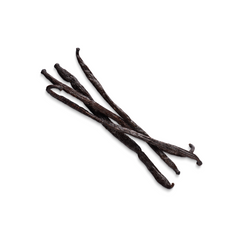
Pear has become a defining note in contemporary perfumery, especially since the 1990s, when advances in ester chemistry enabled a realistic, photorealistic pear effect. Jo Malone London’s English Pear & Freesia (2010, perfumer Christine Nagel) is perhaps the most iconic pear fragrance, using pear as a luminous top note paired with freesia and patchouli for a transparent, elegant signature. Jean Paul Gaultier’s La Belle (2019, Quentin Bisch and Sonia Constant) places pear at the center of a gourmand composition, where it is contrasted with vanilla and vetiver, creating a sweet, addictive opening. Lancôme’s Idôle (2019, Shyamala Maisondieu, Adriana Medina, Nadege Le Garlantezec) uses pear as a fresh, juicy introduction to a modern floral bouquet, while Juliette Has A Gun’s Pear Inc. (2021, Romano Ricci) explores a minimalist, musky pear accord with Ambroxan. Clean Reserve Radiant Nectar (2020, Celine Barel) demonstrates pear’s versatility as a bridge note, connecting fruity and musky accords for a soft, skin-like effect.
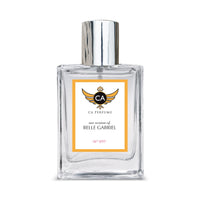
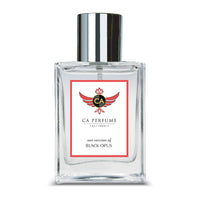
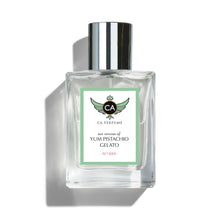
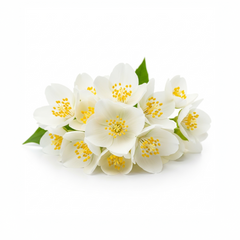
Historically, pear notes appeared in earlier works such as Laura Biagiotti Tempore Donna (1999) and D&G Feminine (1999), where hexyl acetate was used to evoke a musky, photorealistic fruitiness. In each of these compositions, pear functions as either a dominant note, a bridge, or an accent, often paired with white florals (freesia, jasmine), musks, or vanilla. CA Perfume’s collection draws inspiration from this lineage, offering pear-forward fragrances that balance freshness, sweetness, and transparency.
Natural vs Synthetic Pear in Perfumery
No commercially viable natural pear extract exists for perfumery. The fruit’s aroma is composed of volatile esters—primarily ethyl (2E,4Z)-2,4-decadienoate (Pear Ester, CAS 3025-30-7), hexyl acetate (CAS 142-92-7), and butyl acetate (CAS 123-86-4)—which are present at trace levels and degrade rapidly under heat or solvent conditions. As a result, all pear notes in fine fragrance are synthetic reconstructions, built from carefully selected aroma chemicals.
Synthetic pear notes offer several advantages: they are highly stable, consistent across batches, and can be precisely dosed to achieve the desired intensity. Longevity and diffusion are generally superior to what could be achieved with a hypothetical natural extract, and the synthetic molecules are less prone to oxidation or spoilage. Famous fragrances such as Jo Malone English Pear & Freesia (2010), Jean Paul Gaultier La Belle (2019), and Juliette Has A Gun Pear Inc. (2021) all rely on synthetic pear esters for their signature effect. The cost differential is substantial: synthetic pear esters cost $80–$200/kg, while a natural pear extract (if available) would be both prohibitively expensive and olfactorily weak.
From a sustainability perspective, synthetic pear notes reduce pressure on agricultural resources and avoid the variability and ethical concerns associated with natural harvesting. CA Perfume’s HumanSafe™ platform ensures full transparency in sourcing and safety, verifying that all pear aroma chemicals used are IFRA-compliant and free from known sensitizers above regulatory thresholds. In summary, the synthetic route is not only necessary for pear, but also offers clear advantages in performance, safety, and environmental impact.