Where Red Currant Blossom Comes From — Origin & Extraction
Red currant blossom is derived from the flowers of the red currant bush (Ribes rubrum, family Grossulariaceae), native to temperate regions of Europe and western Asia. The plant has been cultivated since the Middle Ages, with major commercial cultivation in France, Germany, and the United Kingdom. However, the actual extraction of red currant blossom scent for perfumery is not performed via traditional distillation or cold pressing, as the delicate flowers yield minimal essential oil and their volatile aroma compounds degrade rapidly upon harvesting.
Instead, the red currant blossom note is typically constructed as an accord using a combination of synthetic aroma chemicals and natural plant extracts. Key molecules include cis-3-hexenol (green, leafy), ethyl butyrate (fruity, tart), and damascenone (floral-berry nuance). These are blended to mimic the fleeting, fresh, and tart character of the actual blossom. The cost of producing a red currant blossom accord is significantly lower than extracting natural fruit or blossom oil, with synthetic components priced at $50–$200/kg, compared to the high cost of natural absolutes for other florals.
Sustainability is a consideration, as the use of synthetic molecules reduces the need for large-scale agricultural harvesting of red currant flowers, which would be impractical and environmentally taxing. The HumanSafe™ platform at CA Perfume ensures transparency in sourcing and the use of IFRA-compliant, skin-safe materials. There is currently no commercial-scale natural extraction of red currant blossom absolute; all perfumery uses are based on reconstructed accords.
Famous Fragrances That Define Red Currant Blossom in Perfumery
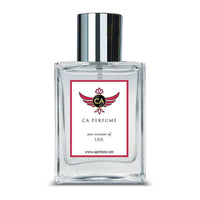
Red currant blossom has become a defining note in contemporary perfumery, particularly in compositions that emphasize freshness, powdery florals, and modern fruity accords. One of the earliest and most influential uses is found in Lolita Lempicka’s L L’aime (2014), where red currant blossom anchors a powdery, white floral heart, paired with rose, peony, and vanilla to create a luminous, romantic effect. Jennifer Lopez’s Live (2005) utilizes red currant blossom as a sparkling top note, brightening a blend of peony, pineapple, and soft vanilla. In niche perfumery, Buchart Colbert’s L’Hantise (2023) features red currant as a pivotal top note, combined with rosewood and bergamot to introduce a tart, green freshness that evolves into a floral-woody base.
Other notable examples include Coach Wild Rose (2022), where red currant blossom is paired with rose and ambroxan for a modern, dewy effect, and Moschino Funny! (2007), which uses red currant blossom alongside bitter orange and green tea for a playful, effervescent opening. In each of these fragrances, red currant blossom functions as a dominant or bridge note, providing a lively, tart lift that complements florals, musks, and soft woods. CA Perfume’s collection draws inspiration from this lineage, offering red currant blossom compositions that emphasize freshness, versatility, and contemporary appeal.
Natural vs Synthetic Red Currant Blossom in Perfumery
Red currant blossom, as a perfumery note, is almost exclusively synthetic due to the technical challenges of extracting volatile compounds from the delicate flowers. The key synthetic molecules used to recreate its scent include cis-3-hexenol (CAS 928-96-1), ethyl butyrate (CAS 105-54-4), and damascenone (CAS 23726-93-4). These compounds provide the tart, green, and subtly floral facets characteristic of the note. Synthetic versions offer superior consistency, stability, and longevity compared to any natural extract, which would be both cost-prohibitive and unstable.
Natural red currant blossom absolute is not commercially available; attempts to extract the scent via solvent extraction or enfleurage yield extremely low quantities and rapid degradation. In contrast, synthetic accords can be tailored for performance, with a cost of $50–$200/kg, while a hypothetical natural extraction would exceed $10,000/kg due to labor and yield constraints. Famous fragrances such as Lolita Lempicka L L’aime and Jennifer Lopez Live rely on synthetic red currant blossom accords for their signature top note freshness.
From a sustainability perspective, synthetic red currant blossom reduces environmental impact and supports IFRA safety standards. CA Perfume’s HumanSafe™ platform ensures full transparency in ingredient sourcing, with all red currant blossom accords verified for skin safety and environmental responsibility. Other notable aroma chemicals that may be used in these accords include methyl anthranilate (CAS 134-20-3) for a berry nuance and linalool (CAS 78-70-6) for a soft floral lift.