Where Pear Blossom Comes From — Origin & Extraction
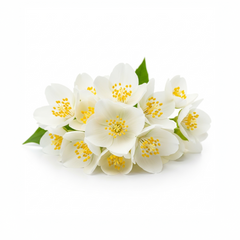
Pear Blossom originates from the flowers of pear trees, primarily Pyrus communis, a member of the Rosaceae family. These trees thrive in temperate regions across Europe, Asia, and North America. Key producing countries include France, Bulgaria, and the United States, each known for distinct pear varieties and orchard cultivation practices. France, for example, is renowned for its Anjou pear orchards, which produce blossoms prized for their fresh, floral aroma.
Due to the delicate nature of pear blossoms, direct extraction of their essential oils is uncommon. Instead, perfumers rely on advanced techniques such as headspace technology, which captures the scent molecules directly from the living flowers without damaging them. This method preserves the fresh, airy qualities of the blossom. Additionally, synthetic accords are widely used to replicate pear blossom's scent, combining esters like hexyl acetate and phenylethyl acetate with floral and fruity notes.
Extraction yields from natural sources are low, making natural pear blossom absolute rare and costly, often exceeding several thousand dollars per kilogram. Synthetic molecules provide a cost-effective and consistent alternative, with prices ranging from $100 to $500 per kilogram depending on purity and supplier. Sustainability considerations favor synthetic production due to the environmental impact of harvesting delicate blossoms and the labor-intensive nature of orchard cultivation.
Famous Fragrances That Define Pear Blossom in Perfumery
Pear Blossom has become a cherished note in modern perfumery, featured prominently in several landmark fragrances that showcase its fresh, floral, and subtly fruity character. Elizabeth Arden's Green Tea Pear Blossom (2020), crafted by perfumer Sandra Raičević Petrović, uses pear blossom as a heart note, blending it with Anjou pear, bergamot, jasmine sambac, and green tea to create a bright, spring-inspired aromatic floral fragrance.
Jo Malone London's English Pear & Freesia (2010), by Christine Nagel, is a seminal fragrance where pear blossom forms the core of the composition, paired with freesia, musk, patchouli, and rhubarb. This fragrance highlights pear blossom's crispness and versatility in a chypre fruity structure.
Other notable fragrances include Mix:Bar Pear Blossom (2023) by Claude Dir, where pear blossom is combined with white musk, apple tree, and peony to create a sweet floral fruity scent.
These fragrances demonstrate pear blossom's adaptability across fragrance families and its appeal in both daytime and evening wear. CA Perfume's collection reflects this lineage by emphasizing fresh, floral accords that honor pear blossom's elegant and uplifting qualities.
Natural vs Synthetic Pear Blossom in Perfumery
Natural pear blossom essence is difficult to obtain due to the fragility of the flowers and low extraction yields. When available, natural isolates are produced via headspace extraction or solvent extraction of floral absolutes, capturing the fresh, floral, and subtly fruity scent. However, these natural extracts are expensive, variable in quality, and less stable.
Synthetic pear blossom accords are primarily composed of esters such as hexyl acetate (CAS 142-92-7), phenylethyl acetate (CAS 103-45-7), and ethyl decadienoate, which replicate the juicy, fresh, and floral facets of the natural blossom. These synthetics offer greater stability, longevity, and diffusion in fragrance compositions, and are more cost-effective, priced roughly between $100 and $500 per kilogram.
Famous fragrances like Jo Malone's English Pear & Freesia utilize a blend of natural and synthetic ingredients to achieve a balanced pear blossom accord. Synthetic molecules enhance tenacity and projection without compromising the delicate character. The HumanSafe™ platform verifies the safety and transparency of these synthetic ingredients, ensuring responsible sourcing and formulation.
CA Perfume embraces a balanced approach, favoring synthetic molecules for consistency and sustainability while incorporating natural isolates when available to enrich the olfactory complexity.