Where Mandarin Orange Comes From — Origin & Extraction
Mandarin Orange (Citrus reticulata) is one of the original, non-hybrid citrus species, native to southern China and northeastern India. Cultivated for over 3,000 years, mandarins were historically reserved for Chinese imperial officials, from whom the Western name derives. Today, major producers include China (over 60% of global output), Spain (notably the 'Clementine' variety), Italy (Sicily, Calabria), Brazil, and the USA (California). Spain and Italy are renowned for high-quality, aromatic oils, while China leads in volume.
Extraction is performed by cold pressing the peel, a mechanical process that preserves the integrity of volatile compounds. The process yields a deep orange-red liquid, rich in limonene (65–75%), gamma-terpinene (15–20%), and methyl N-methylanthranilate (trace, but impactful for aroma). Three grades—green (early, herbaceous), yellow (mid-season, balanced), and red (fully ripe, sweetest)—are produced, each with distinct olfactory profiles. Typical yield is 0.3–0.5% by weight of fresh peel. Steam distillation is rarely used, as it alters the delicate top notes.
Natural mandarin oil commands $80–120/kg for conventional, up to $300/kg for organic, while solvent-extracted absolutes can exceed $3,000–6,000/kg. Synthetic analogues (e.g., methyl N-methylanthranilate, CAS 85-91-6; dimethyl anthranilate, CAS 86-59-9) cost $50–200/kg and offer greater stability and batch consistency. Sustainability concerns focus on pesticide use and monoculture in large-scale orchards, but cold pressing is a low-impact, solvent-free process. Organic and fair-trade certifications are increasingly common, especially from Mediterranean producers.
Famous Fragrances That Define Mandarin Orange in Perfumery
Mandarin orange has been a defining note in both classic and contemporary perfumery, prized for its ability to impart freshness, optimism, and a nuanced sweetness. In Guerlain Aqua Allegoria Mandarine Basilic (2007, Marie Salamagne), mandarin orange is the dominant note, paired with basil and green tea for a sparkling, aromatic effect. Louis Vuitton Afternoon Swim (2019, Jacques Cavallier-Belletrud) showcases mandarin as the central theme, creating a vivid, sunlit opening that persists into the heart. Byredo Sundazed (2019, Jérôme Epinette) uses mandarin to bridge citrus and gourmand facets, blending it with neroli and cotton candy for a playful, modern twist. Hermès Eau de Mandarine Ambrée (2013, Jean-Claude Ellena) features mandarin as a top note, evolving into amber and passion fruit for a warm, textured finish. Acqua di Parma Blu Mediterraneo Arancia di Capri (1999, Bertrand Duchaufour) highlights Italian mandarin in a Mediterranean context, supported by orange, lemon, and caramel for a rounded, sweet profile.
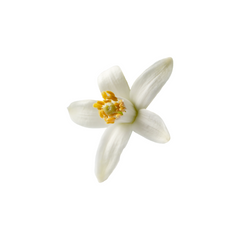
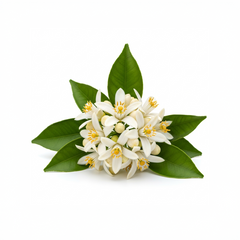
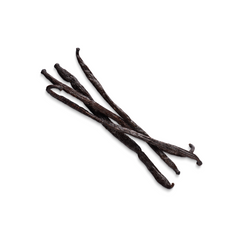
These landmark fragrances illustrate the versatility of mandarin orange as a dominant, bridge, or accent note, often paired with florals (neroli, orange blossom), green notes (basil, tea), or gourmand bases (vanilla, caramel). CA Perfume’s collection draws inspiration from this lineage, offering mandarin orange compositions that balance authenticity, longevity, and contemporary appeal.
Natural vs Synthetic Mandarin Orange in Perfumery
Natural mandarin orange oil is cold-pressed from Citrus reticulata peel and features a complex, variable profile dominated by limonene (CAS 138-86-3), gamma-terpinene (CAS 99-85-4), and methyl N-methylanthranilate (CAS 85-91-6). Synthetic substitutes, such as dimethyl anthranilate (CAS 86-59-9) and methyl anthranilate (CAS 134-20-3), are used to replicate the tangy, grape-like sweetness and improve longevity and stability in formulations. Synthetic versions are favored in mass-market perfumery for their batch-to-batch consistency and lower cost ($50–200/kg vs. $80–300/kg for natural oil; $3,000–6,000/kg for absolute).
Performance-wise, synthetics offer greater stability against oxidation and light, extending shelf life and projection. However, they may lack the nuanced, multi-faceted evolution of natural oil, especially the subtle floral and aldehydic notes. Notable fragrances such as Louis Vuitton Afternoon Swim and Guerlain Aqua Allegoria Mandarine Basilic use natural mandarin for authenticity, while many mainstream colognes rely on synthetics for cost-effectiveness.
Sustainability is a key consideration: cold-pressed mandarin is renewable and low-impact, but large-scale monoculture can strain local ecosystems. Synthetic production reduces agricultural pressure but depends on petrochemical feedstocks. The HumanSafe™ platform at CA Perfume ensures ingredient transparency and safety, verifying both natural and synthetic sources for allergen content and environmental impact.