Ingredient Guide · Bergamot
Bergamot Family · Perfumery Note

Mandarin Leaf

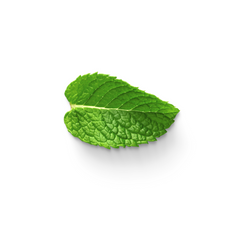
A vibrant green citrus note from mandarin foliage

Mandarin Leaf is a fresh green citrus note derived from the aromatic foliage of the mandarin tree, used primarily as a top to heart note in perfumery. Its scent combines bright citrus freshness with subtle herbal undertones, typically used at 0.1–1% concentration.

Mandarin Leaf
Ingredient Profile

Mandarin Leaf

Bergamot Family
Family Bergamot
Note Position Heart Note
Usage Level 0.1–1%
Key Origins China, Spain, United States
Iconic In Saffron Mandarin, From the Garden
The Ingredient

What does Mandarin Leaf smell like and why is it cherished in perfumery?

Mandarin Leaf is the aromatic foliage of the mandarin tree (Citrus reticulata), offering a bright citrus scent with herbal undertones. Its scent profile includes fresh green notes combined with a lively citrus burst, primarily due to volatile compounds such as limonene, linalool, and other terpenes. This note is classified as a top to heart note in perfumery, typically used at concentrations ranging from 0.1% to 1%, where it adds a fresh, natural green brightness to compositions. In perfumery, Mandarin Leaf interacts dynamically with skin chemistry, often revealing a crisp, slightly bitter green facet that balances the sweeter citrus notes. Its volatility allows it to open fragrances with a sparkling freshness that gradually softens into a gentle herbal heart. Mandarin Leaf is found in fragrances such as Les Liquides Imaginaires' Saffron Mandarin (2025) and Maison Martin Margiela's From the Garden (2023), where it contributes a vital green citrus freshness that enhances the overall aromatic complexity. These examples demonstrate Mandarin Leaf's versatility in perfumery, where it can serve as a fresh bridge between citrus top notes and herbal or floral heart notes, enriching the scent with natural vitality and a sunlit orchard character.

0.1–1%
Typical concentration range of Mandarin Leaf extract in fragrance formulations, balancing freshness and safety.
65–94%
Range of d-limonene content in mandarin essential oils, the primary molecule responsible for bright citrus aroma.
12–24 hours
Approximate longevity of Mandarin Leaf within well-formulated perfumes when combined with appropriate fixatives.
Origin & Extraction

Where Mandarin Leaf Comes From — Origin & Extraction

Mandarin Leaf's aromatic profile is influenced by its geographic origin, with soil composition, climate, and cultivation methods shaping its scent character. Subtropical and Mediterranean climates yield leaves with distinct brightness and herbal nuances.

Mandarin Leaf is sourced from the foliage of the mandarin tree, Citrus reticulata, a member of the Rutaceae family. The tree is native to subtropical and tropical regions of Southeast Asia, primarily China, and is now cultivated extensively in Mediterranean countries such as Spain and Italy, as well as in Brazil, Argentina, and the United States (notably California). These regions contribute distinct aromatic profiles influenced by local soil composition, climate, and cultivation practices. The extraction of Mandarin Leaf fragrance material is typically achieved through solvent extraction or enfleurage of the fresh leaves, capturing the delicate volatile oils without heat degradation. Cold pressing is used for the fruit peel, but leaf extraction requires gentler methods to preserve the green, herbal nuances. Supercritical CO2 extraction is an emerging technique favored for its ability to obtain pure, thermally labile compounds without solvent residues. Natural Mandarin Leaf extracts are relatively costly, with prices varying based on origin and extraction method, often ranging from $2,000 to $5,000 per kilogram. Synthetic aroma chemicals mimicking Mandarin Leaf's green citrus facets are available at significantly lower costs. Sustainability efforts focus on responsible harvesting to avoid defoliation stress and support local farming communities, ensuring long-term availability of high-quality raw material.

CN

China

Origin of Citrus reticulata, China produces Mandarin Leaf with a bright, zesty green citrus profile. The subtropical climate and fertile soils of southern provinces contribute to high-quality aromatic foliage. China accounts for approximately 40% of global mandarin cultivation.

ES

Spain

Spain's Mediterranean climate produces Mandarin Leaf with sweeter, fruitier, and slightly herbaceous notes. Regions like Valencia and Murcia are major producers, supplying about 20% of the global market with leaves harvested through sustainable agricultural practices.

US

United States

California's warm climate and well-drained soils yield Mandarin Leaf with lively and energetic green citrus qualities. The state contributes roughly 10% of the world's mandarin production, with careful leaf harvesting to preserve aromatic integrity.

BR

Brazil

Brazil's tropical climate supports mandarin cultivation with leaves exhibiting a rich, vibrant green aroma. The São Paulo region is a key producer, focusing on sustainable farming to maintain leaf quality and environmental balance.

Chemistry

Natural vs Synthetic Mandarin Leaf in Perfumery

Natural Mandarin Leaf extracts contain complex mixtures of volatile terpenes such as limonene (CAS 5989-27-5), linalool (CAS 78-70-6), and terpinene isomers, which provide the characteristic bright citrus-herbal scent. These natural extracts offer nuanced, evolving scent profiles but can vary between batches due to agricultural factors. Synthetic substitutes include aroma chemicals like citral (CAS 5392-40-5), citronellal (CAS 106-23-0), and hydroxycitronellal (CAS 107-75-5), which replicate the fresh, green citrus facets with greater stability and consistency. These synthetics provide longer-lasting scent performance and are more cost-effective, priced around $50–200/kg compared to natural extracts costing thousands per kilogram. Famous fragrances such as Les Liquides Imaginaires' Saffron Mandarin utilize natural Mandarin Leaf extract for its authentic green freshness, while some mass-market perfumes may rely on synthetic blends for cost and consistency. The HumanSafe™ platform emphasizes transparency in sourcing and formulation, encouraging the use of natural extracts when possible while acknowledging the role of synthetics in sustainable perfumery.

Natural
Mandarin Leaf Absolute
Cost $3,000–6,000/kg
Method Solvent / CO₂
Character Complex, variable
vs
Synthetic
Safranal & Analogues
Cost $50–200/kg
Method Lab synthesis
Character Consistent, stable
Hall of Fame

Famous Fragrances That Define Mandarin Leaf in Perfumery

2025
supporting note

Saffron Mandarin

Les Liquides Imaginaires
by Wesley Perumal
Italian MandarinBlood OrangeSaffron
2023
top note

From the Garden

Maison Martin Margiela
by Olivier Cresp, Sébastien Cresp
Tomato LeafGreen MandarinPatchouli
2007
accent note

Aqua Allegoria Mandarine Basilic

Guerlain
by Thierry Wasser
MandarinBasil
2019
key note

Sundazed

Byredo
by Jérôme Epinette
MandarinOther Citrus Notes
accent note

Odyssey Mandarin Sky

Armaf
MandarinAromatic Notes

Mandarin Leaf has been featured in several notable fragrances, where it contributes a fresh green citrus character that bridges top and heart notes. A landmark example is Les Liquides Imaginaires' Saffron Mandarin (2025), created by perfumer Wesley Perumal. Mandarin Leaf functions as a supporting note alongside Italian mandarin and blood orange, adding a crisp herbal brightness that enhances the spicy saffron heart. Maison Martin Margiela's From the Garden (2023), by Olivier and Sébastien Cresp, uses Mandarin Leaf as a top note paired with tomato leaf and green mandarin, creating a fresh, green, and earthy composition evocative of a sunlit garden. Guerlain's Aqua Allegoria Mandarine Basilic (2007), by Thierry Wasser, features Mandarin Leaf as an accent note, combining it with mandarin and basil for a lively, aromatic freshness ideal for summer wear. Byredo's Sundazed (2019), by Jérôme Epinette, incorporates mandarin and mandarin leaf to evoke sunny, joyful summer vibes with a bright, sparkling citrus accord. Armaf's Odyssey Mandarin Sky blends Mandarin Leaf with other citrus and aromatic notes to create a fresh, uplifting fragrance. These fragrances illustrate Mandarin Leaf's role as a versatile green citrus note that enhances freshness, complexity, and natural vitality in modern perfumery. CA Perfume's collection reflects this lineage by offering fragrances that emphasize natural green and citrus accords.

The Accord

How is a captivating Mandarin Leaf accord crafted?

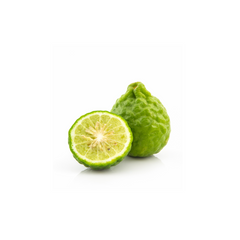
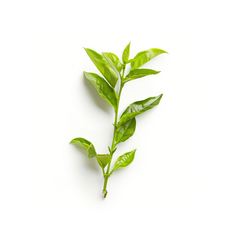
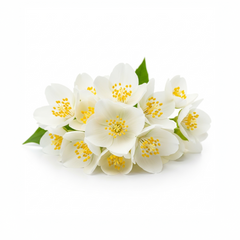
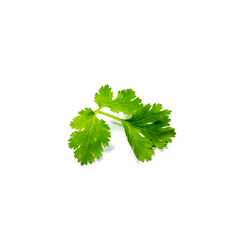
A Mandarin Leaf accord blends the bright, fresh green citrus essence of mandarin foliage with complementary notes to create a lively and balanced fragrance. Mandarin Leaf (20-25%) provides the core green citrus freshness, supported by Bergamot (20-25%) for sparkling citrus lift. Green Tea (20-25%) adds a soothing, leafy quality that enhances the natural vibrancy, while Jasmine (20-25%) introduces a floral elegance that balances the herbal facets. This combination ensures the accord remains fresh, complex, and harmonious.

25%

Mandarin Leaf

20–25% of blend

Provides the fresh green citrus character with herbal undertones, forming the accord's vibrant core.

25%

Bergamot

20–25% of blend

Adds sparkling citrus brightness that amplifies the freshness of Mandarin Leaf.

25%

Green Tea

20–25% of blend

Contributes a soothing leafy quality that complements and softens the citrus sharpness.

25%

Jasmine

20–25% of blend

Imparts floral elegance that balances the herbal and citrus facets with delicate softness.

The Olfactory Layers

How Mandarin Leaf Evolves on Skin

Mandarin Leaf's olfactory journey begins with a bright, volatile citrus-green burst that lasts 10-15 minutes, driven by limonene and other monoterpenes. The heart phase (20-60 minutes) reveals herbal and floral nuances from linalool and terpinen-4-ol, softening the initial sharpness. The base phase extends the green freshness subtly, blending with supporting woody or musky notes for several hours.

I
Top notes
0–15 min
Sparkling Citrus Green

The initial impression is a bright, sparkling citrus-green freshness dominated by limonene and gamma-terpinene, which evaporate quickly to deliver an uplifting opening.

BrightCitrusyGreen
II
Heart notes
20–60 min
Herbal and Floral Softness

Leafy and herbal nuances emerge, with linalool and terpinen-4-ol contributing a soft, balmy warmth that blends with subtle floral hints, creating a calming and natural aroma.

HerbalFloralSoft
III
Base notes
Several hours
Sustained Green Freshness

The base sustains a gentle green freshness, often supported by woody or musky elements that provide depth and longevity without overpowering the citrus character.

GreenWoodySubtle
TOP NOTES Sparkling Citrus Green 0–15 minutes HEART NOTES Herbal and Floral Softness 20–60 minutes BASE NOTES Sustained Green Freshness Several hours
Through the Ages

The Story of Mandarin Leaf in Perfumery

Mandarin Leaf's use in perfumery traces back to ancient China, evolving through centuries to modern extraction and fragrance applications.

Ancient China

Mandarin Cultivation and Symbolism

Mandarin trees were cultivated in ancient China, where mandarins symbolized prosperity and were used in rituals. The aromatic leaves were appreciated for their fresh scent in traditional medicine.

18th Century

Introduction to Europe

Mandarin trees and their aromatic leaves were introduced to Europe, particularly Mediterranean countries, expanding their use in perfumery and culinary arts.

19th Century

Cold Expression Extraction

The development of cold expression techniques allowed for the extraction of essential oils from mandarin peels and leaves, preserving their fresh aromatic qualities for perfumery.

Late 20th Century

Supercritical CO2 Extraction Advances

Supercritical CO2 extraction emerged as a method to obtain pure, thermally sensitive aromatic compounds from mandarin leaves, improving quality and sustainability.

2020s

Modern Perfumery Usage

Mandarin Leaf features prominently in contemporary fragrances such as Les Liquides Imaginaires' Saffron Mandarin (2025), showcasing its fresh green citrus-herbal character.

The Art of Layering

How to Layer Mandarin Leaf

Understanding how to layer Mandarin Leaf involves recognizing molecular compatibilities and olfactory masking effects. Layering enhances complexity and personalizes scent experience.

01

Enhance Sweetness

Pair Mandarin Leaf with vanilla or tonka bean to soften its citrus sharpness via olfactory masking, where vanillin's sweet threshold overrides the green bitterness, creating a warm, rounded accord. This is exemplified in fragrances like Guerlain's Aqua Allegoria Mandarine Basilic.

02

Add Depth

Combine Mandarin Leaf with woody notes such as cedarwood or sandalwood, which share sesquiterpene compounds that harmonize with the leaf’s green facets, grounding the freshness and extending longevity. Maison Martin Margiela's From the Garden demonstrates this layering.

03

Lighten the Glow

Layer Mandarin Leaf with floral notes like jasmine or neroli, which contain linalool and other shared terpenes, creating a seamless transition from green to floral. This synergy enhances brightness and complexity, as seen in Byredo's Sundazed.

Wear It Right

How to Wear Mandarin Leaf Like a Pro

Seasonal Guide

Fall & Winter

Cooler temperatures slow molecular diffusion, muting Mandarin Leaf's brightness. Layering with warm spices or woods enhances longevity and adds depth, making it suitable for cozy, uplifting winter scents.

Spring

Spring's moderate warmth highlights Mandarin Leaf's fresh green citrus facets, complementing floral and herbal notes. Apply moderately for a vibrant, uplifting daytime fragrance.

Summer

High heat increases volatility, intensifying Mandarin Leaf's sparkling freshness but shortening wear time. Use lighter applications or combine with aquatic notes for refreshing summer scents.

Year-Round Tip

Adjust application based on temperature: lighter sprays in heat, richer layering in cold. Combining Mandarin Leaf with fixatives improves performance across all seasons.

Application Points

Strategic application of Mandarin Leaf enhances its fresh green citrus impact and longevity on the skin.

1

Neck

Pulse points like the neck emit heat that activates Mandarin Leaf's volatile citrus compounds, enhancing projection and freshness.

2

Behind the Ears

This warm area helps diffuse the herbal nuances subtly, creating an intimate scent aura.

3

Inner Wrists

The pulse here allows for quick evaporation of bright top notes, ideal for experiencing Mandarin Leaf's initial citrus burst.

4

Hair

Hair retains fragrance longer; applying Mandarin Leaf here offers a sustained, gentle green citrus trail.

Pro Tip

Layer Mandarin Leaf with complementary notes on clothing or scarves to extend scent longevity without overwhelming skin chemistry.

Mood Architecture™

Top Mandarin Leaf Fragrances by Mood Score

These Mandarin Leaf-based fragrances scored highest on the MEI™ Mood Architecture Framework — measuring how a scent may influence your emotional state.

Highest MEI Score
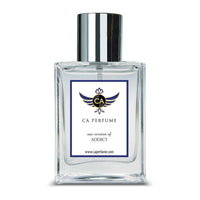
Addict — Christian Dior Addict Alternative Perfume
7.6
MEI™
Primary Romantic
Secondary Confident
Confidence
6.47
Presence
6.4
Mood Lift
8.65
Identity
6.67
Warmth
9.5
Social Ease
8.13
Energy
3.2
" I am beautiful.
View full mood profile →
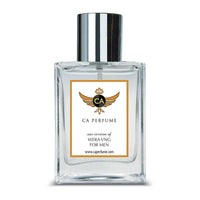
Wera Vng. For Men — Vera Wang For Men Alternative Cologne
7.09
MEI™
Primary Magnetic
Secondary Confident
Confidence
7.24
Presence
9.24
Mood Lift
7.01
Identity
7.71
Warmth
7.38
Social Ease
6.05
Energy
3.7
" I am bold.
View full mood profile →
HumanSafe™

Top Mandarin Leaf Fragrances by HumanSafe™ Score

These Mandarin Leaf-based fragrances have the highest product-level HumanSafe™ scores in this ingredient collection.

Highest HumanSafe™ Score
Wera Vng. For Men — Vera Wang For Men Alternative Cologne
A-
HumanSafe™ Score Generally Safe
Safest Evaluated Ingredients EDP
AQUA Solvent / Carrier ISS 10.0
BENZYL SALICYLATE Evaluated ingredient ISS 9.0
7-OCTEN-2-OL, 2,6-DIMETHYL- Evaluated ingredient ISS 9.0
LINALYL ACETATE Evaluated ingredient ISS 7.0
LINALOOL Evaluated ingredient ISS 7.0
View full safety profile →
Addict — Christian Dior Addict Alternative Perfume
A-
HumanSafe™ Score Generally Safe
Safest Evaluated Ingredients EDP
AQUA Solvent / Carrier ISS 10.0
AMBROXID Evaluated ingredient ISS 10.0
4H-INDEN-4-ONE, 1,2,3,5,6,7-HEXAHYDRO-1,1,2,3,3- Evaluated ingredient ISS 9.0
3-CYCLOPENTENE-1-ACETALDEHYDE, 2,2,3-TRIMETHYL-, Evaluated ingredient ISS 9.0
1H-3A,7-METHANOAZULEN-6-OL, OCTAHYDRO-3,6,8,8- Evaluated ingredient ISS 9.0
2H-1-BENZOPYRAN-2-ONE Evaluated ingredient ISS 8.0
View full safety profile →
Expert Voices

What Masters Say About Mandarin Leaf

Mandarin Leaf offers a fresh, green citrus brightness that acts as a vital bridge between top citrus notes and herbal or floral hearts, enriching fragrance compositions with natural vitality.
CA Perfume Editorial
The complexity of Mandarin Leaf lies in its ability to combine vibrant citrus freshness with subtle herbal undertones, making it a versatile and indispensable ingredient in modern perfumery.
CA Perfume Editorial
Common Questions

Frequently Asked Questions

Answers to common questions about Mandarin Leaf in perfumery, covering scent, usage, and layering.

Mandarin Leaf in perfume smells bright and fresh with a distinctive citrus-green character. It combines the zesty, sparkling aroma of mandarin foliage with subtle herbal undertones, creating a lively and natural scent. This note often opens fragrances with a crisp freshness that evolves into a soft, leafy warmth. Examples include its use in Les Liquides Imaginaires' Saffron Mandarin and Maison Martin Margiela's From the Garden.

Mandarin Leaf is primarily used as a top to heart note in fragrances. Its high volatility allows it to provide an immediate fresh green citrus burst in the opening, which gradually softens into herbal and floral nuances in the heart. It is rarely used as a base note due to its light and volatile nature.

Mandarin Leaf is favored in niche perfumery for its authentic natural green citrus aroma that adds complexity and freshness. Its ability to bridge citrus top notes with herbal or floral hearts creates nuanced, multi-dimensional scent profiles. Additionally, its variability and natural origin appeal to perfumers seeking unique, artisanal compositions.

Mandarin Leaf fragrance uses include pairing with citrus notes like bergamot, lime, and lemon to enhance brightness; floral notes such as jasmine and neroli to add softness; herbal notes like coriander and mint for complexity; and woody notes like sandalwood and cedarwood to provide depth and longevity.

Yes, Mandarin Leaf perfumes are ideal for summer and hot weather due to their fresh, bright, and invigorating green citrus scent. However, high temperatures can increase volatility, so lighter applications or layering with fixatives are recommended to maintain longevity.

Mandarin Leaf itself is volatile and may last 1-3 hours on skin, but when combined with fixatives and base notes in well-formulated perfumes, the overall fragrance can last 12-24 hours. Longevity depends on concentration and supporting ingredients.

Absolutely. Learning how to layer Mandarin Leaf involves combining it with complementary notes like vanilla to soften sharpness, woods to add depth, or florals to enhance complexity. This molecular compatibility creates personalized and multifaceted scent experiences.

Beginner-friendly Mandarin Leaf perfumes include Guerlain's Aqua Allegoria Mandarine Basilic for its fresh and approachable citrus-herbal blend, and Maison Martin Margiela's From the Garden for a green, natural scent. These offer clear expressions of Mandarin Leaf without overwhelming complexity.

Selecting a Mandarin Leaf fragrance at CA Perfume involves considering your preference for freshness, herbal complexity, and longevity. Explore fragrances with natural extracts for authenticity or those with synthetic blends for stability. Sampling multiple options helps find your ideal balance.

Mandarin Leaf primarily smells fresh, bright, and citrusy with herbal undertones rather than sweet or spicy. Its green facets provide a crispness that can be complemented by spicy notes like coriander or pepper in a fragrance, but the leaf itself is not inherently spicy or sweet.

Bergamot Collection

Explore Our Top Mandarin Leaf Fragrances

Discover a curated selection of fragrances highlighting Mandarin Leaf's fresh green citrus character.

Shop all mandarin-leaf fragrances at CA Perfume →

Where Mandarin Leaf Comes From — Origin & Extraction

Mandarin Leaf is sourced from the foliage of the mandarin tree, Citrus reticulata, a member of the Rutaceae family. The tree is native to subtropical and tropical regions of Southeast Asia, primarily China, and is now cultivated extensively in Mediterranean countries such as Spain and Italy, as well as in Brazil, Argentina, and the United States (notably California). These regions contribute distinct aromatic profiles influenced by local soil composition, climate, and cultivation practices. The extraction of Mandarin Leaf fragrance material is typically achieved through solvent extraction or enfleurage of the fresh leaves, capturing the delicate volatile oils without heat degradation. Cold pressing is used for the fruit peel, but leaf extraction requires gentler methods to preserve the green, herbal nuances. Supercritical CO2 extraction is an emerging technique favored for its ability to obtain pure, thermally labile compounds without solvent residues. Natural Mandarin Leaf extracts are relatively costly, with prices varying based on origin and extraction method, often ranging from $2,000 to $5,000 per kilogram. Synthetic aroma chemicals mimicking Mandarin Leaf's green citrus facets are available at significantly lower costs. Sustainability efforts focus on responsible harvesting to avoid defoliation stress and support local farming communities, ensuring long-term availability of high-quality raw material.

Famous Fragrances That Define Mandarin Leaf in Perfumery

Mandarin Leaf has been featured in several notable fragrances, where it contributes a fresh green citrus character that bridges top and heart notes. A landmark example is Les Liquides Imaginaires' Saffron Mandarin (2025), created by perfumer Wesley Perumal. Mandarin Leaf functions as a supporting note alongside Italian mandarin and blood orange, adding a crisp herbal brightness that enhances the spicy saffron heart. Maison Martin Margiela's From the Garden (2023), by Olivier and Sébastien Cresp, uses Mandarin Leaf as a top note paired with tomato leaf and green mandarin, creating a fresh, green, and earthy composition evocative of a sunlit garden. Guerlain's Aqua Allegoria Mandarine Basilic (2007), by Thierry Wasser, features Mandarin Leaf as an accent note, combining it with mandarin and basil for a lively, aromatic freshness ideal for summer wear. Byredo's Sundazed (2019), by Jérôme Epinette, incorporates mandarin and mandarin leaf to evoke sunny, joyful summer vibes with a bright, sparkling citrus accord. Armaf's Odyssey Mandarin Sky blends Mandarin Leaf with other citrus and aromatic notes to create a fresh, uplifting fragrance. These fragrances illustrate Mandarin Leaf's role as a versatile green citrus note that enhances freshness, complexity, and natural vitality in modern perfumery. CA Perfume's collection reflects this lineage by offering fragrances that emphasize natural green and citrus accords.

Natural vs Synthetic Mandarin Leaf in Perfumery

Natural Mandarin Leaf extracts contain complex mixtures of volatile terpenes such as limonene (CAS 5989-27-5), linalool (CAS 78-70-6), and terpinene isomers, which provide the characteristic bright citrus-herbal scent. These natural extracts offer nuanced, evolving scent profiles but can vary between batches due to agricultural factors. Synthetic substitutes include aroma chemicals like citral (CAS 5392-40-5), citronellal (CAS 106-23-0), and hydroxycitronellal (CAS 107-75-5), which replicate the fresh, green citrus facets with greater stability and consistency. These synthetics provide longer-lasting scent performance and are more cost-effective, priced around $50–200/kg compared to natural extracts costing thousands per kilogram. Famous fragrances such as Les Liquides Imaginaires' Saffron Mandarin utilize natural Mandarin Leaf extract for its authentic green freshness, while some mass-market perfumes may rely on synthetic blends for cost and consistency. The HumanSafe™ platform emphasizes transparency in sourcing and formulation, encouraging the use of natural extracts when possible while acknowledging the role of synthetics in sustainable perfumery.