Where Lily of the Valley Comes From — Origin & Extraction
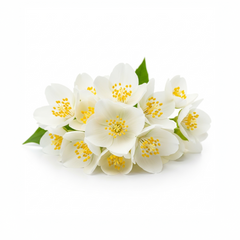
Lily of the valley (Convallaria majalis L., family Asparagaceae) is native to the cool temperate woodlands of Eurasia and North America, with wild populations found in Europe, Russia, and parts of East Asia. The plant is cultivated ornamentally in France (notably in the region of Nantes), Poland, and the Netherlands for cut flowers and traditional May Day bouquets, but not for fragrance extraction. Attempts to extract the scent via steam distillation, solvent extraction (petroleum ether, butane), or even modern CO2 extraction yield either negligible or non-representative oils—typically less than 1% yield, with the resulting product lacking the characteristic muguet aroma. The flower’s volatile aroma compounds are produced only at the moment of release and are not stored in the tissue, making commercial extraction unviable.
As a result, all lily of the valley notes in perfumery are synthetic reconstructions. The first key molecule, hydroxycitronellal, was synthesized in 1905 by German chemist Hermann Knoll (Knoll & Co.), followed by commercial launches such as Laurine (Givaudan, 1906). Subsequent advances introduced Lilial (Givaudan, 1956, CAS 80-54-6), Lyral (IFF, 1958, CAS 31906-04-4), and more recently, Mahonial (Givaudan, 2010s) and Lilybelle (Symrise). The cost of these synthetics ranges from $20–$200/kg, compared to the hypothetical cost of natural extraction, which would exceed $10,000/kg for a non-representative product. Sustainability is a key advantage of synthetics: no wild harvesting is required, and production is scalable and consistent. However, regulatory restrictions (e.g., EU bans on Lilial and Lyral due to allergenicity) have driven ongoing innovation in new muguet molecules.
Famous Fragrances That Define Lily of the Valley in Perfumery
Lily of the valley has played a pivotal role in perfumery since the early 20th century, especially in soliflore and floral-green compositions. The archetype is Diorissimo by Christian Dior (1956), composed by Edmond Roudnitska, which set the standard for photorealistic muguet using hydroxycitronellal, Lilial, and supporting aldehydes. Guerlain’s annual Muguet (first launched in 1908, with modern versions by Thierry Wasser) is another benchmark, reformulated over the decades to comply with evolving regulations. Penhaligon’s Lily of the Valley (1976, Michael Pickthall) offers a classic English interpretation with green and woody undertones. In contemporary perfumery, Maison Martin Margiela’s Springtime in a Park (2019, Jérôme Epinette) uses modern muguet molecules to evoke a dewy, pear-laced spring landscape, while Frederic Malle’s Synthetic Jungle (2021, Anne Flipo) explores a hyperreal, green-muguet accord. These fragrances demonstrate lily of the valley’s versatility: as a dominant soliflore, a bridge note in bouquets, or a freshening accent in green or aldehydic structures. CA Perfume’s collection draws inspiration from this lineage, offering both classic and modern muguet interpretations.
Natural vs Synthetic Lily of the Valley in Perfumery
Natural lily of the valley oil is not commercially available, as all extraction methods fail to capture the true scent. Instead, perfumers rely on synthetic molecules to recreate its profile. The most historically important are hydroxycitronellal (CAS 107-75-5), Lilial (butylphenyl methylpropional, CAS 80-54-6), and Lyral (hydroxyisohexyl 3-cyclohexene carboxaldehyde, CAS 31906-04-4). Hydroxycitronellal provides the core green-floral note, Lilial adds creamy, powdery facets, and Lyral contributes a fresh, watery nuance. Other supporting molecules include cyclamen aldehyde (CAS 103-95-7), Bourgeonal (CAS 18127-01-0), and Mahonial (CAS 37677-14-8).
Synthetic muguet molecules offer superior stability, longevity, and batch consistency compared to hypothetical natural extracts. They are also more sustainable, as no wild harvesting is required. However, some key synthetics (notably Lilial and Lyral) have been banned or restricted in the EU due to allergenic potential, prompting the development of new alternatives such as Lilybelle (Symrise) and Nympheal (Givaudan). Famous fragrances using synthetic lily of the valley include Diorissimo (Dior, 1956), which relied on hydroxycitronellal and supporting aldehydes, and Guerlain Muguet (annual, since 1908), which has reformulated its muguet accord multiple times to comply with regulations. The HumanSafe™ platform at CA Perfume ensures full transparency and regulatory compliance for all lily of the valley aroma chemicals used.