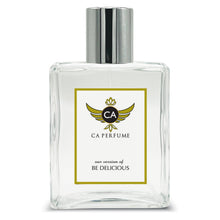
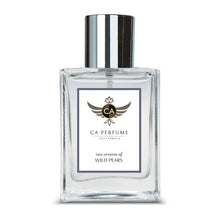
Great class packaging and the scent is spot on!
I loove this scent. It smells like the original at a reasonable price. It brings back great memories and it is spot on!
A springlike, green-white floral with radiant freshness.
Lily of the valley is a heart note in perfumery, prized for its green, dewy, and soapy floral character. Its scent is recreated using hydroxycitronellal, Lilial, and Lyral, as the natural flower is a ‘mute’—yielding no extractable oil.
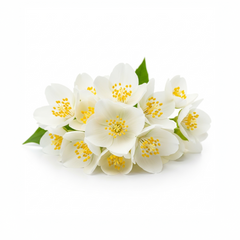
Lily of the valley (Convallaria majalis) is renowned in perfumery for its uniquely fresh, green, and slightly soapy floral scent. The scent profile is often described as a blend of green leaves, delicate white petals, and subtle citrus facets, with a gentle sweetness reminiscent of jasmine but without indolic heaviness. On a molecular level, the signature aroma is recreated with hydroxycitronellal (CAS 107-75-5), Lilial (butylphenyl methylpropional, CAS 80-54-6), and Lyral (hydroxyisohexyl 3-cyclohexene carboxaldehyde, CAS 31906-04-4), none of which are present in the natural flower but are synthesized to mimic its olfactory signature. This synthetic reconstruction is necessary because lily of the valley is a 'mute flower'—its scent cannot be captured by distillation or extraction. In perfumery, lily of the valley is typically classified as a heart note, providing radiant clarity and a sense of springtime freshness to compositions. It is used at concentrations ranging from 0.5% to 5% in the heart of floral, green, and aldehydic fragrances. The note is highly interactive with skin chemistry; on warmer or more acidic skin, the green and citrus facets become more pronounced, while on cooler or neutral skin, the soapy and powdery aspects are more evident. Its molecular structure allows it to act as an olfactory bridge, seamlessly connecting other floral notes like rose and jasmine or freshening heavier bases. Lily of the valley in perfumery is exemplified by iconic fragrances such as Diorissimo by Christian Dior (1956, Edmond Roudnitska), which set the standard for muguet soliflores, and Penhaligon’s Lily of the Valley (1976, Michael Pickthall), which highlights its green, dewy, and slightly woody nuances. More contemporary uses include Maison Martin Margiela’s Springtime in a Park (2019), where it is paired with pear and jasmine for a photorealistic spring effect.
Lily of the valley’s scent is shaped by its native woodland habitats in Europe and Asia, where cool temperatures and moist, humus-rich soils foster its green, dewy aroma. While not cultivated for extraction, regional differences in blooming season and flower size influence its symbolic use in perfumery.
Lily of the valley (Convallaria majalis L., family Asparagaceae) is native to the cool temperate woodlands of Eurasia and North America, with wild populations found in Europe, Russia, and parts of East Asia. The plant is cultivated ornamentally in France (notably in the region of Nantes), Poland, and the Netherlands for cut flowers and traditional May Day bouquets, but not for fragrance extraction. Attempts to extract the scent via steam distillation, solvent extraction (petroleum ether, butane), or even modern CO2 extraction yield either negligible or non-representative oils—typically less than 1% yield, with the resulting product lacking the characteristic muguet aroma. The flower’s volatile aroma compounds are produced only at the moment of release and are not stored in the tissue, making commercial extraction unviable. As a result, all lily of the valley notes in perfumery are synthetic reconstructions. The first key molecule, hydroxycitronellal, was synthesized in 1905 by German chemist Hermann Knoll (Knoll & Co.), followed by commercial launches such as Laurine (Givaudan, 1906). Subsequent advances introduced Lilial (Givaudan, 1956, CAS 80-54-6), Lyral (IFF, 1958, CAS 31906-04-4), and more recently, Mahonial (Givaudan, 2010s) and Lilybelle (Symrise). The cost of these synthetics ranges from $20–$200/kg, compared to the hypothetical cost of natural extraction, which would exceed $10,000/kg for a non-representative product. Sustainability is a key advantage of synthetics: no wild harvesting is required, and production is scalable and consistent. However, regulatory restrictions (e.g., EU bans on Lilial and Lyral due to allergenicity) have driven ongoing innovation in new muguet molecules.
The Nantes region is famed for its May Day muguet tradition, with local flowers prized for their intense green freshness and delicate white bells. France is the symbolic heart of muguet in perfumery, though not a commercial source of extract.
Poland’s temperate forests yield wild Convallaria majalis with a slightly spicier, more herbal scent profile, reflecting higher soil mineral content and cooler spring temperatures.
Dutch horticulturalists cultivate lily of the valley for ornamental use, producing robust, large-flowered varieties with a pronounced green-leaf aroma, though not for fragrance extraction.
Convallaria keiskei, the Japanese lily of the valley, is native to Hokkaido and northern Honshu. Its smaller, more delicate blooms are celebrated in local festivals, with a lighter, slightly citrusy scent.
Natural lily of the valley oil is not commercially available, as all extraction methods fail to capture the true scent. Instead, perfumers rely on synthetic molecules to recreate its profile. The most historically important are hydroxycitronellal (CAS 107-75-5), Lilial (butylphenyl methylpropional, CAS 80-54-6), and Lyral (hydroxyisohexyl 3-cyclohexene carboxaldehyde, CAS 31906-04-4). Hydroxycitronellal provides the core green-floral note, Lilial adds creamy, powdery facets, and Lyral contributes a fresh, watery nuance. Other supporting molecules include cyclamen aldehyde (CAS 103-95-7), Bourgeonal (CAS 18127-01-0), and Mahonial (CAS 37677-14-8). Synthetic muguet molecules offer superior stability, longevity, and batch consistency compared to hypothetical natural extracts. They are also more sustainable, as no wild harvesting is required. However, some key synthetics (notably Lilial and Lyral) have been banned or restricted in the EU due to allergenic potential, prompting the development of new alternatives such as Lilybelle (Symrise) and Nympheal (Givaudan). Famous fragrances using synthetic lily of the valley include Diorissimo (Dior, 1956), which relied on hydroxycitronellal and supporting aldehydes, and Guerlain Muguet (annual, since 1908), which has reformulated its muguet accord multiple times to comply with regulations. The HumanSafe™ platform at CA Perfume ensures full transparency and regulatory compliance for all lily of the valley aroma chemicals used.
Lily of the valley has played a pivotal role in perfumery since the early 20th century, especially in soliflore and floral-green compositions. The archetype is Diorissimo by Christian Dior (1956), composed by Edmond Roudnitska, which set the standard for photorealistic muguet using hydroxycitronellal, Lilial, and supporting aldehydes. Guerlain’s annual Muguet (first launched in 1908, with modern versions by Thierry Wasser) is another benchmark, reformulated over the decades to comply with evolving regulations. Penhaligon’s Lily of the Valley (1976, Michael Pickthall) offers a classic English interpretation with green and woody undertones. In contemporary perfumery, Maison Martin Margiela’s Springtime in a Park (2019, Jérôme Epinette) uses modern muguet molecules to evoke a dewy, pear-laced spring landscape, while Frederic Malle’s Synthetic Jungle (2021, Anne Flipo) explores a hyperreal, green-muguet accord. These fragrances demonstrate lily of the valley’s versatility: as a dominant soliflore, a bridge note in bouquets, or a freshening accent in green or aldehydic structures. CA Perfume’s collection draws inspiration from this lineage, offering both classic and modern muguet interpretations.
A photorealistic lily of the valley accord blends hydroxycitronellal (35–40%), rose (20–25%), cyclamen aldehyde (15–20%), and green leaf alcohols (20–25%). Hydroxycitronellal provides the core green-floral signature; rose supplies a subtle, petal-like sweetness via shared damascenone content; cyclamen aldehyde adds watery, ozonic facets; green leaf alcohols (cis-3-hexenol) reinforce the dewy, leafy freshness. Together, these molecules create the illusion of fresh muguet blossoms.
Hydroxycitronellal forms the backbone of the muguet accord, delivering the signature green, soapy-floral note through its high olfactory threshold and volatility.
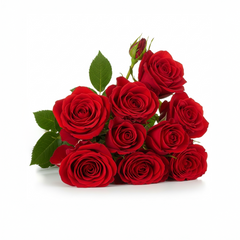
Rose absolute or damascenone-rich rose molecules provide a petal-like sweetness and subtle fruitiness, bridging the muguet accord to other florals.
Cyclamen aldehyde introduces watery, ozonic, and slightly metallic nuances, enhancing the dewy, fresh impression of the muguet accord.
cis-3-Hexenol and related alcohols impart a sharp, grassy-green note, reinforcing the leafy, springlike freshness characteristic of natural lily of the valley.
Lily of the valley fragrances evolve from crisp, citrus-green top notes to a radiant, soapy-floral heart and a soft, musky base. High-volatility aldehydes and green alcohols evaporate quickly, revealing the persistent muguet accord built on hydroxycitronellal and supporting florals.
The opening features high-volatility molecules such as aldehydes (C-8, C-9, C-12) and green alcohols (cis-3-hexenol), creating a burst of dewy grass, citrus zest, and fresh air. These compounds evaporate rapidly, setting a clean, uplifting stage for the heart.
The core muguet accord emerges, dominated by hydroxycitronellal, Lilial, and Lyral, supported by rose and jasmine molecules. This stage is intensely floral, soapy, and slightly sweet, with a radiant, photorealistic freshness.
As the fragrance dries down, soft musks (e.g., galaxolide) and subtle woody notes (sandalwood, cedar) provide a gentle, clean foundation. The muguet impression lingers, but with a powdery, skin-like finish due to the persistence of low-volatility musks.
Lily of the valley’s journey in perfumery spans centuries, from medieval symbolism to modern synthetic innovation. Its mute nature spurred chemists and perfumers to develop new aroma molecules, shaping the evolution of floral perfumery.
King Charles IX of France receives a lily of the valley sprig on May 1 and decrees it be given as a token of good luck each year, cementing the flower’s association with happiness and spring.
German chemist Hermann Knoll synthesizes hydroxycitronellal, the first key molecule for recreating the muguet scent, enabling photorealistic lily of the valley accords in perfumery.
Edmond Roudnitska creates Diorissimo for Christian Dior, using hydroxycitronellal, Lilial, and supporting aldehydes to set the standard for muguet soliflores.
EU regulations restrict Lilial and Lyral due to allergenicity, prompting the development of new muguet molecules such as Mahonial (Givaudan) and Lilybelle (Symrise).
Fragrances like Maison Martin Margiela’s Springtime in a Park and Frederic Malle’s Synthetic Jungle showcase new muguet molecules, reflecting advances in sustainable and allergen-free perfumery.
Understanding how to layer lily of the valley is key to achieving harmonious blends. Its green-floral molecules (hydroxycitronellal, Lilial) pair best with notes that share aldehydic, citrus, or soft musk facets, ensuring molecular compatibility and olfactory balance.
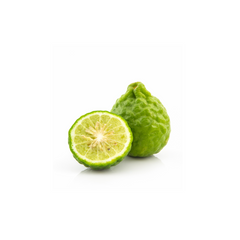
Layer with citrus notes (bergamot, grapefruit) to amplify the green, dewy facets of lily of the valley. Shared aldehydes and green alcohols create a seamless, sparkling effect, as seen in Acqua di Parma Lily of the Valley, where bergamot and grapefruit accentuate the muguet accord.
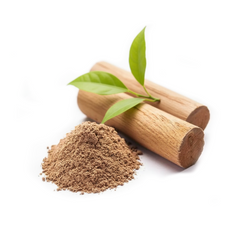
Pair with soft woods (sandalwood, cedar) or musks to ground the volatile muguet molecules. The fixative properties of musks (e.g., galaxolide) slow evaporation, producing a powdery, skin-like finish reminiscent of Penhaligon’s Lily of the Valley and Guerlain Muguet.
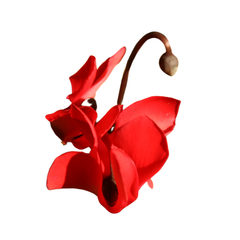
Combine with rose or jasmine for a seamless bouquet, leveraging shared damascenone and ionone content. This molecular bridge enhances the floral heart, as demonstrated in Diorissimo and Maison Martin Margiela Springtime in a Park.
In cold weather, lily of the valley’s volatile molecules evaporate slowly, resulting in a softer, more intimate scent. Apply to pulse points and layer with woods or musks to enhance longevity and add warmth.
Spring’s mild temperatures and moderate humidity allow the muguet accord to bloom fully, projecting its green, dewy freshness. Apply lightly to neck and wrists for a photorealistic, uplifting effect.
Heat and humidity increase the volatility of muguet molecules, intensifying projection but shortening longevity. Apply sparingly and consider layering with citrus or aquatic notes to maintain freshness throughout the day.
For consistent performance, apply lily of the valley fragrances to well-moisturized skin and avoid direct sunlight, which can degrade delicate aroma chemicals. Layer with soft musks or green notes to adapt to seasonal shifts.
Strategic application enhances the luminous, green character of lily of the valley and maximizes its projection and longevity.
Applying to the neck leverages body heat and pulse points, accelerating the evaporation of top aldehydes and green notes for an immediate, uplifting effect.
This area is slightly cooler, allowing the muguet heart to develop more gradually and preserving the floral-soapy core for longer wear.
Pulse points on the wrists enhance diffusion of volatile muguet molecules, while frequent movement helps project the scent’s green, dewy facets.
Spraying on hair provides a sustained, subtle release of the muguet accord, as hair fibers trap and gradually release the fragrance’s lighter molecules.
Layer lily of the valley with a neutral moisturizer or unscented body oil to anchor the volatile top notes and extend the heart’s longevity on skin.
These Lily of the Valley-based fragrances scored highest on the MEI™ Mood Architecture Framework — measuring how a scent may influence your emotional state.
These Lily of the Valley-based fragrances have the highest product-level HumanSafe™ scores in this ingredient collection.
Almost spicy, so green and sweet, with hints of lemon: that’s lily of the valley – and a more spring-like scent it’s hard to imagine.
Lily of the valley is a ‘mute flower’—its scent cannot be extracted, so perfumers rely on synthetic molecules like hydroxycitronellal and Lilial to recreate its photorealistic freshness.
Frequently asked questions about lily of the valley in perfumery.
Lily of the valley in perfume is characterized by a green, soapy, and sweet floral scent with subtle citrus and watery facets. The note is photorealistically reconstructed using molecules like hydroxycitronellal and Lilial, resulting in a fresh, springlike effect that is both uplifting and clean. This note is often described as a blend of dewy leaves, white petals, and soft musk, distinct from the heavier, indolic aroma of jasmine or the heady richness of true lilies.
Lily of the valley is typically used as a heart (middle) note in fragrance compositions. Its key molecules, such as hydroxycitronellal, have moderate volatility, allowing the muguet accord to persist after the top notes fade but before the base notes fully emerge. In some modern fragrances, it may also appear in the top for a burst of green freshness, but its primary role is in the heart.
Lily of the valley is favored in niche perfumery for its ability to impart clarity, radiance, and a sense of natural freshness to compositions. Its synthetic nature allows for precise control over its intensity and interaction with other notes, making it a versatile tool for perfumers seeking to evoke springtime, purity, or green floral landscapes. Iconic niche fragrances like Frederic Malle’s Synthetic Jungle and Maison Martin Margiela’s Springtime in a Park showcase its modern appeal.
Lily of the valley fragrance uses often include pairing with rose, jasmine, cyclamen, hyacinth, and green notes (such as galbanum or green leaf alcohols). It also blends well with citrus (bergamot, grapefruit) for added freshness, and with soft musks or sandalwood to provide a gentle, powdery base. These combinations leverage shared molecular components (e.g., damascenone, ionones) for seamless olfactory harmony.
Yes, lily of the valley perfumes are well-suited for summer and warm climates due to their high volatility and light, refreshing character. The green, dewy facets project more strongly in heat, though longevity may be reduced. Applying sparingly and layering with citrus or aquatic notes can help maintain freshness throughout the day.
A lily of the valley-centric fragrance typically lasts 4–6 hours in Eau de Parfum format, reflecting the volatility of its key molecules. Longevity can be extended by layering with fixatives such as musk or sandalwood, or by applying to moisturized skin. In lighter formats (EDT), the scent may fade after 2–4 hours.
Yes, lily of the valley is highly compatible for layering due to its green-floral molecular structure. It blends well with citrus, soft woods, musks, and other florals, creating harmonious, personalized scents. For example, layering with bergamot enhances freshness, while pairing with rose or jasmine creates a lush bouquet. Always test combinations for balance and projection.
For those new to lily of the valley, classic options like Diorissimo (Dior), Penhaligon’s Lily of the Valley, and Guerlain Muguet offer benchmark interpretations. Modern choices include Maison Martin Margiela Springtime in a Park and Acqua di Parma Lily of the Valley, which showcase the note in contemporary, wearable forms. These fragrances highlight the photorealistic, clean, and uplifting aspects of muguet.
When selecting a lily of the valley fragrance at CA Perfume, consider the desired intensity (EDT vs. EDP), supporting notes (citrus, woods, musks), and seasonality. Review scent pyramids and ingredient transparency via the HumanSafe™ platform to ensure regulatory compliance and allergen safety. Sampling different blends can help identify your preferred muguet interpretation.
Lily of the valley perfumes are generally balanced between green, soapy, and sweet facets, making them versatile for daily wear. The soapy quality is clean rather than overpowering, and the sweetness is subtle, avoiding cloying heaviness. Modern muguet fragrances are formulated for broad appeal, suitable for both casual and formal occasions.
Discover classic and modern muguet interpretations at CA Perfume, from radiant soliflores to innovative green-floral blends.
Shop all lily of the valley fragrances at CA Perfume →Lily of the valley (Convallaria majalis L., family Asparagaceae) is native to the cool temperate woodlands of Eurasia and North America, with wild populations found in Europe, Russia, and parts of East Asia. The plant is cultivated ornamentally in France (notably in the region of Nantes), Poland, and the Netherlands for cut flowers and traditional May Day bouquets, but not for fragrance extraction. Attempts to extract the scent via steam distillation, solvent extraction (petroleum ether, butane), or even modern CO2 extraction yield either negligible or non-representative oils—typically less than 1% yield, with the resulting product lacking the characteristic muguet aroma. The flower’s volatile aroma compounds are produced only at the moment of release and are not stored in the tissue, making commercial extraction unviable. As a result, all lily of the valley notes in perfumery are synthetic reconstructions. The first key molecule, hydroxycitronellal, was synthesized in 1905 by German chemist Hermann Knoll (Knoll & Co.), followed by commercial launches such as Laurine (Givaudan, 1906). Subsequent advances introduced Lilial (Givaudan, 1956, CAS 80-54-6), Lyral (IFF, 1958, CAS 31906-04-4), and more recently, Mahonial (Givaudan, 2010s) and Lilybelle (Symrise). The cost of these synthetics ranges from $20–$200/kg, compared to the hypothetical cost of natural extraction, which would exceed $10,000/kg for a non-representative product. Sustainability is a key advantage of synthetics: no wild harvesting is required, and production is scalable and consistent. However, regulatory restrictions (e.g., EU bans on Lilial and Lyral due to allergenicity) have driven ongoing innovation in new muguet molecules.
Lily of the valley has played a pivotal role in perfumery since the early 20th century, especially in soliflore and floral-green compositions. The archetype is Diorissimo by Christian Dior (1956), composed by Edmond Roudnitska, which set the standard for photorealistic muguet using hydroxycitronellal, Lilial, and supporting aldehydes. Guerlain’s annual Muguet (first launched in 1908, with modern versions by Thierry Wasser) is another benchmark, reformulated over the decades to comply with evolving regulations. Penhaligon’s Lily of the Valley (1976, Michael Pickthall) offers a classic English interpretation with green and woody undertones. In contemporary perfumery, Maison Martin Margiela’s Springtime in a Park (2019, Jérôme Epinette) uses modern muguet molecules to evoke a dewy, pear-laced spring landscape, while Frederic Malle’s Synthetic Jungle (2021, Anne Flipo) explores a hyperreal, green-muguet accord. These fragrances demonstrate lily of the valley’s versatility: as a dominant soliflore, a bridge note in bouquets, or a freshening accent in green or aldehydic structures. CA Perfume’s collection draws inspiration from this lineage, offering both classic and modern muguet interpretations.
Natural lily of the valley oil is not commercially available, as all extraction methods fail to capture the true scent. Instead, perfumers rely on synthetic molecules to recreate its profile. The most historically important are hydroxycitronellal (CAS 107-75-5), Lilial (butylphenyl methylpropional, CAS 80-54-6), and Lyral (hydroxyisohexyl 3-cyclohexene carboxaldehyde, CAS 31906-04-4). Hydroxycitronellal provides the core green-floral note, Lilial adds creamy, powdery facets, and Lyral contributes a fresh, watery nuance. Other supporting molecules include cyclamen aldehyde (CAS 103-95-7), Bourgeonal (CAS 18127-01-0), and Mahonial (CAS 37677-14-8). Synthetic muguet molecules offer superior stability, longevity, and batch consistency compared to hypothetical natural extracts. They are also more sustainable, as no wild harvesting is required. However, some key synthetics (notably Lilial and Lyral) have been banned or restricted in the EU due to allergenic potential, prompting the development of new alternatives such as Lilybelle (Symrise) and Nympheal (Givaudan). Famous fragrances using synthetic lily of the valley include Diorissimo (Dior, 1956), which relied on hydroxycitronellal and supporting aldehydes, and Guerlain Muguet (annual, since 1908), which has reformulated its muguet accord multiple times to comply with regulations. The HumanSafe™ platform at CA Perfume ensures full transparency and regulatory compliance for all lily of the valley aroma chemicals used.