Where Karo Karounde Comes From — Origin & Extraction
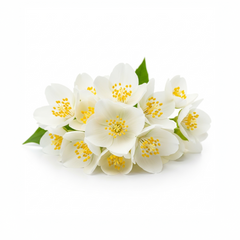
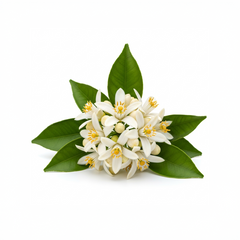
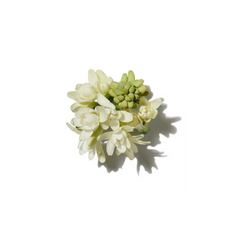
Karo Karounde is derived from the flowers of Leptactina senegambica, a thorny shrub native to the Fouta Djalon mountains in Guinea, West Africa. This plant is related botanically to gardenia and coffee and produces small, star-shaped white flowers with a highly fragrant, jasmine-like scent. The flowers have been traditionally used in West African cultures for perfuming hair, linen, and baths.
Historically, extraction of Karo Karounde absolute involved solvent extraction using hexane or petroleum ether on freshly harvested flowers to produce a waxy reddish-brown concrete, which was then further processed in Grasse, France to yield the absolute. Annual production was extremely limited, with fewer than 50 kilograms produced per year before regulatory and sustainability pressures led to the cessation of commercial extraction in Africa.
Due to its rarity and regulatory challenges, no commercial essential oil or absolute is currently available from the natural source. Instead, perfumers rely on natural reconstructions and synthetic blends to replicate its unique scent profile. The natural absolute, when available, was a viscous orange-yellow liquid with a strong floral odor lasting over 180 hours on smelling strips.
Sustainability concerns include the plant's limited geographic range and the labor-intensive harvesting process, which involved thousands of pickers during a brief flowering season. The synthetic reconstruction, such as Fraterworks' TruAbs®, offers a 100% natural blend without synthetics, produced in France to meet ISO 9235 standards, ensuring supply continuity and environmental responsibility.
Famous Fragrances That Define Karo Karounde in Perfumery
Karo Karounde has appeared in several landmark fragrances, where it functions primarily as a heart or accent note, contributing narcotic white floral richness and exotic depth.
1. Cartier Panthère (1994) – Perfumer: Mathilde Laurent. Karo Karounde anchors the exotic floral heart, blending with gardenia and jasmine to create a sophisticated white floral bouquet.
2. Estée Lauder Pleasures (1995) – Perfumer: Jean-Claude Delville. Here, Karo Karounde adds a sweet, intoxicating floralcy to the composition, complementing peony and lily-of-the-valley.
3. L’Artisan Parfumeur Timbuktu (2004) – Perfumer: Bertrand Duchaufour. Karo Karounde anchors the exotic floral heart, paired with incense and vetiver for a smoky, narcotic effect.
4. Profumi d'Art Art 09 Karo Karounde (2017) – Perfumer: Arturetto Landi. This fragrance showcases Karo Karounde as a dominant note, combined with tuberose, jasmine, and orange blossom, layered over a rich base of vanilla, ambergris, and sandalwood.
5. Olfacto Karo Karoundé (2019) – Designer: Olfacto. A floral woody musk fragrance featuring Karo Karounde prominently, paired with woody notes to create a balanced, modern scent.
CA Perfume recognizes Karo Karounde's legacy in these compositions and incorporates its reconstructed forms to preserve the note’s unique character in contemporary perfumery.
Natural vs Synthetic Karo Karounde in Perfumery
Natural Karo Karounde absolute was historically extracted from Leptactina senegambica flowers but is now effectively unobtainable due to regulatory and sustainability constraints. The natural absolute was prized for its complex narcotic floralcy, combining jasmine-like sweetness, almond-honey warmth, and a tuberose-like richness.
Synthetic reconstructions, such as Fraterworks' TruAbs® Karo Karounde, are 100% natural blends formulated to replicate the original absolute's olfactory profile without synthetic additives. These reconstructions use a combination of natural isolates and aroma chemicals to mimic the note's unique facets, including its floral, almond, and spicy nuances.
Key aroma chemicals involved in synthetic or reconstructed versions include linalool (CAS 78-70-6), benzyl acetate (CAS 140-11-4), and farnesol (CAS 4602-84-0), which contribute to the sweet, floral, and slightly green aspects. Myristic nitrile, a less common metabolite, adds a clean citrusy nuance.
Performance-wise, natural absolute had excellent longevity (>180 hours on smelling strips) and moderate strength, while synthetic reconstructions offer consistent quality and supply with slightly less complexity but improved stability and regulatory compliance.
Cost differentials are significant: natural absolute, when available, commanded prices in the thousands of dollars per kilogram due to rarity, while synthetic blends and natural reconstructions are more affordable and scalable.
CA Perfume sources Karo Karounde ingredients verified through the HumanSafe™ platform, emphasizing transparency and sustainability in ingredient sourcing.