
Ingredient Guide · Fruity Green
Fruity Green Family · Perfumery Note

Granny Smith Apple

The iconic tartness of green apple, reimagined for scent.

Granny Smith Apple is a top note in perfumery, known for its crisp, tart, and aldehydic character. Its scent profile is constructed from esters like ethyl-2-methylbutyrate and hexyl acetate, delivering immediate freshness and high volatility.

Granny Smith Apple
Ingredient Profile

Granny Smith Apple

Fruity Green Family
Family Fruity Green
Note Position Top Note
Usage Level 0.5–2% in formula
Key Origins United States, China, Australia
Iconic In DKNY Be Delicious, Light Blue
The Ingredient

What does Granny Smith Apple smell like and why is it significant in perfumery?

Granny Smith Apple in perfumery is defined by a crisp, tart, and slightly aldehydic scent, closely mimicking the experience of biting into a cold, freshly cut apple. This olfactory character is primarily constructed from a blend of synthetic esters and aldehydes, with ethyl-2-methylbutyrate imparting the signature green apple brightness, and hexyl acetate contributing a waxy, pear-apple nuance. Additional molecules such as Verdox (Fructone) and alpha-damascone are used to round out the apple’s green and cider-like facets. The result is a scent profile that is clean, transparent, and immediately recognizable as Granny Smith Apple. In perfumery, Granny Smith Apple functions almost exclusively as a top note due to its high volatility and immediate impact. Typical concentrations in fine fragrance formulas range from 0.5% to 2%, depending on the desired intensity and the composition’s overall structure. The note’s volatility means it interacts strongly with skin chemistry—on more acidic skin, the tartness is accentuated, while on alkaline skin, the waxy and sweet facets may become more prominent. Its rapid evaporation makes it ideal for imparting a burst of freshness at the opening of a fragrance, often paired with citrus, green, or aquatic notes. Granny Smith Apple in perfumery is exemplified in several contemporary fragrances. Donna Karan DKNY Be Delicious (2004, perfumer Maurice Roucel) is perhaps the most iconic, using a synthetic green apple accord as its signature. Dolce & Gabbana Light Blue (2001, Olivier Cresp) also features Granny Smith Apple in the top notes, where it is blended with Sicilian lemon and cedar for a Mediterranean freshness. These compositions showcase how the note can define the opening character and set the tone for the entire fragrance experience.

0.5–2% in formula
Typical concentration of Granny Smith Apple accord in fine fragrance formulas, balancing impact with volatility for a fresh, photorealistic opening.
5–30 minutes
Average duration of the apple note’s perceptibility on skin, determined by the volatility of key esters like ethyl-2-methylbutyrate and hexyl acetate.
$20–$200/kg
Approximate cost range for synthetic apple aroma chemicals, significantly lower than hypothetical natural extraction attempts.
Origin & Extraction

Where Granny Smith Apple Comes From — Origin & Extraction

The distinctive scent profile of Granny Smith Apple is influenced by its cultivation in temperate regions with well-drained soils and moderate rainfall. The fruit’s volatile composition is shaped by climate, soil minerals, and harvest timing.

The Granny Smith Apple note in perfumery is derived not from direct extraction but from a carefully constructed blend of synthetic aroma molecules. The botanical source, Malus domestica (Granny Smith cultivar), is native to Australia but widely cultivated in temperate regions including the United States, China, and Europe. However, there is no commercially viable essential oil or absolute from apple fruit due to the low yield and instability of its volatile compounds. Instead, the apple scent is reconstructed using key molecules identified in the fruit’s headspace analysis. The primary compounds include ethyl-2-methylbutyrate (CAS 7452-79-1), which provides the characteristic green apple aroma; hexyl acetate (CAS 142-92-7), responsible for the waxy, pear-apple nuance; and Verdox (CAS 68155-66-8), which imparts a fresh, ethereal green apple note. Alpha-damascone and ethyl acetoacetate are also used to add depth and cider-like warmth. These molecules are synthesized via established organic chemistry routes, often starting from petrochemical or renewable feedstocks. The cost of producing a high-quality apple accord is significantly lower than natural fruit extraction, with synthetic apple aroma chemicals averaging $20–$200 per kg, compared to the impractical cost of extracting apple volatiles directly. Sustainability is enhanced by the use of renewable feedstocks and green chemistry practices in modern synthesis. There is ongoing research into biotechnological production of apple aroma compounds via fermentation, which may further improve sustainability and traceability in the future.

US

United States

Washington State is the leading US producer of Granny Smith apples, with Yakima Valley’s volcanic soils and cool nights yielding fruit with high acidity and crisp texture. The US accounts for roughly 10% of global Granny Smith production.

CN

China

The Shandong and Shaanxi provinces are major apple-growing regions in China, producing large volumes of Granny Smith apples. Chinese apples tend to have a slightly less acidic profile due to warmer growing conditions.

AU

Australia

New South Wales, the original home of the Granny Smith cultivar, produces apples with pronounced tartness and firm texture. Australian Granny Smiths are prized for their high malic acid content and bright green color.

Chemistry

Natural vs Synthetic Granny Smith Apple in Perfumery

There is no natural essential oil or absolute of Granny Smith Apple used in perfumery; the note is almost entirely synthetic. The key synthetic molecules include ethyl-2-methylbutyrate (CAS 7452-79-1), hexyl acetate (CAS 142-92-7), and Verdox (Fructone, CAS 68155-66-8). These compounds are chosen for their ability to closely mimic the volatile profile of fresh apple as determined by headspace analysis. Synthetic apple accords offer several advantages: high purity, batch-to-batch consistency, and excellent stability. They provide strong diffusion and immediate impact as top notes, but their volatility means the effect is short-lived unless anchored by fixatives. In contrast, attempts at natural extraction yield weak, unstable, and costly materials with little resemblance to the living fruit. The cost differential is substantial—synthetic apple aroma chemicals cost $20–$200 per kg, while natural extraction (if attempted) would exceed $10,000/kg with poor olfactory results. Famous fragrances such as DKNY Be Delicious (2004) and Dolce & Gabbana Light Blue (2001) rely on synthetic apple accords for their signature freshness. From a sustainability perspective, synthetics reduce pressure on agricultural resources and can be produced using renewable feedstocks. CA Perfume’s HumanSafe™ platform ensures full transparency and traceability for all synthetic apple aroma chemicals used, including IFRA compliance and allergen disclosure.

Natural
Granny Smith Apple Absolute
Cost $3,000–6,000/kg
Method Solvent / CO₂
Character Complex, variable
vs
Synthetic
Safranal & Analogues
Cost $50–200/kg
Method Lab synthesis
Character Consistent, stable
Hall of Fame

Famous Fragrances That Define Granny Smith Apple in Perfumery

2004
dominant note

DKNY Be Delicious

Donna Karan
by Maurice Roucel
cucumbergrapefruitmagnoliasandalwoodamber
2001
top note

Light Blue

Dolce & Gabbana
by Olivier Cresp
Sicilian lemoncedarjasminebamboo
2006
accent note

Nina

Nina Ricci
by Olivier Cresp, Jacques Cavallier
pralinepeonylemoncedar
1996
accent note

All About Eve

Joop!
by Michel Almairac
cinnamonjasminevanilla
2017
dominant note

201 Granny Smith, Lily-of-the-Valley, Pear

Bon Parfumeur
by Philippe Romano
pearlily-of-the-valleymagnoliavetiver

Granny Smith Apple has become a defining note in modern perfumery, particularly in fresh, fruity, and green compositions. One of the earliest and most iconic uses is Donna Karan DKNY Be Delicious (2004, perfumer Maurice Roucel), where a synthetic green apple accord is the unmistakable signature. Dolce & Gabbana Light Blue (2001, Olivier Cresp) employs Granny Smith Apple in the top notes, paired with Sicilian lemon and cedar to evoke Mediterranean freshness. Nina Ricci Nina (2006, Olivier Cresp and Jacques Cavallier) features a candied Granny Smith Apple note, blending it with praline and peony for a playful, gourmand effect. Joop! All About Eve (1996, Michel Almairac) is another classic, using green apple as a crisp, tart accent in a floral-fruity context. Bon Parfumeur 201 (2017, Philippe Romano) highlights Granny Smith Apple alongside lily-of-the-valley and pear for a modern, unisex freshness. Other notable examples include Elizabeth Arden Untold Eau Légère (2014), which uses Granny Smith Apple in the top notes for a sparkling, effervescent opening, and Demeter Jolly Rancher New Green Apple (2012), which focuses on a photorealistic green apple accord. These fragrances demonstrate the versatility of Granny Smith Apple in both mainstream and niche perfumery. CA Perfume’s collection draws inspiration from this lineage, offering contemporary interpretations of the apple note in various olfactory contexts.

The Accord

How is a captivating Granny Smith Apple accord crafted?

A classic Granny Smith Apple accord is built from: Ethyl-2-methylbutyrate 25–30%, Hexyl Acetate 20–25%, Verdox (Fructone) 20–25%, and Alpha-Damascone 25–30%. Ethyl-2-methylbutyrate provides the sharp, tart green apple character. Hexyl acetate adds waxy, pear-like freshness. Verdox imparts an ethereal, juicy green nuance, while alpha-damascone gives subtle cider warmth and depth. Together, these molecules create a photorealistic, crisp apple impression.

30%

Ethyl-2-methylbutyrate

25–30% of blend

This fruity ester is the primary molecule responsible for the green apple aroma, providing the sharp, tart, and juicy character essential to Granny Smith Apple accords.

25%

Hexyl Acetate

20–25% of blend

Hexyl acetate imparts a waxy, pear-apple freshness and supports the apple’s crisp, clean top note through its high volatility and natural occurrence in apple headspace.

25%

Verdox (Fructone)

20–25% of blend

Verdox (Fructone) adds an ethereal, juicy green nuance, enhancing the apple’s freshness and increasing the accord’s diffusion and transparency.

30%

Alpha-Damascone

25–30% of blend

Alpha-damascone introduces subtle cider-like warmth and depth, balancing the tartness and providing a naturalistic finish to the apple accord.

The Olfactory Layers

How Granny Smith Apple Evolves on Skin

Granny Smith Apple unfolds rapidly in the olfactory pyramid, with high-volatility esters dominating the first 15 minutes. The top note delivers an immediate, photorealistic burst of tart, crisp freshness, which quickly transitions to softer, waxy-green and slightly sweet nuances as the more volatile molecules evaporate. The heart and base are typically supported by floral, woody, or musky notes to extend the apple’s fleeting presence.

I
Top notes
0–15 min
Crisp Tartness

The opening is defined by ethyl-2-methylbutyrate and hexyl acetate, which evaporate quickly to create a sharp, tart, and juicy green apple impression. These high-volatility esters provide the initial impact and are responsible for the immediate, mouthwatering freshness associated with Granny Smith Apple.

crisptartaldehydic
II
Heart notes
20–60 min
Juicy Green Freshness

As the top esters dissipate, Verdox (Fructone) and subtle floral or green notes emerge, lending a soft, juicy, and slightly sweet character. The heart is less intense but maintains a clean, green freshness, often supported by lily-of-the-valley or peony accords.

juicygreentransparent
III
Base notes
Several hours
Soft Cider Warmth

The apple note fades rapidly, leaving behind faint traces of alpha-damascone and musky or woody fixatives. These molecules provide a gentle cider warmth and a soft, skin-like finish, ensuring the apple’s memory lingers subtly in the composition.

softcider-likemusky
TOP NOTES Crisp Tartness 0–15 minutes HEART NOTES Juicy Green Freshness 20–60 minutes BASE NOTES Soft Cider Warmth Several hours
Through the Ages

The Story of Granny Smith Apple in Perfumery

Granny Smith Apple’s journey in perfumery reflects advances in aroma chemistry and changing consumer preferences for fresh, fruity notes.

1868

Granny Smith Cultivar Discovered

The Granny Smith apple variety is first cultivated by Maria Ann Smith in Eastwood, New South Wales, Australia. Its tart, crisp profile becomes a global standard for green apples.

1970s

Headspace Analysis Enables Apple Reconstruction

Advances in headspace gas chromatography allow perfumers to identify and replicate the volatile compounds responsible for fresh apple aroma, leading to the first photorealistic apple accords.

1996

Joop! All About Eve Launches

Michel Almairac creates Joop! All About Eve, one of the first mainstream fragrances to feature a prominent Granny Smith Apple note, marking the start of the green apple trend.

2004

DKNY Be Delicious Popularizes Green Apple

Maurice Roucel’s DKNY Be Delicious uses a synthetic Granny Smith Apple accord as its signature, becoming an international bestseller and defining the note for a new generation.

2017

Modern Niche and Unisex Apple Fragrances

Bon Parfumeur 201 (Philippe Romano) and other niche releases explore Granny Smith Apple in unisex and experimental contexts, pairing it with pear, lily-of-the-valley, and musks.

The Art of Layering

How to Layer Granny Smith Apple

Understanding how to layer Granny Smith Apple involves pairing it with notes that share molecular affinities or provide olfactory contrast. The high volatility of apple esters means they pair best with fixatives or complementary top notes. For how to layer Granny Smith Apple, consider molecular bridges and masking effects.

01

Enhance Sweetness

Layering Granny Smith Apple with vanilla or caramel notes leverages olfactory masking, where vanillin’s sweet threshold softens the apple’s tartness. This combination is demonstrated in Nina Ricci Nina, where apple and praline create a playful, gourmand effect.

02

Add Depth

Pairing with woody or amber notes (e.g., cedar, amberwood) provides a molecular anchor for the volatile apple esters. In Dolce & Gabbana Light Blue, cedar and amber extend the apple’s presence and create a Mediterranean freshness.

03

Brighten with Citrus

Combining Granny Smith Apple with citrus notes like bergamot or lemon enhances the top note’s radiance through shared esters (e.g., ethyl butyrate), as seen in DKNY Be Delicious and Bon Parfumeur 201.

Wear It Right

How to Wear Granny Smith Apple Like a Pro

Seasonal Guide

Fall & Winter

In cooler weather, Granny Smith Apple’s freshness is subdued, and its tartness lingers longer. Layer with warm notes like caramel, amber, or woods to create a cozy, gourmand effect. Apply to pulse points under clothing to enhance longevity.

Spring

Spring’s mild temperatures allow the apple note to shine with balanced projection and longevity. Pair with floral or green notes for a light, uplifting effect. Apply to neck and wrists for optimal diffusion.

Summer

Heat increases the volatility of apple esters, resulting in a more intense but shorter-lived freshness. Reapply as needed, and consider layering with aquatic or citrus notes to maintain brightness in high humidity.

Year-Round Tip

For consistent performance, layer Granny Smith Apple fragrances with musks or light woods to anchor the top note. Adjust application amount based on temperature and desired intensity.

Application Points

Strategic application enhances Granny Smith Apple’s fleeting top note, maximizing freshness and projection.

1

Neck

Applying to the neck ensures rapid diffusion of volatile apple esters, providing an immediate burst of freshness close to the nose and those nearby.

2

Behind the Ears

This pulse point radiates heat, accelerating evaporation of the apple note for a quick, bright impression. Ideal for social settings where first impressions matter.

3

Inner Wrists

Wrist application allows for easy reapplication and sampling throughout the day. The warmth of the skin helps project the apple note during gestures.

4

Hair

Spraying lightly on hair provides a subtle, lingering apple freshness as the esters are released gradually with movement.

★

Pro Tip

Layer Granny Smith Apple fragrances over unscented moisturizer to slow evaporation and extend the top note’s presence.

Mood Architecture™

Top Granny Smith Apple Fragrances by Mood Score

These Granny Smith Apple-based fragrances scored highest on the MEI™ Mood Architecture Framework — measuring how a scent may influence your emotional state.

Highest MEI Score
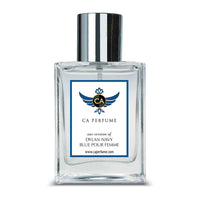
Dylan Navy Blue Pour Femme — Dylan Blue Pour Femme Alternative Perfume
6.7
MEI™
Primary Fresh
Secondary Romantic
Confidence
6.27
Presence
6.97
Mood Lift
7.4
Identity
6.7
Warmth
7.0
Social Ease
6.78
Energy
3.73
" I am radiant.
View full mood profile →
HumanSafe™

Top Granny Smith Apple Fragrances by HumanSafe™ Score

These Granny Smith Apple-based fragrances have the highest product-level HumanSafe™ scores in this ingredient collection.

Highest HumanSafe™ Score
Dylan Navy Blue Pour Femme — Dylan Blue Pour Femme Alternative Perfume
A-
HumanSafe™ Score Generally Safe
Safest Evaluated Ingredients EDP
OXACYCLOHEPTADEC-10-EN-2-ONE Evaluated ingredient ISS 10.0
AQUA Solvent / Carrier ISS 10.0
ACETIC ACID, PHENYLMETHYL ESTER Evaluated ingredient ISS 10.0
BENZYL SALICYLATE Evaluated ingredient ISS 9.0
3-BUTEN-2-ONE, 3-METHYL-4-(2,6,6-TRIMETHYL-2- Evaluated ingredient ISS 8.0
2-HEXENE, 6,6-DIMETHOXY-2,5,5-TRIMETHYL- Evaluated ingredient ISS 8.0
View full safety profile →
Expert Voices

What Masters Say About Granny Smith Apple

“
Apple in perfumery is a rush of cut-fruit freshness — the first bite of a cold Granny Smith, not the warm spice of baked pie. A waxy-green quality from hexyl acetate and a sparkling ester brightness from ethyl-2-methylbutyrate.
Première Peau Editorial
“
The note is almost entirely synthetic — constructed from esters, aldehydes, and ketones that together approximate the experience of biting into a fresh apple.
CA Perfume Editorial
Common Questions

Frequently Asked Questions

Answers to common questions about Granny Smith Apple in perfumery.

Granny Smith Apple in perfume is characterized by a crisp, tart, and aldehydic freshness, closely resembling the aroma of a freshly cut green apple. The scent profile is constructed from synthetic esters such as ethyl-2-methylbutyrate and hexyl acetate, which deliver a photorealistic, mouthwatering impression. The note is immediately recognizable, providing a sharp, juicy opening that quickly transitions to softer, waxy-green and slightly sweet nuances. It is most often used as a top note in modern fruity-floral and green compositions.

Granny Smith Apple is almost exclusively used as a top note in perfumery. Its high volatility and immediate impact make it ideal for the opening of a fragrance, where it imparts a burst of freshness and tartness. The apple note typically lasts 5–30 minutes before fading, and is often supported by floral, citrus, or woody notes in the heart and base.

Granny Smith Apple is favored in niche perfumery for its ability to impart a modern, photorealistic freshness that appeals to contemporary tastes. The note’s versatility allows it to be paired with a wide range of ingredients, from florals to woods to gourmands. Its synthetic construction enables precise control over intensity and character, making it a popular choice for perfumers seeking a distinctive, memorable top note.

Granny Smith Apple fragrance uses often involve pairing with citrus notes (bergamot, lemon), florals (peony, lily-of-the-valley, rose), and woody or musky bases (cedar, amber, musk). These combinations enhance the apple’s freshness, extend its longevity, and create harmonious transitions through the fragrance pyramid.

Yes, Granny Smith Apple perfumes are particularly well-suited for summer and hot weather due to their crisp, refreshing character. The high volatility of apple esters means the note projects well in heat, providing an uplifting and cooling effect. However, reapplication may be necessary as the note fades more quickly in high temperatures.

The Granny Smith Apple note itself is short-lived, typically lasting 5–30 minutes on skin due to the volatility of its key esters. The overall fragrance may last several hours, with the apple impression giving way to supporting heart and base notes. Longevity can be extended by layering with fixatives or applying to moisturized skin.

Yes, Granny Smith Apple can be effectively layered with other fragrances, especially those featuring citrus, floral, or woody notes. Layering enhances the apple’s freshness and allows for creative combinations. For example, pairing with vanilla or caramel creates a gourmand effect, while combining with cedar or amber adds depth and longevity.

Recommended entry points include DKNY Be Delicious (Donna Karan), Dolce & Gabbana Light Blue, and Nina Ricci Nina. These fragrances showcase the apple note in accessible, well-balanced compositions and are widely available. Each offers a different interpretation, from crisp and clean to playful and gourmand.

When selecting a Granny Smith Apple fragrance at CA Perfume, consider the desired intensity, supporting notes, and seasonality. Look for compositions that balance the apple’s tartness with florals, woods, or musks for optimal longevity and versatility. CA Perfume’s collection offers a range of apple-centric scents to suit various preferences.

Granny Smith Apple in fragrance is primarily tart and crisp, with only subtle sweetness. The tartness is driven by esters like ethyl-2-methylbutyrate, while hexyl acetate and Verdox add a soft, waxy-green nuance. Some compositions may enhance the sweetness by pairing with vanilla or caramel, but the dominant impression remains fresh and tart.

Fruity Green Collection

Explore Our Top Granny Smith Apple Fragrances

Discover CA Perfume’s most popular Granny Smith Apple scents, each crafted to highlight the note’s crisp, tart character in a variety of olfactory contexts.

Shop all granny smith apple fragrances at CA Perfume →

Where Granny Smith Apple Comes From — Origin & Extraction

The Granny Smith Apple note in perfumery is derived not from direct extraction but from a carefully constructed blend of synthetic aroma molecules. The botanical source, Malus domestica (Granny Smith cultivar), is native to Australia but widely cultivated in temperate regions including the United States, China, and Europe. However, there is no commercially viable essential oil or absolute from apple fruit due to the low yield and instability of its volatile compounds. Instead, the apple scent is reconstructed using key molecules identified in the fruit’s headspace analysis. The primary compounds include ethyl-2-methylbutyrate (CAS 7452-79-1), which provides the characteristic green apple aroma; hexyl acetate (CAS 142-92-7), responsible for the waxy, pear-apple nuance; and Verdox (CAS 68155-66-8), which imparts a fresh, ethereal green apple note. Alpha-damascone and ethyl acetoacetate are also used to add depth and cider-like warmth. These molecules are synthesized via established organic chemistry routes, often starting from petrochemical or renewable feedstocks. The cost of producing a high-quality apple accord is significantly lower than natural fruit extraction, with synthetic apple aroma chemicals averaging $20–$200 per kg, compared to the impractical cost of extracting apple volatiles directly. Sustainability is enhanced by the use of renewable feedstocks and green chemistry practices in modern synthesis. There is ongoing research into biotechnological production of apple aroma compounds via fermentation, which may further improve sustainability and traceability in the future.

Famous Fragrances That Define Granny Smith Apple in Perfumery

Granny Smith Apple has become a defining note in modern perfumery, particularly in fresh, fruity, and green compositions. One of the earliest and most iconic uses is Donna Karan DKNY Be Delicious (2004, perfumer Maurice Roucel), where a synthetic green apple accord is the unmistakable signature. Dolce & Gabbana Light Blue (2001, Olivier Cresp) employs Granny Smith Apple in the top notes, paired with Sicilian lemon and cedar to evoke Mediterranean freshness. Nina Ricci Nina (2006, Olivier Cresp and Jacques Cavallier) features a candied Granny Smith Apple note, blending it with praline and peony for a playful, gourmand effect. Joop! All About Eve (1996, Michel Almairac) is another classic, using green apple as a crisp, tart accent in a floral-fruity context. Bon Parfumeur 201 (2017, Philippe Romano) highlights Granny Smith Apple alongside lily-of-the-valley and pear for a modern, unisex freshness. Other notable examples include Elizabeth Arden Untold Eau Légère (2014), which uses Granny Smith Apple in the top notes for a sparkling, effervescent opening, and Demeter Jolly Rancher New Green Apple (2012), which focuses on a photorealistic green apple accord. These fragrances demonstrate the versatility of Granny Smith Apple in both mainstream and niche perfumery. CA Perfume’s collection draws inspiration from this lineage, offering contemporary interpretations of the apple note in various olfactory contexts.

Natural vs Synthetic Granny Smith Apple in Perfumery

There is no natural essential oil or absolute of Granny Smith Apple used in perfumery; the note is almost entirely synthetic. The key synthetic molecules include ethyl-2-methylbutyrate (CAS 7452-79-1), hexyl acetate (CAS 142-92-7), and Verdox (Fructone, CAS 68155-66-8). These compounds are chosen for their ability to closely mimic the volatile profile of fresh apple as determined by headspace analysis. Synthetic apple accords offer several advantages: high purity, batch-to-batch consistency, and excellent stability. They provide strong diffusion and immediate impact as top notes, but their volatility means the effect is short-lived unless anchored by fixatives. In contrast, attempts at natural extraction yield weak, unstable, and costly materials with little resemblance to the living fruit. The cost differential is substantial—synthetic apple aroma chemicals cost $20–$200 per kg, while natural extraction (if attempted) would exceed $10,000/kg with poor olfactory results. Famous fragrances such as DKNY Be Delicious (2004) and Dolce & Gabbana Light Blue (2001) rely on synthetic apple accords for their signature freshness. From a sustainability perspective, synthetics reduce pressure on agricultural resources and can be produced using renewable feedstocks. CA Perfume’s HumanSafe™ platform ensures full transparency and traceability for all synthetic apple aroma chemicals used, including IFRA compliance and allergen disclosure.