Where Cedar Comes From — Origin & Extraction
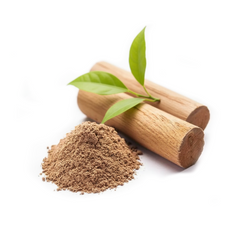
Cedar used in perfumery is derived from several botanical sources, most notably Juniperus virginiana (Virginia or red cedar), Cedrus atlantica (Atlas cedar), and to a lesser extent Cedrus deodara (Himalayan cedar). Virginia cedar, despite its name, is a juniper native to the southeastern United States, while Atlas cedar is indigenous to the Atlas Mountains of Morocco and Algeria. Atlas cedarwood oil is preferred for its slightly sweeter, balsamic profile, while Virginia cedarwood oil is drier and more pencil-like.
The primary producing countries for cedarwood oil are the United States (Virginia and Texas cedar), Morocco (Atlas cedar), and China (Chinese cedar, Cupressus funebris). The US supplies the majority of global cedarwood oil, with annual production exceeding 1,000 metric tons. Extraction is typically performed by steam distillation of wood chips and sawdust, a process conducted at 100–120°C for 8–24 hours, yielding 2–5% essential oil by weight. Solvent extraction is less common but used for absolute production. The resulting oil is filtered and refined to remove impurities, producing a light yellow to amber liquid rich in sesquiterpenes and alcohols.
Natural cedarwood oil costs approximately $20–40/kg for Virginia or Texas types, while Atlas cedar commands higher prices due to limited supply and more labor-intensive harvesting, often exceeding $100/kg. Synthetic cedar aroma chemicals such as cedryl acetate (CAS 77-54-3), Vertofix (IFF), and Cedramber (Firmenich) are widely used for cost efficiency and batch-to-batch consistency, typically priced at $10–30/kg. Sustainability concerns focus on overharvesting of Atlas cedar and habitat loss; most commercial cedarwood oil now comes from sawmill by-products, and IFRA restricts the use of certain cedarwood oils due to potential sensitization. The HumanSafe™ platform verifies the traceability and safety of all cedar materials used in CA Perfume’s supply chain.
Famous Fragrances That Define Cedar in Perfumery
Cedar has shaped the identity of countless fragrances, serving as both a dominant and supporting note across genres. In 1992, Serge Lutens Féminité du Bois (Christopher Sheldrake & Pierre Bourdon) revolutionized the use of cedar by placing Atlas cedar at the heart of a composition that blurred gender lines, pairing it with plum, violet, and spices. Diptyque Tam Dao Eau de Parfum (2003, Daniel Molière) is another landmark, showcasing a creamy blend of Atlas and Texas cedar with sandalwood and cypress, evoking the tranquility of Buddhist temples.
Jean-Claude Ellena’s Terre d’Hermès (2006) employs cedar as a structural base, anchoring citrus and mineral notes with a dry, woody backbone. Bleu de Chanel (2010, Jacques Polge) uses cedar in combination with incense and citrus to create a modern, versatile masculine scent. Byredo Super Cedar (2016, Jérôme Epinette) is a minimalist interpretation, built around ISO E Super and Virginian cedar for a clean, pencil-shaving effect. These fragrances demonstrate cedar’s versatility: as a dominant note (Féminité du Bois), a bridge (Terre d’Hermès), or an accent (Bleu de Chanel).
CA Perfume’s collection draws inspiration from this lineage, offering cedar-centric compositions that highlight both the classic and contemporary facets of this essential woody note.
Natural vs Synthetic Cedar in Perfumery
Natural cedarwood oil is primarily composed of cedrol, alpha-cedrene, and thujopsene, which provide the characteristic dry, woody, and resinous scent. Synthetic alternatives, such as cedryl acetate (CAS 77-54-3), Vertofix (IFF, CAS 8000-27-9), and Cedramber (Firmenich, CAS 67674-46-8), are engineered to mimic or enhance specific facets of cedar’s olfactory profile. Cedryl acetate imparts a creamy, woody nuance, Vertofix offers a dry, pencil-shaving effect, and Cedramber delivers a smooth, ambered woodiness with exceptional diffusion.
Performance-wise, synthetic cedars are prized for their stability, batch consistency, and enhanced longevity, often outperforming natural oils in terms of projection and resistance to oxidation. Natural cedarwood oil, however, is favored in luxury and niche perfumery for its complexity and authenticity. Cost is a significant differentiator: natural Atlas cedarwood oil can exceed $100/kg, while synthetics are available for $10–30/kg. Iconic fragrances such as Diptyque Tam Dao (natural Atlas and Texas cedar) and Escentric Molecules Molecule 01 (featuring ISO E Super, a cedarwood-related molecule) illustrate both approaches. Sustainability is a key concern—synthetic cedar molecules reduce pressure on endangered cedar forests and ensure a reliable supply chain. At CA Perfume, all cedar ingredients are HumanSafe™ verified for traceability, safety, and environmental compliance.