Where Cumin Comes From — Origin & Extraction
Cumin is derived from the dried seeds of Cuminum cyminum, an annual herb in the Apiaceae family. The plant is native to the Mediterranean and South Asia, with archaeological evidence of its use dating back to ancient Egypt. Today, India dominates global cumin production, accounting for approximately 70% of the world’s supply—Gujarat and Rajasthan alone contribute 90% of Indian output, with annual production exceeding 300,000 metric tons. Other significant producers include Iran, Turkey, Egypt, and Syria, each offering subtle differences in aromatic profile: Indian cumin oil tends sharper and more pungent, while Iranian and Turkish oils are rounder and slightly sweeter.
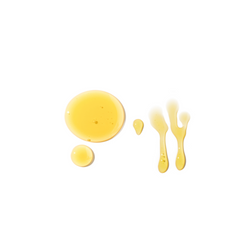
The primary extraction method for perfumery is steam distillation of dried, crushed seeds, yielding a pale yellow to brownish essential oil. Typical yields are 1–2% by weight. Hydrodistillation and, less commonly, microwave-assisted extraction are also used, with the latter offering higher yields (up to 1% vs. 0.16% for steam distillation) and a different chemical profile. The main constituent, cuminaldehyde, varies from 15–50% depending on origin and extraction method. Solvent extraction and supercritical CO₂ extraction are rare but can produce richer, more complex absolutes for niche perfumery.
Natural cumin oil is phototoxic due to furocoumarin content and is IFRA-restricted to 0.4% in leave-on products. The cost of natural cumin oil ranges from $250–400/kg, while synthetic cuminaldehyde (CAS 122-03-2) is available at $30–60/kg, offering greater purity and safety. Sustainability concerns include soil depletion and water use in major producing regions, but cumin’s relatively high yield and annual growth cycle make it less resource-intensive than many other spice crops.
Famous Fragrances That Define Cumin in Perfumery
Cumin’s polarizing, animalic warmth has made it a signature note in some of the most daring and influential fragrances of the past century. In 1953, Rochas Femme (reformulated by Olivier Cresp) introduced cumin as a key component, lending a sensual, lived-in quality to its peach and oakmoss heart. Edmond Roudnitska’s Eau d’Hermès (1951) used cumin to evoke the intimacy of worn leather and citrus, pioneering the use of spice as a skin-like bridge note.
The late 1990s saw cumin’s renaissance in Jean-Claude Ellena’s Cartier Déclaration (1998), where cumin and cardamom create a fresh yet unmistakably human warmth—this fragrance is widely regarded as the modern reference for cumin in perfumery. Alexander McQueen Kingdom (2003, Jacques Cavallier) famously overdosed cumin, pushing the note to the edge of wearability and controversy, while Serge Lutens Muscs Koublaï Khän (1998, Christopher Sheldrake) paired cumin with musks for an unapologetically animalic effect.
In niche perfumery, Maison Francis Kurkdjian Absolue Pour le Soir (2010) uses cumin alongside honey and incense to evoke sensuality and nocturnal intimacy. Le Labo Rose 31 (2006, Daphne Bugey) demonstrates cumin’s ability to add a spicy, corporeal twist to floral compositions. CA Perfume’s cumin-based collection draws inspiration from this lineage, offering IFRA-compliant, HumanSafe™ verified blends that respect both tradition and modern safety standards.
Natural vs Synthetic Cumin in Perfumery
Natural cumin essential oil (CAS 8014-13-9) is a complex mixture dominated by cuminaldehyde (15–50%), with significant contributions from gamma-terpinene, p-cymene, and additional aldehydes such as p-mentha-1,3-dien-7-al. The oil is highly phototoxic due to furocoumarins and is a known dermal sensitizer, leading to strict IFRA limits. Synthetic cuminaldehyde (CAS 122-03-2) is widely used as a safer, more consistent alternative, delivering the characteristic cumin effect without phototoxicity or batch variability. Other aroma chemicals used to replicate cumin’s nuances include gamma-terpinene (CAS 99-85-4), p-cymene (CAS 99-87-6), and 3-hydroxy-3-methylhexanoic acid (HMHA, CAS 33443-10-6), the latter being structurally unrelated but olfactorily similar to human sweat.
Performance-wise, synthetic cuminaldehyde offers greater stability, precise dosing, and reduced risk of skin sensitization. Natural cumin oil, while richer and more nuanced, is more variable and can introduce unwanted phototoxicity or allergenicity. Cost differences are substantial: natural cumin oil is $250–400/kg, while synthetic cuminaldehyde is $30–60/kg. Iconic fragrances such as Cartier Déclaration and Maison Francis Kurkdjian Absolue Pour le Soir rely on synthetic cuminaldehyde for safety and consistency. The HumanSafe™ platform at CA Perfume ensures all cumin-containing formulas are IFRA-compliant and transparently sourced, with batch-level documentation of natural vs. synthetic origin. Sustainability also favors synthetics, as they reduce pressure on agricultural land and water resources.