Ingredient Guide · Floral Fruity
Floral Fruity Family · Perfumery Note

Chinese Osmanthus

A rare floral note evoking apricot, suede, and tea nuances.

Chinese Osmanthus is a heart note in perfumery, prized for its apricot-peach fruitiness and suede-like undertone. Its defining quality comes from delta- and gamma-decalactone, ionones, and linalool oxides, used at 0.5–2% in fine fragrance for nuanced, long-lasting warmth.

Chinese Osmanthus
Ingredient Profile

Chinese Osmanthus

Floral Fruity Family
Family Floral Fruity
Note Position Heart Note
Usage Level 0.5–2% in concentrate
Key Origins China, Japan, Vietnam
Iconic In 1000, Osmanthe Yunnan
The Ingredient

What does Chinese Osmanthus smell like and why is it prized in perfumery?

Chinese Osmanthus (Osmanthus fragrans) is botanically classified within the Oleaceae family, alongside jasmine and lilac. Its scent profile is unique among floral ingredients, dominated by fruity-floral facets reminiscent of ripe apricot, peach, and dried plum, layered with honeyed, suede-like, and faintly leathery undertones. This character is chemically anchored by delta-decalactone (~12%), gamma-decalactone, alpha- and beta-ionone (violet/iris-like), (E)-linalool oxide furanoid (~21%), and linalool (~15%). The interplay of lactones and ionones generates a natural fruitiness rarely found in floral absolutes, while the linalool oxides impart a waxy, slightly oxidized, tea-like nuance. Unlike most florals, osmanthus absolute is less green and more texturally complex, with a medium odor strength and a tenacious drydown. In perfumery, Chinese Osmanthus is primarily used as a heart note, though its volatility allows it to bridge top and heart phases. Typical concentrations in fine fragrance range from 0.5% to 2% of the concentrate, due to its high cost and olfactory impact. On skin, osmanthus interacts with individual chemistry: acidic skin can accentuate its tart, fruity facets, while alkaline skin may amplify the leathery, animalic undertones. Its molecular structure allows it to both project and meld with the wearer's skin, creating an intimate, enveloping aura that is neither overpowering nor fleeting. Chinese Osmanthus in perfumery is exemplified in Hermès Osmanthe Yunnan (2005, Jean-Claude Ellena), where its apricot-tea character is paired with Chinese tea and freesia, and in Parfum d’Empire Osmanthus Interdite (2007, Marc-Antoine Corticchiato), which highlights its synergy with green tea, rose, and leather. These fragrances demonstrate the note’s versatility—serving as both a luminous focal point and a subtle bridge between floral, fruity, and leathery accords.

720–1,000 kg
Amount of fresh osmanthus flowers required to produce just 750–1,000 g of absolute—reflecting extremely low extraction yield and high cost.
0.5–2% in concentrate
Typical concentration of osmanthus absolute in fine fragrance. Higher levels risk overpowering the blend due to its intense fruit-leather profile.
400 hours
Substantivity of osmanthus absolute at 100% concentration—one of the longest-lasting natural floral notes, thanks to its high content of ionones and decanoic acid.
Origin & Extraction

Where Chinese Osmanthus Comes From — Origin & Extraction

Chinese Osmanthus’s scent is shaped by the terroir of southern China—humid subtropical climates, mineral-rich soils, and autumnal temperature swings yield blossoms with heightened apricot and suede notes. Regional cultivation and processing methods further influence olfactory nuance.

Chinese Osmanthus (Osmanthus fragrans) is an evergreen shrub native to southern China, with principal cultivation in Guangxi (notably Guilin), Jiangsu (Suzhou), and Sichuan (Chengdu). Guilin alone harvests approximately 10,000 metric tons of flowers annually, reflecting the region’s deep cultural and agricultural ties to the plant. The blossoms, less than 1 cm in diameter and ranging from white to golden-orange, are harvested by hand or by shaking branches over sheets. The flowers are immediately immersed in brine (saltwater solution) to prevent withering and allow for staged extraction over several months. Extraction for perfumery is performed via solvent extraction, producing a concrete that is subsequently processed with ethanol to yield the absolute. The yield is extremely low: approximately 720–1,000 kg of fresh flowers are required to produce 750–1,000 g of absolute. This low yield, combined with labor-intensive harvesting and limited annual production (only about 1 ton of concrete per year globally), makes osmanthus absolute one of the most expensive floral materials, with prices ranging from $4,000 to $8,000 per kg (2025 data). Synthetic reconstructions, using gamma- and delta-decalactone, ionones, and linalool oxides, cost $50–$200 per kg. China holds a virtual monopoly on osmanthus absolute production, with minor cultivation in Japan and Vietnam. Sustainability efforts are ongoing, with some producers adopting brine preservation and staggered harvesting to minimize waste and reduce pressure on wild populations. Biotechnological approaches are emerging to replicate key aroma molecules, further supporting sustainable supply.

CN

China

Guilin, Guangxi: The world’s largest osmanthus producer, Guilin’s karst limestone soils and humid subtropical climate yield blossoms with pronounced apricot and leathery facets. Annual harvest exceeds 10,000 metric tons. Flowers are preserved in brine before solvent extraction, ensuring maximal aroma capture. No PDO/PGI, but Guilin osmanthus is considered the global standard.

JP

Japan

Kansai region: Japanese kinmokusei (Osmanthus fragrans var. aurantiacus) is celebrated for its delicate, tea-like aroma. Lower production volume than China, but prized for subtlety and clarity. Harvested in autumn, often used for tea scenting and ceremonial purposes.

VN

Vietnam

Northern provinces: Vietnamese osmanthus is cultivated in smaller quantities, with a focus on traditional uses in tea and confections. The warmer, wetter climate produces blossoms with a slightly greener, more honeyed profile. No formal quality designations.

FR

France

Grasse: While not a major producer, Grasse occasionally imports and processes osmanthus absolute for high-end perfumery. French osmanthus is valued for its blending expertise rather than raw material origin.

Chemistry

Natural vs Synthetic Chinese Osmanthus in Perfumery

Natural Chinese Osmanthus absolute is chemically complex, with major constituents including delta-decalactone (CAS 705-86-2), gamma-decalactone (CAS 706-14-9), (E)-linalool oxide furanoid (CAS 1365-19-1), and alpha-ionone (CAS 127-41-3). Synthetic osmanthus accords are typically constructed from combinations of these molecules, along with beta-ionone (CAS 14901-07-6), dihydro-beta-ionone, and cis-jasmone (CAS 488-10-8). These synthetics replicate the apricot, peach, and suede-leather nuances of the natural absolute, but often lack the full textural complexity and nuanced evolution on skin. Performance-wise, synthetic osmanthus accords offer greater batch-to-batch consistency, improved stability, and lower allergen content. However, natural absolute exhibits greater tenacity (up to 400 hours at 100% concentration) and a more dynamic evolution due to its broader spectrum of minor constituents. Cost is a major differentiator: natural absolute ranges from $4,000–$8,000/kg, while synthetic blends are $50–$200/kg. Notable fragrances using natural osmanthus include Hermès Osmanthe Yunnan and Parfum d’Empire Osmanthus Interdite, while many mainstream and niche compositions rely on synthetic reconstructions for affordability and IFRA compliance. Sustainability is a growing concern, as wild osmanthus populations are at risk from overharvesting. Biotechnological production of key aroma molecules and HumanSafe™ verified sourcing platforms are increasingly used to ensure traceability and minimize environmental impact. CA Perfume’s HumanSafe™ platform transparently documents the source, allergen content, and sustainability profile of each osmanthus batch used.

Natural
Chinese Osmanthus Absolute
Cost $3,000–6,000/kg
Method Solvent / CO₂
Character Complex, variable
vs
Synthetic
Safranal & Analogues
Cost $50–200/kg
Method Lab synthesis
Character Consistent, stable
Hall of Fame

Famous Fragrances That Define Chinese Osmanthus in Perfumery

1972
dominant note

1000

Jean Patou
by Jean Kerléo
rosejasminesandalwood
2005
dominant note

Osmanthe Yunnan

Hermès
by Jean-Claude Ellena
Chinese teafreesiaapricot
2007
bridge note

Osmanthus Interdite

Parfum d’Empire
by Marc-Antoine Corticchiato
green tearoseleather
2012
accent

Good Girl Gone Bad

By Kilian
by Alberto Morillas
tuberosejasmineamber
2021
dominant note

Osmanthus 颐和金桂

To Summer
by David Huang
peachjasmine teaamber

Chinese Osmanthus has inspired a lineage of fragrances that showcase its apricot, suede, and tea-like facets. Jean Patou’s 1000 (1972, Jean Kerléo) was among the first Western fragrances to feature osmanthus absolute, pairing it with rose, jasmine, and sandalwood as a luminous heart note. Hermès Osmanthe Yunnan (2005, Jean-Claude Ellena) elevated osmanthus to a starring role, blending it with Chinese tea, freesia, and apricot for a transparent, tea-inflected floral. Parfum d’Empire Osmanthus Interdite (2007, Marc-Antoine Corticchiato) explores the synergy of osmanthus with green tea, rose, and leather, emphasizing its dual fruity-leather character. By Kilian Good Girl Gone Bad (2012, Alberto Morillas) uses osmanthus as a bridge between tuberose, jasmine, and amber, lending a honeyed, peachy warmth. More recently, To Summer Osmanthus 颐和金桂 (2021, David Huang) highlights the note’s cultural roots, pairing it with peach, jasmine tea, and amber for a poetic evocation of autumn in Beijing. These fragrances illustrate the versatility of Chinese Osmanthus—as a dominant note, a bridge, or a subtle accent—across floral, fruity, and leather-amber structures. CA Perfume’s collection draws on this lineage, offering both soliflore and blended interpretations that honor the ingredient’s heritage and complexity.

The Accord

How is a captivating Chinese Osmanthus accord crafted?

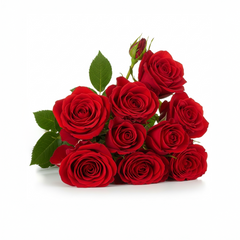
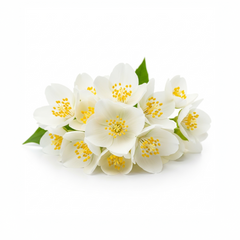
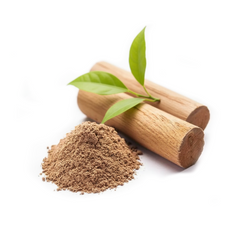
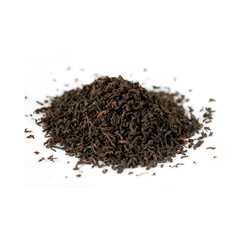
A classic Chinese Osmanthus accord blends Osmanthus absolute (25–30%), Rose absolute (20–22%), Sandalwood (22–25%), and Black Tea (20–23%). Osmanthus provides the apricot-suede core; rose adds a damascenone-rich floral lift; sandalwood supplies creamy, lactonic warmth that extends the fruitiness; black tea (often via theaspirane or linalool oxide) reinforces the tea-like, tannic undertone. This molecular interplay creates a seamless, nuanced floral-fruity-leather accord.

30%

Chinese Osmanthus Absolute

25–30% of blend

Provides the core apricot, peach, and suede-leather facets via delta/gamma-decalactone, ionones, and linalool oxides. Sets the accord’s signature.

22%

Rose Absolute

20–22% of blend

Supplies damascenone and beta-damascenone, amplifying the fruity-floral brightness and bridging osmanthus’s ionone content for a seamless heart.

25%

Sandalwood

22–25% of blend

Rich in santalol, sandalwood imparts creamy, lactonic warmth, extending the fruity facets and supporting osmanthus’s suede undertone.

23%

Black Tea

20–23% of blend

Black tea notes (theaspirane, linalool oxide) reinforce osmanthus’s natural tea nuance, adding tannic, slightly bitter depth and enhancing longevity.

The Olfactory Layers

How Chinese Osmanthus Evolves on Skin

Chinese Osmanthus fragrances evolve from a luminous, fruity-floral opening to a suede-leather heart and a honeyed, musky base. High-volatility lactones and linalool oxides drive the top, while ionones and decanoic acid anchor the drydown.

I
Top notes
0–15 min
Apricot Radiance

The initial impression is bright, fruity, and floral—dominated by delta- and gamma-decalactone (apricot, peach), (E)-linalool oxide, and minor green aldehydes. These high-volatility molecules evaporate quickly, creating a luminous, juicy opening that recalls sun-warmed orchards and fresh blossoms.

ApricotPeachBright Floral
II
Heart notes
20–60 min
Suede Embrace

As the top fades, osmanthus’s signature suede-leather and violet-powdery facets emerge. Alpha- and beta-ionone, dihydro-beta-ionone, and decanoic acid contribute to a soft, tactile warmth, while linalool oxide maintains a tea-like, waxy undertone. The heart is enveloping, intimate, and subtly animalic.

SuedeVioletTea-like
III
Base notes
Several hours
Honeyed Veil

The drydown is honeyed, musky, and faintly tobacco-like, with residual ionones, decanoic acid, and subtle woody notes (from sandalwood or amber in blends). The base lingers with a gentle, powdery sweetness and a soft, skin-like warmth, reflecting osmanthus’s tenacity and complexity.

HoneyedMuskyPowdery
TOP NOTES Apricot Radiance 0–15 minutes HEART NOTES Suede Embrace 20–60 minutes BASE NOTES Honeyed Veil Several hours
Through the Ages

The Story of Chinese Osmanthus in Perfumery

Chinese Osmanthus’s history in perfumery spans millennia of cultural use in China to its modern role in niche and luxury fragrances.

Neolithic Period

Earliest Cultivation in Southern China

Sporopollen evidence from the Zengpiyan cave site (Guangxi) documents osmanthus cultivation as early as 5,000 BCE, establishing its deep roots in Chinese horticulture and ritual.

Tang Dynasty (7th–10th c.)

Cultural Symbolism and Moon Legends

Osmanthus becomes a symbol of immortality and perseverance in Chinese folklore, linked to the Mid-Autumn Festival and the legend of Wu Gang and the lunar osmanthus tree.

18th–19th c.

Introduction to Western Botany

Osmanthus fragrans is described in European botanical texts (Flora Cochinchinensis, 1790), but remains largely unknown in Western perfumery until the 20th century.

1972

First Major Western Use in Jean Patou 1000

Jean Kerléo’s 1000 introduces osmanthus absolute to Western fine fragrance, blending it with rose and jasmine to create a new floral-fruity paradigm.

2005–present

Niche Perfumery and Modern Interpretations

Fragrances like Hermès Osmanthe Yunnan (2005) and Parfum d’Empire Osmanthus Interdite (2007) bring osmanthus to prominence in niche perfumery, emphasizing its apricot, tea, and suede facets.

The Art of Layering

How to Layer Chinese Osmanthus

Understanding how to layer Chinese Osmanthus requires attention to molecular compatibility—shared lactones, ionones, and linalool oxides create seamless blends. Here’s how to layer Chinese Osmanthus for nuanced effects:

01

Enhance Fruitiness

Layer with fragrances containing peach, apricot, or plum (high in gamma- and delta-decalactone) to amplify osmanthus’s natural fruit facets. For example, Hermès Osmanthe Yunnan pairs osmanthus with apricot and tea, creating a radiant, juicy heart. The shared lactones create olfactory synergy, intensifying the impression of ripe stone fruit.

02

Add Depth

Combine with sandalwood, amber, or leather notes to emphasize osmanthus’s suede and powdery base. Cuir de Chine (Les Indémodables) uses sandalwood and amber to extend osmanthus’s leathery warmth, while Parfum d’Empire Osmanthus Interdite layers green tea and leather for a sophisticated, multifaceted drydown.

03

Lighten the Glow

Pair with green tea, citrus (bergamot, grapefruit), or fresh florals to highlight osmanthus’s tea-like and floral brightness. Jo Malone Osmanthus Blossom and Ormonde Jayne Osmanthus both use citrus and green notes to create a translucent, uplifting effect, with hedione or linalool oxide bridging the accords.

Wear It Right

How to Wear Chinese Osmanthus Like a Pro

Seasonal Guide

Fall & Winter

In cooler months, osmanthus’s suede-leather and honeyed base notes become more pronounced, as lower temperatures suppress volatility and extend the drydown. Apply to pulse points under clothing for a cocooning, intimate effect. The note’s warmth and subtle sweetness are ideal for autumn and winter layering.

Spring

Spring’s moderate temperatures highlight osmanthus’s apricot and floral brightness. The note projects well without becoming overwhelming, making it suitable for daytime and transitional weather. Pair with green or tea accords for a fresh, uplifting effect.

Summer

Heat increases the volatility of lactones and linalool oxide, intensifying the fruity top notes but shortening longevity. To prevent rapid evaporation, apply sparingly to cooler areas (inner elbows, behind knees) and consider layering with a light citrus or tea-based fragrance.

Year-Round Tip

Regardless of season, osmanthus’s molecular structure allows it to adapt—on humid days, its tea-like nuances are amplified; on dry days, the powdery base is more prominent. Adjust application and layering partners to suit temperature and humidity for optimal performance.

Application Points

Strategic application enhances osmanthus’s nuanced evolution and projection.

1

Neck

Applying to the neck leverages body heat, accelerating the release of apricot and peach lactones for a luminous opening. Ideal for showcasing the fruity top notes.

2

Behind the Ears

This area maintains moderate warmth and moisture, allowing the suede and tea-like heart to unfold gradually. Enhances the intimate, skin-close character of osmanthus.

3

Inner Wrists

Pulse points on the wrists amplify volatility, emphasizing the transition from fruity top to suede heart. Frequent movement aids gentle diffusion.

4

Hair

Spraying on hair provides a slow, sustained release of osmanthus’s honeyed, powdery base notes. The lower temperature preserves delicate lactones and extends longevity.

Pro Tip

Layer osmanthus with a tea or citrus fragrance on the chest or inner elbows to reinforce its fresh, serene facets and prolong the apricot-suede evolution.

Mood Architecture™

Top Chinese Osmanthus Fragrances by Mood Score

These Chinese Osmanthus-based fragrances scored highest on the MEI™ Mood Architecture Framework — measuring how a scent may influence your emotional state.

Highest MEI Score
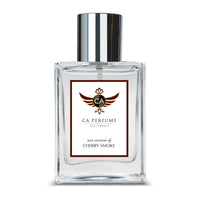
Cherry Smoke — Tom Ford Cherry Smoke Alternative Perfume
6.59
MEI™
Primary Magnetic
Secondary Confident
Confidence
7.14
Presence
8.03
Mood Lift
5.8
Identity
7.14
Warmth
6.75
Social Ease
5.98
Energy
5.1
" I am bold.
View full mood profile →
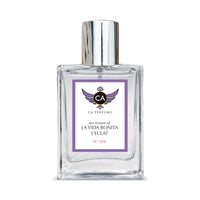
La Vida Bonita L'eclat — Eclat D'arpege Alternative Perfume
5.64
MEI™
Primary Fresh
Secondary Romantic
Confidence
4.51
Presence
4.66
Mood Lift
7.04
Identity
5.03
Warmth
5.1
Social Ease
6.96
Energy
3.9
" I am free.
View full mood profile →
HumanSafe™

Top Chinese Osmanthus Fragrances by HumanSafe™ Score

These Chinese Osmanthus-based fragrances have the highest product-level HumanSafe™ scores in this ingredient collection.

Highest HumanSafe™ Score
La Vida Bonita L'eclat — Eclat D'arpege Alternative Perfume
A-
HumanSafe™ Score Generally Safe
Safest Evaluated Ingredients EDP
AQUA Solvent / Carrier ISS 10.0
CYCLOHEXANEPROPANOL, 2,2,6-TRIMETHYL-.ALPHA.-PROPYL- Evaluated ingredient ISS 7.0
CYCLOHEXANEMETHANOL, 4-(1-METHYLETHYL)-, CIS- Evaluated ingredient ISS 7.0
CITRAL Evaluated ingredient ISS 7.0
BETA-PINENE Evaluated ingredient ISS 7.0
ALCOHOL DENAT. Solvent / Carrier ISS 7.0
View full safety profile →
Cherry Smoke — Tom Ford Cherry Smoke Alternative Perfume
A-
HumanSafe™ Score Generally Safe
Safest Evaluated Ingredients EDP
AQUA Solvent / Carrier ISS 10.0
1,4-DIOXACYCLOHEPTADECANE-5,17-DIONE Evaluated ingredient ISS 10.0
4H-INDEN-4-ONE, 1,2,3,5,6,7-HEXAHYDRO-1,1,2,3,3- Evaluated ingredient ISS 9.0
3-CYCLOPENTENE-1-ACETALDEHYDE, 2,2,3-TRIMETHYL-, Evaluated ingredient ISS 9.0
3-BUTEN-2-ONE, 3-METHYL-4-(2,6,6-TRIMETHYL-2- Evaluated ingredient ISS 8.0
2H-1-BENZOPYRAN-2-ONE Evaluated ingredient ISS 8.0
View full safety profile →
Expert Voices

What Masters Say About Chinese Osmanthus

Osmanthus absolute is one of the only natural materials that delivers genuine fruitiness without smelling edible. Ripe apricot halves drying on warm leather—honeyed, dense, with a violet-powdery shadow underneath.
Première Peau Editorial
Chinese Osmanthus’s scent profile is a captivating fusion of sweet, fruity floral notes that resemble apricots and peaches, wrapped in a soft floral embrace.
CA Perfume Editorial
Common Questions

Frequently Asked Questions

Answers to common questions about Chinese Osmanthus in perfumery.

Chinese Osmanthus in perfume is characterized by a luminous blend of apricot, peach, and plum fruitiness, layered with honeyed, suede-leather, and tea-like nuances. Its scent is driven by delta- and gamma-decalactone (fruity lactones), ionones (violet, powdery), and linalool oxides (waxy, green). The result is a floral-fruity note that is both bright and tactile, evolving from juicy top notes to a soft, powdery, and musky drydown.

Chinese Osmanthus is primarily used as a heart (middle) note in perfumery, though its volatility allows it to bridge the top and heart phases. Its molecular composition—rich in lactones and ionones—gives it moderate tenacity and projection, with the suede and honeyed facets lingering into the base. Typical usage is 0.5–2% in concentrate.

Chinese Osmanthus is favored in niche perfumery for its rare natural fruitiness, complex evolution, and ability to bridge floral, fruity, and leather accords. Its extraction is labor-intensive and yields are low, making it a luxury ingredient. Niche perfumers value its ability to create transparent, nuanced compositions with both radiance and depth.

Chinese Osmanthus fragrance uses include pairing with rose (damascenone synergy), sandalwood (lactonic warmth), black tea (theaspirane, linalool oxide), and amber or vanilla (sweet, resinous base). These combinations reinforce osmanthus’s natural fruit, suede, and tea-like facets, creating seamless, multidimensional accords.

Yes, Chinese Osmanthus performs well in summer when layered with citrus or tea notes, as heat amplifies its fruity top notes. However, high temperatures can shorten longevity, so lighter application or pairing with fresh, green accords is recommended. In cooler weather, its suede and honeyed base becomes more pronounced.

Osmanthus absolute has high substantivity—up to 400 hours at 100% concentration. In finished fragrances, longevity ranges from 4–8 hours in EDP/Parfum formats, depending on concentration and skin chemistry. The suede and powdery facets persist longest, while the fruity top fades after 1–2 hours.

Yes, layering is effective due to osmanthus’s molecular compatibility with lactones, ionones, and linalool oxides. Layer with peach, apricot, or tea-based scents to enhance fruitiness and freshness, or with sandalwood, amber, or leather for depth. This approach is demonstrated in Hermès Osmanthe Yunnan and Parfum d’Empire Osmanthus Interdite.

Recommended entry points include Hermès Osmanthe Yunnan (transparent, tea-inflected), Parfum d’Empire Osmanthus Interdite (green tea and leather), and Jean Patou 1000 (classic floral-fruity). These fragrances showcase osmanthus’s versatility and are widely regarded for their balanced compositions.

Explore CA Perfume’s collection by considering desired facets—fruity (apricot, peach), floral (rose, jasmine), or leathery (suede, amber). Sample both soliflore and blended options to experience osmanthus’s evolution. The HumanSafe™ platform provides transparency on ingredient sourcing and allergen content.

Chinese Osmanthus is both: its primary impression is sweet, fruity (apricot, peach), but it quickly develops a suede-leather undertone due to ionones and decanoic acid. The balance of sweetness and leatheriness depends on concentration, pairing notes, and skin chemistry.

Floral Fruity Collection

Explore Our Top Chinese Osmanthus Fragrances

Discover CA Perfume’s curated selection of Chinese Osmanthus fragrances—ranging from soliflore expressions to complex blends that highlight apricot, suede, and tea nuances.

Shop all chinese osmanthus fragrances at CA Perfume →

Where Chinese Osmanthus Comes From — Origin & Extraction

Chinese Osmanthus (Osmanthus fragrans) is an evergreen shrub native to southern China, with principal cultivation in Guangxi (notably Guilin), Jiangsu (Suzhou), and Sichuan (Chengdu). Guilin alone harvests approximately 10,000 metric tons of flowers annually, reflecting the region’s deep cultural and agricultural ties to the plant. The blossoms, less than 1 cm in diameter and ranging from white to golden-orange, are harvested by hand or by shaking branches over sheets. The flowers are immediately immersed in brine (saltwater solution) to prevent withering and allow for staged extraction over several months. Extraction for perfumery is performed via solvent extraction, producing a concrete that is subsequently processed with ethanol to yield the absolute. The yield is extremely low: approximately 720–1,000 kg of fresh flowers are required to produce 750–1,000 g of absolute. This low yield, combined with labor-intensive harvesting and limited annual production (only about 1 ton of concrete per year globally), makes osmanthus absolute one of the most expensive floral materials, with prices ranging from $4,000 to $8,000 per kg (2025 data). Synthetic reconstructions, using gamma- and delta-decalactone, ionones, and linalool oxides, cost $50–$200 per kg. China holds a virtual monopoly on osmanthus absolute production, with minor cultivation in Japan and Vietnam. Sustainability efforts are ongoing, with some producers adopting brine preservation and staggered harvesting to minimize waste and reduce pressure on wild populations. Biotechnological approaches are emerging to replicate key aroma molecules, further supporting sustainable supply.

Famous Fragrances That Define Chinese Osmanthus in Perfumery

Chinese Osmanthus has inspired a lineage of fragrances that showcase its apricot, suede, and tea-like facets. Jean Patou’s 1000 (1972, Jean Kerléo) was among the first Western fragrances to feature osmanthus absolute, pairing it with rose, jasmine, and sandalwood as a luminous heart note. Hermès Osmanthe Yunnan (2005, Jean-Claude Ellena) elevated osmanthus to a starring role, blending it with Chinese tea, freesia, and apricot for a transparent, tea-inflected floral. Parfum d’Empire Osmanthus Interdite (2007, Marc-Antoine Corticchiato) explores the synergy of osmanthus with green tea, rose, and leather, emphasizing its dual fruity-leather character. By Kilian Good Girl Gone Bad (2012, Alberto Morillas) uses osmanthus as a bridge between tuberose, jasmine, and amber, lending a honeyed, peachy warmth. More recently, To Summer Osmanthus 颐和金桂 (2021, David Huang) highlights the note’s cultural roots, pairing it with peach, jasmine tea, and amber for a poetic evocation of autumn in Beijing. These fragrances illustrate the versatility of Chinese Osmanthus—as a dominant note, a bridge, or a subtle accent—across floral, fruity, and leather-amber structures. CA Perfume’s collection draws on this lineage, offering both soliflore and blended interpretations that honor the ingredient’s heritage and complexity.

Natural vs Synthetic Chinese Osmanthus in Perfumery

Natural Chinese Osmanthus absolute is chemically complex, with major constituents including delta-decalactone (CAS 705-86-2), gamma-decalactone (CAS 706-14-9), (E)-linalool oxide furanoid (CAS 1365-19-1), and alpha-ionone (CAS 127-41-3). Synthetic osmanthus accords are typically constructed from combinations of these molecules, along with beta-ionone (CAS 14901-07-6), dihydro-beta-ionone, and cis-jasmone (CAS 488-10-8). These synthetics replicate the apricot, peach, and suede-leather nuances of the natural absolute, but often lack the full textural complexity and nuanced evolution on skin. Performance-wise, synthetic osmanthus accords offer greater batch-to-batch consistency, improved stability, and lower allergen content. However, natural absolute exhibits greater tenacity (up to 400 hours at 100% concentration) and a more dynamic evolution due to its broader spectrum of minor constituents. Cost is a major differentiator: natural absolute ranges from $4,000–$8,000/kg, while synthetic blends are $50–$200/kg. Notable fragrances using natural osmanthus include Hermès Osmanthe Yunnan and Parfum d’Empire Osmanthus Interdite, while many mainstream and niche compositions rely on synthetic reconstructions for affordability and IFRA compliance. Sustainability is a growing concern, as wild osmanthus populations are at risk from overharvesting. Biotechnological production of key aroma molecules and HumanSafe™ verified sourcing platforms are increasingly used to ensure traceability and minimize environmental impact. CA Perfume’s HumanSafe™ platform transparently documents the source, allergen content, and sustainability profile of each osmanthus batch used.