Where Camellia Comes From — Origin & Extraction
Camellia japonica is native to East Asia, with key cultivation regions in Japan, China, and South Korea. In Japan, camellia is culturally significant, often associated with traditional tea ceremonies and ornamental gardens, particularly in the Kanto district. China is the original native land of camellia, where it holds importance in folklore and art, and South Korea reveres camellia as a symbol of love and fidelity, with wild varieties found in serene landscapes.
The camellia flower itself produces virtually no extractable aromatic oil, making natural extraction for perfumery impractical. Instead, camellia’s scent in perfumery is recreated synthetically through accords combining floral, green, and musky notes. When natural camellia absolute is produced, it is typically obtained via solvent extraction or supercritical CO2 extraction from camellia leaves or flowers, but yields are extremely low and the character is complex and variable.
Natural camellia absolute costs approximately $3,000–6,000 per kilogram due to its rarity and labor-intensive extraction. Synthetic camellia accords, often based on molecules such as safranal analogues, cost significantly less—around $50–200 per kilogram—and provide consistent, stable scent profiles. Sustainability considerations favor synthetic production given the flower’s low natural aromatic yield and the environmental impact of large-scale harvesting.
Famous Fragrances That Define Camellia in Perfumery
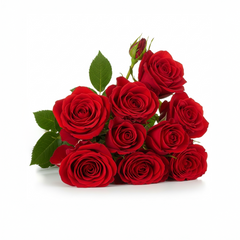
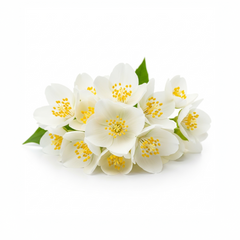
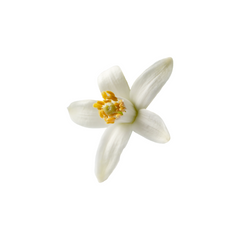
Camellia’s delicate floral character has been featured in several notable fragrances, often as a heart note that enriches floral bouquets with subtle sweetness and freshness. Aroma M’s Camellia Eau de Parfum (2014), created by Maria McElroy, is a landmark natural floral fragrance that places camellia at its core, accompanied by jasmine, neroli, gardenia, rose, and frankincense. This fragrance exemplifies camellia’s ability to convey softness and sophistication.
Acqua di Parma’s Camelia Eau de Parfum (2019), by perfumer Joelle Lerioux Patris, blends camellia with bergamot, pink pepper, jasmine sambac, clary sage, musk, and benzoin, creating a refined floral-woody composition that highlights camellia’s sweet aromatic facets.
Other fragrances featuring camellia include Victoria’s Secret Camellia Sunset (2025), which combines camellia with citrus, pepper, and sandalwood for a fresh and spicy floral-woody scent, and Keiko Mecheri’s Camellia, known for its elegant floral purity.
These fragrances demonstrate camellia’s versatility across different olfactory styles and its enduring appeal among perfumers seeking a soft, romantic floral note. CA Perfume’s collection reflects this lineage by offering camellia-infused compositions that emphasize natural elegance and modern artistry.
Natural vs Synthetic Camellia in Perfumery
Natural camellia absolute is derived through solvent or CO2 extraction methods, yielding a complex and variable aromatic profile. However, the natural flower’s near scentlessness limits the availability and consistency of natural extracts. Synthetic camellia accords are primarily composed of aroma chemicals such as safranal (CAS 116-26-7) and related analogues, which replicate the floral, green, and powdery facets of camellia’s scent.
Synthetic versions offer greater stability, longevity, and diffusion compared to natural extracts, which can degrade or vary with harvests. Cost differentials are significant: natural camellia absolute ranges from $3,000 to $6,000 per kilogram, whereas synthetic molecules cost between $50 and $200 per kilogram. Famous fragrances like Aroma M’s Camellia Eau de Parfum utilize natural and natural-inspired ingredients, while many other camellia accords rely on synthetic blends for consistency.
From a sustainability perspective, synthetic camellia accords reduce environmental strain and supply chain risks. The HumanSafe™ platform emphasizes transparency in sourcing, favoring synthetic ingredients when natural extraction is ecologically or economically unsustainable. CA Perfume’s approach balances natural complexity with synthetic precision to deliver authentic camellia scent experiences.