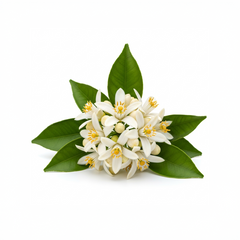
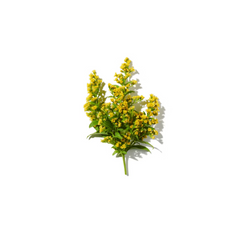
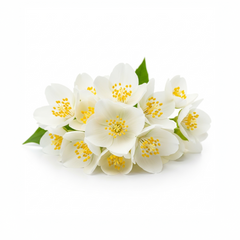
Black locust Honey, derived from the nectar of Robinia pseudoacacia flowers, is renowned in perfumery for its multifaceted scent profile. What does black locust honey smell like? The answer lies in its complex blend of intense floralcy, reminiscent of orange blossom and mimosa, layered with clear, sweet honey, grape candy, and subtle green-hay undertones. The primary odorants include methyl anthranilate (responsible for the grape facet), benzyl alcohol, and linalool, which together create a radiant, almost sparkling floral sweetness. Indole is present in trace amounts, contributing to the naturalistic, slightly animalic nuance that gives depth to the note.
In perfumery, black locust honey is classified as a heart note, often used at concentrations of 0.5–2% to impart a rich, honeyed floral character to white floral, gourmand, and amber compositions. Its interaction with skin chemistry is notable: the high content of volatile terpenoids and esters means the note can shift from bright and green to deeper, more honeyed and hay-like, depending on skin pH and warmth. On acidic skin, the green facets are more pronounced, while alkaline skin tends to amplify the honeyed sweetness. Black locust honey in perfumery is valued for its ability to bridge floral and gourmand accords, enhancing both projection and longevity when paired with complementary notes such as orange blossom, mimosa, and vanilla.
Several modern fragrances exemplify the use of black locust honey. Tom Ford’s Fleur de Portofino (2015, perfumer: Calice Becker) uses the note as a central bridge between acacia blossom, citrus, and honey, creating a luminous Mediterranean floral. Tiziana Terenzi’s Laudano Nero (2014, Paolo Terenzi) leverages black locust honey to bind smoky, woody, and floral elements, showcasing the ingredient’s versatility. These examples illustrate how black locust honey scent profile can define both the heart and the evolution of a perfume.