
Smells like heaven. Fast shipping. I will purchase from this company again.
Best customer service, the scent is great but only lasted 2 hrs on me.
Everything is as advertised and the packaging and presentation was awesome
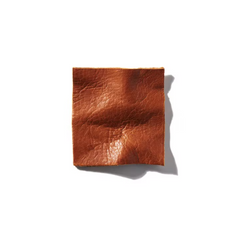
A rich, sweet, and leathery note with complex aromatic depth.
Tobacco leaf is a prized base note in perfumery, known for its warm, honeyed, and subtly smoky character. Its defining scent comes from megastigmatrienone and β-damascenone, which impart sweet, hay-like, and leathery nuances at concentrations of 0.1–1% in fine fragrance.

Tobacco leaf in perfumery is derived from the cured leaves of Nicotiana tabacum. Its scent profile is remarkably complex, blending warm, honeyed sweetness with hay, dried fruit, and subtle leathery undertones. This distinctive aroma is primarily due to the presence of megastigmatrienone (CAS 13215-88-8), which imparts the characteristic tobacco warmth, and β-damascenone, which contributes dried fruit and floral nuances. Additional contributors such as solanone, coumarin, and vanillin add depth, creating a multifaceted olfactory experience that is far removed from the acrid smell of burning tobacco. In perfumery, tobacco leaf is classified as a base note due to its high molecular weight and low volatility. It is typically used at concentrations of 0.1–1% in fine fragrance compositions, where it provides lasting warmth and complexity. The note interacts with skin chemistry in unique ways: acidic skin can amplify its sweet, honeyed facets, while alkaline skin may bring out more leathery or smoky nuances. This variability makes tobacco leaf a dynamic and intriguing ingredient in both masculine and unisex fragrances. Tobacco leaf in perfumery is exemplified by Tom Ford Tobacco Vanille (2007, Olivier Gillotin), where it is paired with vanilla and dried fruits for a gourmand effect, and Maison Margiela Jazz Club (2013, Alienor Massenet), which highlights its smoky, spicy, and woody aspects. These fragrances showcase the versatility of tobacco leaf, demonstrating its ability to serve as both a dominant note and a sophisticated bridge in complex compositions.
Tobacco leaf’s scent profile is shaped by the terroir of its origin. Soil composition, climate, and curing methods in regions like Virginia, Turkey, and Brazil impart distinct aromatic nuances, from honeyed sweetness to smoky dryness.
Tobacco leaf used in perfumery is sourced primarily from Nicotiana tabacum, a species native to the Americas but now cultivated globally. The most valued perfumery grades are derived from Virginia (flue-cured), Burley (air-cured), and Oriental (sun-cured) tobaccos. Major producing countries include the United States, Brazil, China, India, and Zimbabwe, with the U.S. and Brazil supplying significant volumes for fragrance-grade material. The extraction process begins with curing, which can involve air, flue, sun, or fire-curing methods, each imparting distinct olfactory characteristics by catalyzing enzymatic cleavage of carotenoids in the leaf. Tobacco absolute is obtained via solvent extraction, typically using hexane to produce a concrete, followed by ethanol washing to yield the absolute. Supercritical CO2 extraction is also employed for a greener profile, preserving more of the top-note volatiles. Extraction yields are low, with approximately 1–2 kg of absolute produced from 1000 kg of cured leaf. The resulting material is a viscous, dark brown liquid with high odor strength. Natural tobacco absolute commands prices of $1,500–4,000/kg, while synthetic tobacco accords can cost as little as $50–200/kg depending on the complexity and purity of the aroma chemicals used. Sustainability concerns include land use, pesticide application, and the environmental impact of solvent extraction, though CO2 extraction offers a more eco-friendly alternative. The absolute is IFRA-compliant when used at standard levels, and contains negligible nicotine due to its low solubility in nonpolar solvents.
Virginia’s Piedmont region produces flue-cured tobacco with a bright, honeyed, and slightly fruity aroma. The sandy loam soils and moderate rainfall yield leaves high in sugars, ideal for perfumery. The U.S. supplies a significant share of fragrance-grade tobacco absolute.
The Aegean region’s sun-cured Oriental tobacco is prized for its dry, aromatic, and slightly spicy profile. Thin soils and intense sunlight produce leaves with pronounced hay and cedarwood nuances. Turkish tobaccos are often used for their aromatic complexity.
Southern Brazil, especially Rio Grande do Sul, cultivates air-cured tobacco with a rich, earthy, and subtly smoky scent. The region’s humid subtropical climate and fertile soils contribute to a robust, full-bodied aromatic profile.
Bulgarian tobacco, often used for absolute production, is known for its dark, resinous, and slightly fruity aroma. The Balkan climate and traditional curing methods yield a material with high megastigmatrienone content and deep complexity.
Natural tobacco absolute is a chemically dense material, containing over 200 identified odorants, including megastigmatrienone (CAS 13215-88-8), β-damascenone (CAS 23726-93-4), and solanone (CAS 2278-53-7). These compounds provide the signature honeyed, hay-like, and leathery facets. Synthetic tobacco accords, on the other hand, are constructed using aroma chemicals such as 2-acetylpyrazine (CAS 22047-25-2) for nutty, roasted notes, coumarin (CAS 91-64-5) for hay sweetness, and vanillin (CAS 121-33-5) for creamy warmth. Synthetics offer greater consistency, stability, and IFRA compliance, and are widely used in commercial perfumery due to their lower cost and absence of allergens like nicotine. Performance-wise, natural tobacco absolute provides exceptional longevity (over 400 hours on blotters) and complex evolution, while synthetics offer cleaner, more linear interpretations with enhanced diffusion. Notable fragrances such as Tom Ford Tobacco Vanille and Serge Lutens Chergui utilize natural absolute for depth, whereas Viktor&Rolf Spicebomb Extreme and Burberry London for Men rely more on synthetic accords for clarity and projection. Sustainability is a key consideration: synthetics reduce pressure on agricultural land and minimize solvent waste, while CO2-extracted natural material offers a lower-impact alternative. CA Perfume’s HumanSafe™ platform ensures full transparency regarding the source and safety of both natural and synthetic tobacco materials.
Tobacco leaf has shaped the identity of many iconic fragrances across eras and genres. In 1919, Caron Tabac Blond (Ernest Daltroff) pioneered the use of tobacco as a symbol of modernity and gender fluidity, blending it with leather and carnation. Serge Lutens Chergui (2005, Christopher Sheldrake) showcases tobacco absolute’s honeyed and spicy facets, paired with hay, iris, and amber. Tom Ford Tobacco Vanille (2007, Olivier Gillotin) redefined the note for the 21st century, combining tobacco with vanilla, dried fruits, and cacao for a gourmand, opulent effect. Maison Margiela Jazz Club (2013, Alienor Massenet) interprets tobacco leaf as smoky, woody, and subtly boozy, layered with rum and vetiver. Amouage Journey Man (2014, Pierre Negrin and Alberto Morillas) uses tobacco as a bridge between spice, leather, and incense, demonstrating its versatility in complex, modern compositions. CA Perfume’s collection draws inspiration from this lineage, offering both classic and contemporary interpretations of the tobacco leaf note.
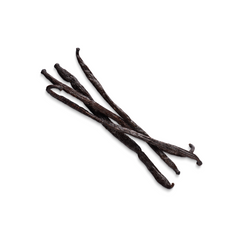
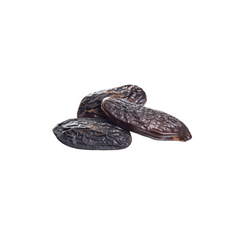
A classic tobacco leaf accord balances sweet, hay-like warmth with creamy, spicy, and woody nuances. Typical proportions: Tobacco Absolute 25–30%, Vanilla 20–25%, Tonka Bean 20–25%, Patchouli 25–30%. Tobacco absolute provides the core honeyed, leathery profile (megastigmatrienone, β-damascenone). Vanilla (vanillin) softens and rounds the blend, tonka bean (coumarin) amplifies hay and almond facets, while patchouli adds earthy depth and fixative power.
Provides the core honeyed, hay-like, and leathery profile due to megastigmatrienone and β-damascenone. Forms the structural backbone of the accord.
Vanillin softens tobacco’s dryness and amplifies its sweet, creamy facets through olfactory masking and shared lactone content.
Coumarin in tonka bean enhances the hay and almond-like sweetness, reinforcing the natural coumarinic notes in tobacco absolute.
Patchouli’s earthy, woody, and slightly camphoraceous molecules (patchoulol, norpatchoulenol) provide depth and fixative qualities, anchoring the accord.
Tobacco leaf’s olfactory evolution is marked by a slow, persistent diffusion. High-molecular-weight compounds evaporate gradually, revealing sweet, hay-like top notes, honeyed and leathery heart, and a smoky, earthy base over several hours.
The initial impression is dry, aromatic, and hay-like, driven by volatile coumarin and β-damascenone. These molecules evaporate quickly, imparting a fleeting sweetness and subtle floral nuance reminiscent of dried apricots and sun-warmed hay.
As the top fades, honeyed, fruity, and leathery facets emerge. Megastigmatrienone and solanone dominate, imparting warmth, depth, and a gentle smokiness. The scent becomes richer, with hints of dried fruit and soft leather.
The drydown is dominated by earthy, resinous, and subtly smoky notes. Long-chain norisoprenoids and lactones (dihydroactinidiolide) linger, providing a persistent, papery dryness and a faintly woody, mossy undertone.
Tobacco leaf’s journey in perfumery spans sacred ritual, medicinal use, and modern olfactory artistry, evolving from indigenous ceremonial plant to a cornerstone of niche fragrance.
Native peoples of the Americas use Nicotiana tabacum in spiritual ceremonies and as a medicinal plant, recognizing its aromatic and symbolic power.
Christopher Columbus brings tobacco to Europe from the New World. The plant quickly spreads across the continent, valued for its scent and medicinal properties.
Ernest Daltroff launches Tabac Blond, pioneering tobacco as a modern, gender-fluid perfume note, blending it with leather and florals.
Serge Lutens Chergui and Tom Ford Tobacco Vanille (2007) spark renewed interest in tobacco leaf, showcasing its versatility in both gourmand and oriental compositions.
Fragrances like Maison Margiela Jazz Club and Amouage Journey Man highlight tobacco’s role as a bridge note, paired with spices, woods, and resins in modern perfumery.
Understanding how to layer tobacco leaf is key to maximizing its olfactory impact. Molecular compatibility with vanilla, amber, and patchouli enables seamless blending, while olfactory masking and shared lactones create harmonious transitions.
Layering tobacco leaf with vanilla or tonka bean leverages shared lactones (e.g., coumarin), amplifying the honeyed and gourmand facets. Tom Ford Tobacco Vanille demonstrates this synergy, where vanillin softens tobacco’s dryness and creates a plush, enveloping effect.
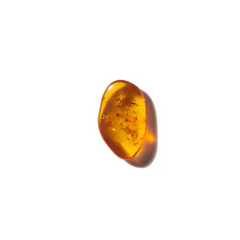
Pairing with patchouli or oud introduces earthy, woody, and resinous molecules (patchoulol, agarol), deepening tobacco’s base and extending longevity. Amouage Journey Man uses this approach, blending tobacco with leather and incense for a complex, lasting impression.
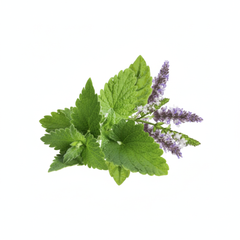
Combining tobacco leaf with citrus (bergamot, orange) or aromatic florals (lavender, jasmine) utilizes olfactory contrast and masking. The citrus top notes lift tobacco’s heaviness, while shared terpenoids (linalool) create a fresh, balanced opening, as seen in Burberry London for Men.
Cooler temperatures suppress volatility, allowing tobacco’s honeyed, leathery, and smoky facets to linger. Apply to pulse points and under clothing for a cozy, enveloping effect. Ideal for layering with vanilla or amber in cold weather.
Moderate warmth enhances the sweet, hay-like top notes and fruity nuances. Use lighter applications to avoid overwhelming projection. Pair with floral or citrus notes for a fresh, uplifting effect.
High heat increases volatility, emphasizing tobacco’s aromatic, spicy, and slightly green facets. Apply sparingly to avoid olfactory fatigue. Layer with citrus or green notes for a lighter, more wearable summer profile.
Adjust application based on humidity: in dry climates, tobacco leaf’s base notes persist longer, while in humid conditions, projection and sillage are enhanced. Experiment with layering to tailor the scent to seasonal shifts.
Strategic application of tobacco leaf fragrances maximizes their evolution and projection.
The warmth of the neck accelerates evaporation of top notes, revealing tobacco’s hay-like and honeyed facets early in the wear.
This area retains scent longer due to lower sebaceous activity, allowing tobacco’s leathery and resinous base to linger.
Pulse points on the wrists enhance diffusion, showcasing the full aromatic evolution from sweet top to earthy base.
Hair fibers trap volatile molecules, providing sustained release of tobacco’s sweet and smoky notes throughout the day.
Apply to fabric (scarf, collar) for extended projection, as textiles absorb and slowly release tobacco’s heavier molecules.
These Tobacco Leaf-based fragrances scored highest on the MEI™ Mood Architecture Framework — measuring how a scent may influence your emotional state.
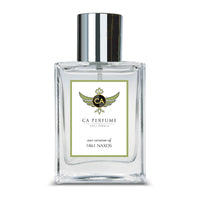
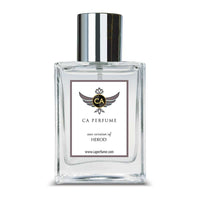


These Tobacco Leaf-based fragrances have the highest product-level HumanSafe™ scores in this ingredient collection.


Tobacco absolute reveals antique wood, dried fruits, honey, tea, chocolate, vanilla-tonka complexes, and earthy-mossy undertones with exceptional longevity exceeding 400 hours on smelling strips.
The key to successful tobacco formulation lies in balancing coumarinic sweetness with woody dryness, using proper dilutions, and allowing 2–4 weeks maturation.
Tobacco leaf pairs well with a range of complementary ingredients, each enhancing a different facet of its complex profile.
Answers to the most common technical and practical questions about tobacco leaf in perfumery.
Tobacco leaf in perfume smells warm, honeyed, and leathery, with sweet hay, dried fruit, and subtle smoky undertones. The scent is shaped by molecules such as megastigmatrienone and β-damascenone, which impart a complex, nuanced aroma far removed from the acrid smell of burning tobacco. Notable fragrances like Tom Ford Tobacco Vanille and Serge Lutens Chergui exemplify this profile.
Tobacco leaf is classified as a base note in perfumery due to its high molecular weight and low volatility. It provides lasting warmth and depth, anchoring compositions and supporting more volatile top and heart notes. Its tenacity allows it to persist for hours on skin and textiles.
Tobacco leaf is favored in niche perfumery for its multifaceted scent profile and ability to bridge gourmand, woody, and oriental accords. Its complexity, derived from over 200 odorants, allows perfumers to create rich, sophisticated compositions with both nostalgic and modern appeal. The note’s versatility is showcased in fragrances like Amouage Journey Man and Maison Margiela Jazz Club.
Tobacco leaf fragrance uses include pairing with vanilla, tonka bean, patchouli, amber, leather, and oud. These notes share molecular affinities (e.g., lactones, norisoprenoids) that enhance tobacco’s sweetness, depth, and longevity. Citrus and floral notes can also be used to lift and balance tobacco’s heavier facets.
Tobacco leaf can be worn in summer, but its rich, warm profile is best suited to cooler evenings or air-conditioned environments. In high heat, its volatility increases, emphasizing aromatic and spicy facets. For summer wear, layer with citrus or green notes and apply sparingly to avoid overwhelming projection.
Tobacco leaf fragrances are known for exceptional longevity, often persisting 8–12 hours on skin and over 400 hours on blotters. This is due to the presence of high-molecular-weight norisoprenoids and lactones, which evaporate slowly and anchor the scent.
Yes, tobacco leaf is highly layerable due to its molecular compatibility with vanilla, amber, patchouli, and leather. Layering enhances sweetness, depth, or freshness depending on the chosen pairing. For example, combining with vanilla amplifies gourmand facets, while pairing with citrus adds lift.
For those new to tobacco leaf, Tom Ford Tobacco Vanille, Maison Margiela Jazz Club, and Burberry London for Men are excellent starting points. These fragrances balance tobacco’s warmth with accessible gourmand, woody, or spicy notes, making them versatile and approachable.
Consider the desired profile: for a sweet, gourmand effect, look for tobacco paired with vanilla and dried fruits; for a woody or spicy character, seek blends with patchouli, leather, or incense. CA Perfume’s collection spans classic and modern interpretations, with full ingredient transparency via the HumanSafe™ platform.
Tobacco leaf in fragrance can exhibit both sweet and spicy facets. Its core is honeyed and hay-like, but depending on the blend and skin chemistry, spicy, leathery, or smoky nuances may be more prominent. The balance is determined by the specific composition and the presence of complementary notes.
Discover CA Perfume’s curated selection of tobacco leaf fragrances, from classic honeyed blends to modern spicy-woody interpretations.
Shop all tobacco leaf fragrances at CA Perfume →Tobacco leaf used in perfumery is sourced primarily from Nicotiana tabacum, a species native to the Americas but now cultivated globally. The most valued perfumery grades are derived from Virginia (flue-cured), Burley (air-cured), and Oriental (sun-cured) tobaccos. Major producing countries include the United States, Brazil, China, India, and Zimbabwe, with the U.S. and Brazil supplying significant volumes for fragrance-grade material. The extraction process begins with curing, which can involve air, flue, sun, or fire-curing methods, each imparting distinct olfactory characteristics by catalyzing enzymatic cleavage of carotenoids in the leaf. Tobacco absolute is obtained via solvent extraction, typically using hexane to produce a concrete, followed by ethanol washing to yield the absolute. Supercritical CO2 extraction is also employed for a greener profile, preserving more of the top-note volatiles. Extraction yields are low, with approximately 1–2 kg of absolute produced from 1000 kg of cured leaf. The resulting material is a viscous, dark brown liquid with high odor strength. Natural tobacco absolute commands prices of $1,500–4,000/kg, while synthetic tobacco accords can cost as little as $50–200/kg depending on the complexity and purity of the aroma chemicals used. Sustainability concerns include land use, pesticide application, and the environmental impact of solvent extraction, though CO2 extraction offers a more eco-friendly alternative. The absolute is IFRA-compliant when used at standard levels, and contains negligible nicotine due to its low solubility in nonpolar solvents.
Tobacco leaf has shaped the identity of many iconic fragrances across eras and genres. In 1919, Caron Tabac Blond (Ernest Daltroff) pioneered the use of tobacco as a symbol of modernity and gender fluidity, blending it with leather and carnation. Serge Lutens Chergui (2005, Christopher Sheldrake) showcases tobacco absolute’s honeyed and spicy facets, paired with hay, iris, and amber. Tom Ford Tobacco Vanille (2007, Olivier Gillotin) redefined the note for the 21st century, combining tobacco with vanilla, dried fruits, and cacao for a gourmand, opulent effect. Maison Margiela Jazz Club (2013, Alienor Massenet) interprets tobacco leaf as smoky, woody, and subtly boozy, layered with rum and vetiver. Amouage Journey Man (2014, Pierre Negrin and Alberto Morillas) uses tobacco as a bridge between spice, leather, and incense, demonstrating its versatility in complex, modern compositions. CA Perfume’s collection draws inspiration from this lineage, offering both classic and contemporary interpretations of the tobacco leaf note.
Natural tobacco absolute is a chemically dense material, containing over 200 identified odorants, including megastigmatrienone (CAS 13215-88-8), β-damascenone (CAS 23726-93-4), and solanone (CAS 2278-53-7). These compounds provide the signature honeyed, hay-like, and leathery facets. Synthetic tobacco accords, on the other hand, are constructed using aroma chemicals such as 2-acetylpyrazine (CAS 22047-25-2) for nutty, roasted notes, coumarin (CAS 91-64-5) for hay sweetness, and vanillin (CAS 121-33-5) for creamy warmth. Synthetics offer greater consistency, stability, and IFRA compliance, and are widely used in commercial perfumery due to their lower cost and absence of allergens like nicotine. Performance-wise, natural tobacco absolute provides exceptional longevity (over 400 hours on blotters) and complex evolution, while synthetics offer cleaner, more linear interpretations with enhanced diffusion. Notable fragrances such as Tom Ford Tobacco Vanille and Serge Lutens Chergui utilize natural absolute for depth, whereas Viktor&Rolf Spicebomb Extreme and Burberry London for Men rely more on synthetic accords for clarity and projection. Sustainability is a key consideration: synthetics reduce pressure on agricultural land and minimize solvent waste, while CO2-extracted natural material offers a lower-impact alternative. CA Perfume’s HumanSafe™ platform ensures full transparency regarding the source and safety of both natural and synthetic tobacco materials.