Where Tangerine Blossom Comes From — Origin & Extraction
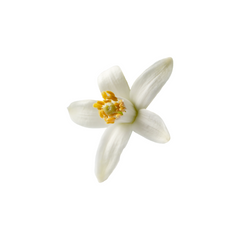
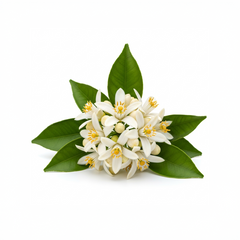
Tangerine blossom is harvested from the flowers of Citrus reticulata, a species native to Southeast Asia and now widely cultivated in subtropical and Mediterranean regions. Major producing countries include Brazil, China, Italy, Morocco, and Spain. The trees are typically grown for fruit, making blossom harvests relatively limited and seasonal, usually occurring in late spring. The flowers are small, white, and intensely fragrant, with a volatile oil yield significantly lower than that of the fruit peel.
Extraction of tangerine blossom oil is achieved primarily through steam distillation or solvent extraction. Steam distillation is performed at low pressures and temperatures (typically below 100°C) to preserve delicate floral molecules such as methyl anthranilate and linalool. Solvent extraction, using hexane or ethanol, yields a concrete and then an absolute, capturing a broader spectrum of the flower’s aroma compounds. Yields are low—approximately 0.01–0.03% by weight—making natural tangerine blossom absolute a rare and costly material, often exceeding $8,000–12,000 per kilogram. By contrast, synthetic reconstructions using isolated aroma chemicals (e.g., methyl anthranilate, linalool, limonene) cost $50–200/kg.
Sustainability is a concern, as large-scale blossom harvest can impact fruit yields. Most commercial tangerine blossom notes are therefore recreated synthetically to ensure supply chain stability and minimize agricultural impact. There are no IFRA restrictions specific to tangerine blossom oil, and the ingredient is generally considered safe when used within standard perfumery concentrations. The rarity and cost of true tangerine blossom absolute mean that most fine fragrances rely on high-fidelity synthetic accords for consistency and environmental responsibility.
Famous Fragrances That Define Tangerine Blossom in Perfumery
Tangerine blossom has been featured in a range of notable fragrances, often as a bridge between citrus and floral notes. In Jo Malone London Orange Blossom (2003, perfumer Jean Claude Delville), tangerine blossom is paired with clementine flower, water lily, and orris root, creating a luminous, photorealistic white floral composition. Moschino Glamour (2008, perfumers Olivier Polge and Rosendo Mateu) uses tangerine blossom as a heart note, linking fresh citrus top notes to a creamy floral base of hibiscus and salt.
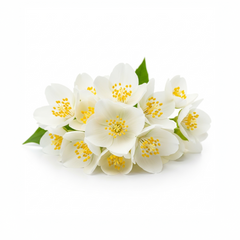
Wilgermain Aquafortis (2021, perfumer Jean-Claude Astier) demonstrates the versatility of tangerine blossom in modern perfumery, combining it with green and aquatic notes for a vibrant, contemporary effect. Agatha Paris Un Matin à Paris (2017) and Avon Essência Sensual (2015) both utilize tangerine blossom to impart a soft, spring-like freshness, often paired with neroli, white musk, and green notes. In Anthologie Seringa Blanc (2014), tangerine blossom is blended with syringa and jasmine, emphasizing its gentle, sweet-floral character.
Historically, tangerine blossom has served as a lighter, more accessible alternative to orange blossom and neroli, especially in compositions where a less indolic, more transparent floral note is desired. CA Perfume’s collection draws inspiration from this lineage, offering tangerine blossom fragrances that balance citrus brightness with floral delicacy.
Natural vs Synthetic Tangerine Blossom in Perfumery
Natural tangerine blossom absolute is produced in extremely limited quantities due to the agricultural priority of fruit production. The natural extract contains a complex mixture of linalool (CAS 78-70-6), methyl anthranilate (CAS 134-20-3), limonene (CAS 138-86-3), and geraniol (CAS 106-24-1), which together create its characteristic sweet, floral-citrus scent. However, the low yield and high cost—often exceeding $8,000–12,000/kg—make it impractical for large-scale use.
Synthetic tangerine blossom accords are constructed using key aroma chemicals: methyl anthranilate (providing the grape-like, sweet nuance), linalool (floral), and limonene (citrusy). These molecules are blended in precise ratios to mimic the natural blossom’s olfactory profile. Synthetic versions offer greater consistency, improved stability, and are less prone to oxidation than their natural counterparts. Longevity and diffusion are generally superior in synthetics, with a more predictable performance across different skin types.
Famous fragrances such as Jo Malone London Orange Blossom and Moschino Glamour rely on synthetic tangerine blossom accords, as do most contemporary compositions. Sustainability and supply chain transparency are improved with synthetics, reducing pressure on agricultural resources. CA Perfume’s HumanSafe™ platform ensures all tangerine blossom materials are fully traceable, IFRA-compliant, and responsibly sourced, whether natural or synthetic.