Where Tagetes Comes From — Origin & Extraction
Tagetes is derived from the flowering tops of plants in the Tagetes genus, most notably Tagetes minuta (Mexican marigold) and Tagetes patula (French marigold), both members of the Asteraceae family. Native to Mexico and Central America, tagetes is now cultivated extensively in India, South Africa, Egypt, France, and the United States. India and South Africa are among the largest commercial producers, with India alone producing several hundred metric tons annually, primarily for essential oil and floral waste valorization.
Extraction of tagetes oil is typically performed via steam distillation of the aerial parts (flowers and leaves), yielding approximately 0.3–0.5% oil by weight. Solvent extraction (using hexane or ethanol) and supercritical CO₂ extraction are also employed to produce tagetes absolute, which is richer and more complex in aroma but significantly more expensive. The main chemical constituents are tagetone (~50%), dihydrotagetone, and tagetenone, with minor contributions from (Z)-β-ocimene and limonene. The CAS number for tagetes oil is 8016-84-0. Natural tagetes absolute commands a price of $3,000–6,000 per kg, while synthetic analogues (such as safranal and related compounds) are available for $50–200 per kg.
Sustainability is a key consideration in tagetes production. The plant is valued in crop rotation for its nematocidal properties (due to alpha-terthienyl), reducing the need for chemical pesticides. Floral waste from religious and cultural festivals is increasingly repurposed for essential oil extraction, supporting circular economy initiatives. There are currently no IFRA restrictions on tagetes oil, but its high content of reactive ketones requires careful formulation to avoid sensitization.
Famous Fragrances That Define Tagetes in Perfumery
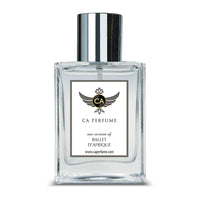
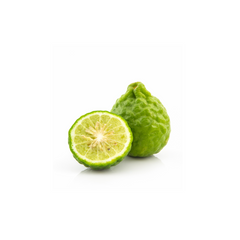
Tagetes has played a distinctive role in perfumery, often as a heart or accent note that imparts a green, citrusy lift to floral and fruity compositions. In Byredo Bal d’Afrique (2009, Jérôme Epinette), tagetes is paired with bergamot and African marigold to create a vibrant, sunlit opening that bridges into vetiver and cedarwood. Jean Patou Joy Forever (2013, Thomas Fontaine) uses tagetes to add a green, apple-like freshness to a classic floral bouquet of rose and jasmine. In Alfred Kafé by Carrément Belle, tagetes provides a fresh, fruity-green boost, enhancing the originality of the composition.
Tagetes also appears in niche and contemporary fragrances such as Initio Parfums Prives Paragon (2022), where it is layered with plum, white sage, and palo santo for a meditative, spiritual effect, and in Commodity Mimosa, where its dusty wildflower character is paired with mimosa and soft woods. In Zara Wonder Rose Crush, tagetes contributes to the floral heart, paired with rose and fruity notes for a modern, approachable scent. CA Perfume’s collection draws inspiration from these landmark uses, offering tagetes-based fragrances that highlight its versatility across floral, citrus, and woody families.
Natural vs Synthetic Tagetes in Perfumery
Natural tagetes oil is a complex mixture dominated by tagetone (CAS 8016-84-0), dihydrotagetone, and tagetenone, with minor components such as (Z)-β-ocimene and limonene. Synthetic substitutes often rely on safranal (CAS 116-26-7), which mimics the hay-like, slightly metallic undertone, and isophorone (CAS 78-59-1) or 2,6,6-trimethylcyclohex-2-ene-1,4-dione for green, fruity accents. Synthetic tagetes offers greater batch-to-batch consistency, improved stability, and lower allergenic potential, but lacks the nuanced complexity of the natural extract.
Cost is a major differentiator: natural tagetes absolute ranges from $3,000–6,000/kg, while synthetics are available at $50–200/kg. Fragrances such as Byredo Bal d’Afrique and Jean Patou Joy Forever use natural tagetes for its multifaceted aroma, whereas large-scale commercial fragrances may opt for synthetic analogues for cost and stability. Sustainability considerations favor natural tagetes when sourced from waste valorization or integrated pest management systems. CA Perfume’s HumanSafe™ platform ensures transparency in ingredient sourcing, with both natural and synthetic tagetes options subject to rigorous safety and traceability standards.