Ingredient Guide · Woody Smoky
Woody Smoky Family · Perfumery Note

Smoke

From sacred rituals to modern niche, smoke defines olfactory mystery.

Smoke is a foundational base note in perfumery, evoking ashy, resinous, and leathery nuances. Its character is shaped by birch tar, cade oil, and incense resins, with usage typically below 2% of a formula due to its intensity.

Smoke
Ingredient Profile

Smoke

Woody Smoky Family
Family Woody Smoky
Note Position Base Note
Usage Level <2%
Key Origins Russia, France, Oman
Iconic In Cuir de Russie, Fumérie Turque
The Ingredient

What does Smoke smell like and why is it so significant in perfumery?

Smoke in perfumery is not a single molecule but an accord built from natural and synthetic sources, including birch tar, cade oil, frankincense (olibanum), myrrh, and guaiac wood. Its scent profile is multifaceted: ashy, resinous, leathery, and sometimes sweet or spicy. Birch tar (rich in guaiacol and cresols) imparts a campfire, tarry, and phenolic aroma, while cade oil (from Juniperus oxycedrus) adds a dry, medicinal, and intensely smoky note. Incense resins like frankincense (containing alpha-pinene and incensole acetate) contribute a cool, lemony smoke, and myrrh introduces earthy, licorice-like undertones. Synthetic molecules such as isobutyl quinoline (CAS 86-75-9) and Iso E Super (CAS 54464-57-2) are often used to replicate or enhance smoky effects, providing burnt leather and cedar-incense nuances respectively. In perfumery, smoke is almost always used as a base note due to its low volatility and strong tenacity. Typical concentrations range from 0.1% to 2% of the total composition, depending on the desired intensity and style. Smoke interacts with skin chemistry in complex ways: on acidic skin, its ashy facets may become sharper, while on alkaline skin, leathery or sweet aspects may be more pronounced. The note is prized for its ability to add depth, mystery, and a ritualistic or nostalgic quality to a fragrance, often bridging resinous, woody, and spicy notes. Notable fragrances that exemplify smoke in perfumery include Maison Margiela’s By the Fireplace (2015, perfumer Marie Salamagne), where birch and guaiac wood create a realistic campfire effect, and Arquiste’s Indigo Smoke (2022, perfumer Rodrigo Flores-Roux), which layers smoky tea with incense and woods for a complex, atmospheric signature. Smoke in perfumery is both a technical and emotional tool, anchoring compositions and evoking ancient rituals or modern urbanity.

<2%
Smoke notes are typically used at concentrations below 2% of a fragrance formula due to their intensity and potential allergenicity. Higher levels can overpower other notes.
5–10 Hours
Smoke accords, especially those anchored by birch tar and labdanum, can persist on skin and fabric for 5–10 hours, with the base notes lingering the longest.
$50–$1,000/kg
The cost of smoke materials ranges from $50–$300/kg for synthetics (isobutyl quinoline, Iso E Super) to $400–$1,000/kg for natural birch tar, cade oil, and frankincense.
Origin & Extraction

Where Smoke Comes From — Origin & Extraction

Geography shapes the character of smoky materials: birch tar from northern Europe is denser and more phenolic, while cade oil from Mediterranean France is drier and more herbal. Frankincense from Oman is prized for its clarity and lemony smoke, while South American guaiac wood yields a sweeter, softer smoke.

Smoke as a perfumery note is not directly bottled, but recreated through extraction of materials that yield smoky aromas. Key natural sources include birch tar (from Betula pendula or Betula pubescens), cade oil (from Juniperus oxycedrus), frankincense (Boswellia sacra), myrrh (Commiphora myrrha), and guaiac wood (Bulnesia sarmientoi). Birch tar is produced by destructive distillation of birch bark at 500–700°C in the absence of oxygen, yielding a dark, viscous oil rich in guaiacol and cresols. Cade oil is similarly obtained by dry distillation of cade wood, primarily in southern France, with annual production volumes estimated at 10–20 metric tons. Frankincense and myrrh resins are harvested mainly in Oman, Somalia, and Ethiopia, with Oman producing about 7,000 metric tons of frankincense resin annually. Extraction is typically done by steam distillation or solvent extraction (hexane or ethanol), depending on the material. Synthetic smoke notes are created using molecules such as isobutyl quinoline, methyl cedryl ketone, and Saffraleine. Isobutyl quinoline, discovered by Ciba in 1913 (CAS 86-75-9), is a key component in smoky leather accords. Synthetic smoke molecules are produced at scale in Europe and Asia, with prices ranging from $50–$300 per kg, compared to $400–$1,000 per kg for natural birch tar or cade oil. Sustainability is a concern, especially for guaiac wood (CITES-listed) and overharvested resins. Synthetic alternatives are increasingly favored for consistency, lower allergenicity, and reduced environmental impact. The HumanSafe™ platform provides transparency on sourcing and allergen status for all smoke-related ingredients used in CA Perfume compositions.

RU

Russia

Northern Russia produces birch tar from Betula pendula, harvested in the Arkhangelsk and Karelia regions. The cold climate and dense forests yield tar with high guaiacol content, prized for its intense, ashy smoke. Annual production is limited, with artisanal methods dominating.

FR

France

Southern France, especially Provence, is the main source of cade oil from Juniperus oxycedrus. The garrigue landscape and dry climate create cade wood with a sharp, medicinal smoke. France supplies about 70% of global cade oil, using traditional dry distillation.

OM

Oman

The Dhofar region of Oman produces Boswellia sacra frankincense, considered the world’s purest. The arid, limestone-rich soils yield resin with a cool, lemony smoke. Oman exports about 7,000 metric tons annually, with strict quality controls.

AR

Argentina

Northern Argentina is a major source of guaiac wood (Bulnesia sarmientoi). The Chaco region’s subtropical climate produces wood with a sweet, soft smoke. Argentina supplies over 60% of global guaiac wood, but CITES restrictions limit exports to ensure sustainability.

Chemistry

Natural vs Synthetic Smoke in Perfumery

Natural smoke effects in perfumery are achieved using birch tar, cade oil, frankincense, myrrh, and guaiac wood. Key molecules include guaiacol (CAS 90-05-1), cresols, and phenols for birch tar; juniper-derived hydrocarbons for cade; and incensole acetate for frankincense. Synthetic smoke notes are built with isobutyl quinoline (CAS 86-75-9), Iso E Super (CAS 54464-57-2), and Saffraleine (CAS 65418-21-9). Synthetics offer greater stability, longevity, and batch-to-batch consistency, as well as reduced risk of skin sensitization compared to natural birch tar, which is IFRA-restricted due to polycyclic aromatic hydrocarbons (PAHs). Natural smoke notes are more complex and variable, evolving on skin and interacting with other notes in unpredictable ways. Synthetics are more linear but allow precise control over the smoky effect. Cost-wise, synthetics are significantly less expensive ($50–$300/kg) than natural birch tar or cade oil ($400–$1,000/kg). Famous fragrances using natural smoke notes include Chanel Cuir de Russie (1927, birch tar) and Tauer Perfumes Lonestar Memories (2006, cade oil). Modern compositions such as Maison Margiela By the Fireplace (2015) and Akro Smoke (2018, Olivier Cresp) rely on a blend of synthetics and naturals for a controlled, photorealistic smoke effect. The HumanSafe™ platform at CA Perfume ensures all smoke ingredients are screened for safety, transparency, and environmental impact.

Natural
Smoke Absolute
Cost $3,000–6,000/kg
Method Solvent / CO₂
Character Complex, variable
vs
Synthetic
Safranal & Analogues
Cost $50–200/kg
Method Lab synthesis
Character Consistent, stable
Hall of Fame

Famous Fragrances That Define Smoke in Perfumery

1927
dominant note

Cuir de Russie

Chanel
by Ernest Beaux
irisjasminealdehydes
2003
dominant note

Fumérie Turque

Serge Lutens
by Christopher Sheldrake
tobaccohoneyroseleather
2015
dominant note

By the Fireplace

Maison Margiela
by Marie Salamagne
guaiac woodchestnutvanilla
2022
bridge note

Indigo Smoke

Arquiste
by Rodrigo Flores-Roux
teaincensewoods
2018
dominant note

Smoke

Akro
by Olivier Cresp
tobacco leafcade oiltonka bean
2014
accent

A City on Fire

Imaginary Authors
by Josh Meyer
labdanumdark woodsspices

Smoke has been a defining note in perfumery for centuries, from the ritualistic incense of antiquity to the avant-garde compositions of modern niche houses. Chanel’s Cuir de Russie (1927, perfumer Ernest Beaux) pioneered the use of birch tar for a smoky leather effect, paired with iris and jasmine. Serge Lutens’ Fumérie Turque (2003, perfumer Christopher Sheldrake) explores tobacco smoke with honey, rose, and leather. Maison Margiela’s By the Fireplace (2015, perfumer Marie Salamagne) is a contemporary classic, using birch and guaiac wood to evoke the scent of burning wood and roasted chestnuts. Arquiste’s Indigo Smoke (2022, perfumer Rodrigo Flores-Roux) layers smoky tea, incense, and woods for a nuanced, atmospheric signature. Akro’s Smoke (2018, perfumer Olivier Cresp) delivers a photorealistic cigarette smoke effect using cade oil, tobacco, and tonka bean. Other notable examples include Imaginary Authors’ A City on Fire (2014, perfumer Josh Meyer), which combines cade, labdanum, and dark woods for a dramatic, urban smoke impression. CA Perfume’s collection draws inspiration from this lineage, offering smoke as both a dominant and supporting note in a range of compositions.

The Accord

How is a captivating Smoke accord crafted?

A classic smoke accord blends 25–30% birch tar for ashy, phenolic intensity; 20–25% cade oil for dry, medicinal smoke; 25–30% frankincense for resinous, lemony facets; and 20–25% guaiac wood for sweet, burnt-sugar undertones. Birch tar provides the core smoky character via guaiacol and cresols. Cade oil adds sharpness and depth through juniper-derived hydrocarbons. Frankincense introduces a cool, ethereal smoke from alpha-pinene and incensole acetate. Guaiac wood smooths the blend with soft, sweet, and woody smoke, rich in guaiacols.

30%

Birch Tar

25–30% of blend

Birch tar delivers the primary ashy, phenolic smoke via guaiacol and cresols, essential for a realistic campfire effect.

25%

Cade Oil

20–25% of blend

Cade oil provides dry, medicinal, and woody smoke through juniper-derived hydrocarbons, intensifying the accord’s sharpness.

30%

Frankincense

25–30% of blend

Frankincense adds resinous, lemony, and ethereal smoke, with alpha-pinene and incensole acetate bridging smoky and fresh facets.

25%

Guaiac Wood

20–25% of blend

Guaiac wood imparts sweet, burnt-sugar smoke, smoothing harsh edges and adding longevity through guaiacols.

The Olfactory Layers

How Smoke Evolves on Skin

Smoke unfolds gradually in a fragrance, with volatile phenolics and terpenes emerging first, followed by resinous and woody facets, and finally settling into leathery, ashy, and sweet undertones. The evolution is shaped by the volatility and molecular weight of each component.

I
Top notes
0–15 min
Ashen Spark

Initial impressions are dominated by volatile phenolics from birch tar and terpenes from frankincense, creating a sharp, ashy, and lemony smoke. These molecules evaporate quickly, producing an immediate campfire or incense effect that dissipates as heavier resins emerge.

AshyLemonySharp
II
Heart notes
20–60 min
Resinous Glow

The heart reveals resinous, spicy, and woody smoke as myrrh, labdanum, and guaiac wood molecules become prominent. These compounds have moderate volatility, lending warmth, complexity, and a lingering incense character that bridges the top and base.

ResinousWoodyWarm
III
Base notes
Several hours
Leathery Ember

In the base, high-molecular-weight components like isobutyl quinoline, labdanum, and sweet guaiacols provide leathery, sweet, and persistent smoke. These fixatives anchor the fragrance, leaving a soft, smoky trail that can last for hours on skin and fabric.

LeatherySweetPersistent
TOP NOTES Ashen Spark 0–15 minutes HEART NOTES Resinous Glow 20–60 minutes BASE NOTES Leathery Ember Several hours
Through the Ages

The Story of Smoke in Perfumery

Smoke has shaped perfumery from its ritualistic origins to its modern niche renaissance, evolving through key innovations and landmark fragrances.

Antiquity

Incense Rituals in Egypt and Mesopotamia

Burning frankincense and myrrh as sacred smoke was central to religious ceremonies in ancient Egypt and Mesopotamia. These resins were traded across the Arabian Peninsula and valued for their spiritual and aromatic properties.

1927

Chanel Cuir de Russie Launches

Ernest Beaux creates Cuir de Russie for Chanel, pioneering the use of birch tar for a smoky leather effect. This fragrance sets the standard for smoky leather compositions in modern perfumery.

1960s

Synthetic Smoke Molecules Commercialized

Isobutyl quinoline and related molecules are introduced, allowing perfumers to create stable, photorealistic smoke and leather effects without reliance on allergenic natural tars.

2003

Serge Lutens Fumérie Turque Debuts

Christopher Sheldrake’s Fumérie Turque explores tobacco smoke with honey, rose, and leather, influencing a new generation of smoky, oriental fragrances.

2015–2022

Niche Renaissance of Smoke

Fragrances like Maison Margiela By the Fireplace (2015) and Arquiste Indigo Smoke (2022) bring smoke to the forefront of modern perfumery, blending natural and synthetic materials for complex, evocative effects.

The Art of Layering

How to Layer Smoke

Understanding how to layer smoke is key to creating a balanced, multidimensional scent. Molecular compatibility is crucial: smoke shares phenolic and resinous compounds with woods, spices, and gourmands, enabling seamless blending and olfactory masking.

01

Enhance Sweetness

Layering smoke with vanilla or tonka bean leverages olfactory masking: vanillin and coumarin soften the ashy, phenolic edges of smoke, creating a warm, gourmand effect. Maison Margiela By the Fireplace demonstrates this synergy, pairing smoky woods with sweet vanilla.

02

Add Depth

Combining smoke with oud or leather notes creates a deep, complex accord. Shared guaiacols and quinolines bridge the smoky and animalic facets, as seen in Serge Lutens Fumérie Turque and Akro Smoke, where tobacco, leather, and smoke form a cohesive, long-lasting base.

03

Lighten the Glow

Pairing smoke with citrus or green notes introduces volatile terpenes that lift and diffuse the heavier smoke molecules. Arquiste Indigo Smoke layers smoky tea with bergamot and incense for a fresh, atmospheric effect.

Wear It Right

How to Wear Smoke Like a Pro

Seasonal Guide

Fall & Winter

In cold weather, smoke notes are denser and more persistent, with leathery and resinous facets lingering for hours. Apply to pulse points and fabric to maximize warmth and projection. Layer with vanilla or amber for a cozy, enveloping effect.

Spring

Spring’s moderate temperatures allow smoke to blend seamlessly with florals and green notes. The ashy and resinous aspects are softened, creating a balanced, atmospheric scent. Apply lightly to avoid overpowering delicate spring accords.

Summer

High heat increases the volatility of smoke molecules, making the ashy and phenolic facets more prominent but shorter-lived. Use sparingly, focusing on hair or clothing for subtle diffusion. Pair with citrus or aquatic notes for freshness.

Year-Round Tip

Adjust application based on temperature and humidity. In humid climates, smoke notes project further and may become sweeter. Layer with woody or spicy notes to maintain balance and avoid olfactory fatigue.

Application Points

Strategic application enhances smoke’s evolution and sillage, with pulse points and fabric offering different effects.

1

Neck

Applying smoke-based fragrances to the neck leverages body heat for enhanced diffusion, intensifying the ashy and resinous top notes in the first hour.

2

Behind the Ears

This area retains warmth and moisture, allowing smoke notes to evolve gradually and emphasizing leathery, sweet facets in the drydown.

3

Inner Wrists

Pulse points on the wrists accelerate evaporation of volatile smoke molecules, providing an immediate, sharp impression that softens over time.

4

Hair

Hair absorbs and diffuses smoke notes for extended longevity, with ashy and woody facets lingering for hours. Avoid overapplication to prevent buildup.

Pro Tip

Spray smoke fragrances on a scarf or clothing for a persistent, atmospheric trail. The fabric holds heavier molecules, enhancing the leathery and sweet base notes.

Mood Architecture™

Top Smoke Fragrances by Mood Score

These Smoke-based fragrances scored highest on the MEI™ Mood Architecture Framework — measuring how a scent may influence your emotional state.

Highest MEI Score
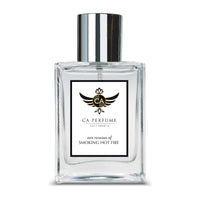
Smoking Hot Fire — Smoking Hot Alternative Perfume
6.87
MEI™
Primary Romantic
Secondary Confident
Confidence
6.65
Presence
7.19
Mood Lift
7.01
Identity
6.63
Warmth
8.18
Social Ease
6.33
Energy
4.3
" I am beautiful.
View full mood profile →
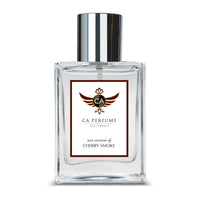
Cherry Smoke — Tom Ford Cherry Smoke Alternative Perfume
6.59
MEI™
Primary Magnetic
Secondary Confident
Confidence
7.14
Presence
8.03
Mood Lift
5.8
Identity
7.14
Warmth
6.75
Social Ease
5.98
Energy
5.1
" I am bold.
View full mood profile →
Bronze Wood & Leather Intense — Bronze Wood & Leather Cologne Intense Alternative Perfume
6.58
MEI™
Primary Magnetic
Secondary Confident
Confidence
7.43
Presence
8.57
Mood Lift
5.85
Identity
7.75
Warmth
6.35
Social Ease
5.49
Energy
4.0
" I am bold.
View full mood profile →
HumanSafe™

Top Smoke Fragrances by HumanSafe™ Score

These Smoke-based fragrances have the highest product-level HumanSafe™ scores in this ingredient collection.

Highest HumanSafe™ Score
Smoking Hot Fire — Smoking Hot Alternative Perfume
A-
HumanSafe™ Score Generally Safe
Safest Evaluated Ingredients EDP
AQUA Solvent / Carrier ISS 10.0
1,4-DIOXACYCLOHEPTADECANE-5,17-DIONE Evaluated ingredient ISS 10.0
BENZENE, 1-METHOXY-4-(1-PROPENYL)-, (E)- Evaluated ingredient ISS 9.0
2H-1-BENZOPYRAN-2-ONE Evaluated ingredient ISS 8.0
LINALYL ACETATE Evaluated ingredient ISS 7.0
BENZOIC ACID, 2,4-DIHYDROXY-3,6-DIMETHYL-, METHYL Evaluated ingredient ISS 7.0
View full safety profile →
Cherry Smoke — Tom Ford Cherry Smoke Alternative Perfume
A-
HumanSafe™ Score Generally Safe
Safest Evaluated Ingredients EDP
AQUA Solvent / Carrier ISS 10.0
1,4-DIOXACYCLOHEPTADECANE-5,17-DIONE Evaluated ingredient ISS 10.0
4H-INDEN-4-ONE, 1,2,3,5,6,7-HEXAHYDRO-1,1,2,3,3- Evaluated ingredient ISS 9.0
3-CYCLOPENTENE-1-ACETALDEHYDE, 2,2,3-TRIMETHYL-, Evaluated ingredient ISS 9.0
3-BUTEN-2-ONE, 3-METHYL-4-(2,6,6-TRIMETHYL-2- Evaluated ingredient ISS 8.0
2H-1-BENZOPYRAN-2-ONE Evaluated ingredient ISS 8.0
View full safety profile →
Bronze Wood & Leather Intense — Bronze Wood & Leather Cologne Intense Alternative Perfume
A-
HumanSafe™ Score Generally Safe
Safest Evaluated Ingredients EDP
AQUA Solvent / Carrier ISS 10.0
1,4-DIOXACYCLOHEPTADECANE-5,17-DIONE Evaluated ingredient ISS 10.0
3-CYCLOPENTENE-1-ACETALDEHYDE, 2,2,3-TRIMETHYL-, Evaluated ingredient ISS 9.0
2-HEXENE, 6,6-DIMETHOXY-2,5,5-TRIMETHYL- Evaluated ingredient ISS 8.0
LINALYL ACETATE Evaluated ingredient ISS 7.0
LINALOOL Evaluated ingredient ISS 7.0
View full safety profile →
Expert Voices

What Masters Say About Smoke

The smoky scent profile is often associated with tree resins that have woody and spicy undertones, such as olibanum (frankincense), myrrh, elemi, styrax, and woods like birch and juniper (cade).
ScentXplore Editorial
Smoke in perfumery is both a technical and emotional tool, anchoring compositions and evoking ancient rituals or modern urbanity.
CA Perfume Editorial
Common Questions

Frequently Asked Questions

Answers to common questions about smoke in perfumery, covering scent, usage, performance, and more.

Smoke in perfume smells ashy, resinous, leathery, and sometimes sweet or spicy. It is created using birch tar, cade oil, incense resins, and synthetic molecules like isobutyl quinoline. The scent can evoke campfires, burning incense, or smoldering tobacco, depending on the composition. Notable examples include Maison Margiela By the Fireplace and Serge Lutens Fumérie Turque.

Smoke is almost always used as a base note in fragrance due to its low volatility and strong tenacity. It anchors compositions and provides depth, often lingering for hours after application. Lighter smoky effects may appear in the heart, but the main impact is in the base.

Smoke is favored in niche perfumery for its ability to add complexity, mystery, and a ritualistic or nostalgic quality. It bridges woody, resinous, and spicy notes, creating unique, atmospheric compositions. Niche brands often experiment with higher concentrations and unusual pairings, making smoke a signature of avant-garde perfumery.

Smoke fragrance uses include pairing with vanilla, amber, oud, leather, patchouli, and spices. These notes share molecular affinities—such as guaiacols, quinolines, and resins—that create harmonious blends. Gourmand notes like vanilla soften ashy edges, while woods and leathers deepen the smoky effect.

Smoke perfumes can be worn in summer, but high temperatures increase volatility, making ashy and phenolic facets more prominent and short-lived. Lighter applications and pairing with citrus or aquatic notes can make smoke more wearable in hot weather. For best results, apply to hair or clothing for subtle diffusion.

Smoke fragrances, especially those anchored by birch tar, labdanum, and guaiac wood, typically last 5–10 hours on skin and even longer on fabric. The base notes are persistent, with the ashy and leathery trail lingering well into the drydown.

Yes, smoke can be layered with vanilla, amber, oud, citrus, or green notes for added complexity. Molecular compatibility is key: vanillin and coumarin soften smoke, while terpenes from citrus lift and diffuse heavier molecules. Layering enhances personalization and olfactory depth.

For beginners, Maison Margiela By the Fireplace and Akro Smoke offer accessible, photorealistic smoke effects. These fragrances balance ashy and sweet notes, making them easy to wear. For a more complex experience, try Serge Lutens Fumérie Turque or Arquiste Indigo Smoke.

Explore the CA Perfume collection by considering your preferred style: ashy and intense, sweet and gourmand, or resinous and woody. Use the HumanSafe™ platform for ingredient transparency and allergen information. Sampling is recommended to find the ideal smoke profile for your skin chemistry.

Smoke can present as sweet, spicy, or purely ashy depending on the materials used. Birch tar and cade oil are ashy and phenolic, while guaiac wood and labdanum add sweetness. Incense resins like frankincense and myrrh introduce spicy and lemony facets, allowing for a range of olfactory expressions.

Woody Smoky Collection

Explore Our Top Smoke Fragrances

Discover CA Perfume’s most popular smoke-inspired scents, from ashy leathers to sweet, resinous blends. Each fragrance showcases the complexity and versatility of smoke as a perfumery note.

Shop all smoke fragrances at CA Perfume →

Where Smoke Comes From — Origin & Extraction

Smoke as a perfumery note is not directly bottled, but recreated through extraction of materials that yield smoky aromas. Key natural sources include birch tar (from Betula pendula or Betula pubescens), cade oil (from Juniperus oxycedrus), frankincense (Boswellia sacra), myrrh (Commiphora myrrha), and guaiac wood (Bulnesia sarmientoi). Birch tar is produced by destructive distillation of birch bark at 500–700°C in the absence of oxygen, yielding a dark, viscous oil rich in guaiacol and cresols. Cade oil is similarly obtained by dry distillation of cade wood, primarily in southern France, with annual production volumes estimated at 10–20 metric tons. Frankincense and myrrh resins are harvested mainly in Oman, Somalia, and Ethiopia, with Oman producing about 7,000 metric tons of frankincense resin annually. Extraction is typically done by steam distillation or solvent extraction (hexane or ethanol), depending on the material. Synthetic smoke notes are created using molecules such as isobutyl quinoline, methyl cedryl ketone, and Saffraleine. Isobutyl quinoline, discovered by Ciba in 1913 (CAS 86-75-9), is a key component in smoky leather accords. Synthetic smoke molecules are produced at scale in Europe and Asia, with prices ranging from $50–$300 per kg, compared to $400–$1,000 per kg for natural birch tar or cade oil. Sustainability is a concern, especially for guaiac wood (CITES-listed) and overharvested resins. Synthetic alternatives are increasingly favored for consistency, lower allergenicity, and reduced environmental impact. The HumanSafe™ platform provides transparency on sourcing and allergen status for all smoke-related ingredients used in CA Perfume compositions.

Famous Fragrances That Define Smoke in Perfumery

Smoke has been a defining note in perfumery for centuries, from the ritualistic incense of antiquity to the avant-garde compositions of modern niche houses. Chanel’s Cuir de Russie (1927, perfumer Ernest Beaux) pioneered the use of birch tar for a smoky leather effect, paired with iris and jasmine. Serge Lutens’ Fumérie Turque (2003, perfumer Christopher Sheldrake) explores tobacco smoke with honey, rose, and leather. Maison Margiela’s By the Fireplace (2015, perfumer Marie Salamagne) is a contemporary classic, using birch and guaiac wood to evoke the scent of burning wood and roasted chestnuts. Arquiste’s Indigo Smoke (2022, perfumer Rodrigo Flores-Roux) layers smoky tea, incense, and woods for a nuanced, atmospheric signature. Akro’s Smoke (2018, perfumer Olivier Cresp) delivers a photorealistic cigarette smoke effect using cade oil, tobacco, and tonka bean. Other notable examples include Imaginary Authors’ A City on Fire (2014, perfumer Josh Meyer), which combines cade, labdanum, and dark woods for a dramatic, urban smoke impression. CA Perfume’s collection draws inspiration from this lineage, offering smoke as both a dominant and supporting note in a range of compositions.

Natural vs Synthetic Smoke in Perfumery

Natural smoke effects in perfumery are achieved using birch tar, cade oil, frankincense, myrrh, and guaiac wood. Key molecules include guaiacol (CAS 90-05-1), cresols, and phenols for birch tar; juniper-derived hydrocarbons for cade; and incensole acetate for frankincense. Synthetic smoke notes are built with isobutyl quinoline (CAS 86-75-9), Iso E Super (CAS 54464-57-2), and Saffraleine (CAS 65418-21-9). Synthetics offer greater stability, longevity, and batch-to-batch consistency, as well as reduced risk of skin sensitization compared to natural birch tar, which is IFRA-restricted due to polycyclic aromatic hydrocarbons (PAHs). Natural smoke notes are more complex and variable, evolving on skin and interacting with other notes in unpredictable ways. Synthetics are more linear but allow precise control over the smoky effect. Cost-wise, synthetics are significantly less expensive ($50–$300/kg) than natural birch tar or cade oil ($400–$1,000/kg). Famous fragrances using natural smoke notes include Chanel Cuir de Russie (1927, birch tar) and Tauer Perfumes Lonestar Memories (2006, cade oil). Modern compositions such as Maison Margiela By the Fireplace (2015) and Akro Smoke (2018, Olivier Cresp) rely on a blend of synthetics and naturals for a controlled, photorealistic smoke effect. The HumanSafe™ platform at CA Perfume ensures all smoke ingredients are screened for safety, transparency, and environmental impact.