Where Red Berries Comes From — Origin & Extraction
Red berries as a perfumery note are a synthetic olfactory concept, not a direct extract from fruit. While fruits like raspberry (Rubus idaeus), strawberry (Fragaria × ananassa), cranberry (Vaccinium macrocarpon), and red currant (Ribes rubrum) inspire the accord, their natural aroma compounds are present in such low concentrations (e.g., raspberry ketone at 1–4 mg/kg in ripe raspberries) that direct extraction is commercially unviable. Attempts at solvent extraction or distillation yield negligible aromatic material and are cost-prohibitive, with natural raspberry ketone costing $3,000–20,000/kg.
Modern red berry accords are constructed entirely from synthetic aroma chemicals. The backbone is frambinone (raspberry ketone, CAS 5471-51-2), typically synthesized via Claisen-Schmidt condensation of 4-hydroxybenzaldehyde with acetone, followed by catalytic hydrogenation. Other key molecules include ethyl methylphenylglycidate (strawberry aldehyde, CAS 77-83-8), beta-ionone (CAS 14901-07-6), and cis-3-hexenol (CAS 928-96-1). These compounds are produced in large-scale chemical plants, primarily in Europe (notably Switzerland, France, and Germany) and the United States. Synthetic frambinone is available at $40–80/kg, making it vastly more economical and sustainable than natural isolates.
No single country dominates the production of red berry aroma chemicals, as synthesis is a global industry. However, the inspiration for the accord draws on agricultural traditions from regions such as the Pacific Northwest (USA), Burgundy (France), and Poland, all major producers of edible red berries. Sustainability is inherent to the synthetic approach, as it avoids the agricultural and ecological impact of large-scale fruit harvesting. The HumanSafe™ platform at CA Perfume ensures full transparency and traceability for all synthetic aroma chemicals used in red berry accords.
Famous Fragrances That Define Red Berries in Perfumery
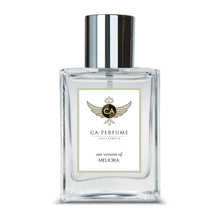
Red berries have become a signature top note in contemporary perfumery, used to impart a bright, playful, and juicy character to both feminine and unisex fragrances. One of the earliest and most influential uses was in Parfums de Marly Meliora (2013, Nathalie Lorson), where a sparkling red berry accord is paired with rose and vanilla, creating a lively, feminine introduction. Ralph Lauren Polo Red (2013, Olivier Gillotin) is another landmark, using a tangy red berry note as its defining signature, contrasted with saffron and amber-wood for a dynamic masculine scent.
Guerlain La Petite Robe Noire (2012, Thierry Wasser) showcases cherry and raspberry in the opening, blended with almond and licorice for a gourmand effect. Tom Ford Tuscan Leather (2007, Harry Fremont) uses raspberry as a bridge note, adding brightness and contrast to a leather-dominated composition. Slumberhouse Sadanne (2015, Josh Lobb) features a prominent strawberry note, paired with ambergris for a dense, syrupy effect. Other notable examples include Marc Jacobs Dot (2012, Annie Buzantian) and Yves Saint Laurent Parisienne (2009, Sophia Grojsman), both of which use red berry accords to create youthful, energetic openings.
These fragrances demonstrate the versatility of red berries as a top note, whether paired with florals, woods, or gourmand bases. CA Perfume’s collection draws inspiration from this lineage, offering red berry accords that balance tartness, sweetness, and freshness in a variety of olfactory contexts.
Natural vs Synthetic Red Berries in Perfumery
There is no commercially viable natural extraction of red berries for perfumery. The natural aroma compounds—such as raspberry ketone (frambinone, CAS 5471-51-2), ethyl methylphenylglycidate (CAS 77-83-8), and beta-ionone (CAS 14901-07-6)—occur in such low concentrations in fruit that direct extraction is impractical and prohibitively expensive (natural frambinone: $3,000–20,000/kg). All red berry accords in modern perfumery are constructed from synthetic molecules, with frambinone, beta-ionone, and ethyl methylphenylglycidate forming the core. Additional modifiers such as cis-3-hexenol (CAS 928-96-1) and gamma-decalactone (CAS 706-14-9) are used to add green and peachy facets, respectively.
Synthetic red berry accords offer superior performance in terms of longevity, diffusion, and batch consistency. Their volatility means they are best suited for top notes, with the effect peaking in the first 15–20 minutes. Notable fragrances using synthetic red berry accords include Parfums de Marly Meliora, Ralph Lauren Polo Red, and Guerlain La Petite Robe Noire. Natural berry absolutes, such as blackcurrant bud absolute, are used for green, animalic nuances but not for the sweet, juicy red berry effect.
The cost differential is substantial: synthetic frambinone is $40–80/kg, while natural isolates are orders of magnitude higher. Sustainability and supply chain transparency are enhanced by synthetic production, which avoids agricultural resource use and seasonal variability. CA Perfume’s HumanSafe™ platform provides full disclosure of all aroma chemicals in red berry accords, ensuring consumer safety and ethical sourcing.