

Smells like heaven. Fast shipping. I will purchase from this company again.
Best customer service, the scent is great but only lasted 2 hrs on me.
Everything is as advertised and the packaging and presentation was awesome
Juicy, tart, and subtly floral — the signature of vibrant red fruit.
Pomegranate is a heart note in perfumery, prized for its tart, juicy, and slightly floral character. Its signature scent is constructed from synthetic esters and green aldehydes, with 3-octen-1-yl acetate as a key molecule.

Pomegranate (Punica granatum) in perfumery is defined by a vibrant, tart, and juicy scent profile, constructed primarily from synthetic esters and aldehydes. The most significant aroma compound is 3-octen-1-yl acetate, which imparts a fresh, fruity, and slightly green note. Additional contributors include beta-myrcene, linalool, and (Z)-3-hexen-1-ol, which together create a complex interplay of sweet, sour, and faintly floral facets. The overall effect is a red fruit accord with a mineral edge, less sweet than strawberry and more astringent than raspberry, with a subtle pithy bitterness. In perfumery, pomegranate is almost exclusively a fantasy note, as no natural extract captures the full aromatic spectrum of the fresh fruit. It is typically used as a heart note, bridging citrus top notes and floral or woody bases. Concentrations in finished fragrances are usually below 3%, sufficient to impart a lively, juicy brightness without overwhelming the composition. Pomegranate interacts with skin chemistry by emphasizing its tartness on acidic skin and revealing more of its floral or musky undertones on alkaline skin, due to the volatility of its key synthetic components. Notable fragrances that exemplify pomegranate in perfumery include Jo Malone London Pomegranate Noir (2005, perfumer Beverley Bayne), where pomegranate is paired with clove, pink pepper, and woody notes for a spicy-fruity effect, and Versace Bright Crystal (2006, perfumer Alberto Morillas), which uses pomegranate as a sparkling, juicy top to a peony and musk heart. These compositions demonstrate the versatility of the pomegranate note as both a dominant and supporting element in modern scent design.
Pomegranate’s scent character is shaped by its geographic origin, with soil, climate, and cultivation methods influencing the aromatic profile. Warm, arid regions yield fruit with higher acidity and aromatic intensity.
Pomegranate (Punica granatum) is a fruit-bearing shrub native to the region spanning Iran to northern India, and has been cultivated across the Mediterranean, Central Asia, and California. Major producers include Iran, India, Turkey, and Spain, with Iran and India accounting for over 60% of global production (estimated at 3–4 million metric tons annually). In perfumery, the note is not derived from essential oil or absolute, as the volatile aroma compounds of fresh pomegranate are too delicate and fugitive for direct extraction. Attempts at cold-pressing or solvent extraction from seeds yield oils with minimal olfactory resemblance to the fruit, and CO2 extracts are primarily used in flavor rather than fragrance applications. The signature scent is instead constructed via synthetic chemistry. Key molecules such as 3-octen-1-yl acetate, beta-myrcene, linalool, and (Z)-3-hexen-1-ol are blended to recreate the tart, juicy, and slightly green character. High vacuum distillation (HVD) and GC–MS analysis of pomegranate arils have confirmed 3-octen-1-yl acetate as the principal odorant. Natural pomegranate seed oil is used in cosmetics for its antioxidant properties, but has negligible olfactory impact in perfumery. Synthetic pomegranate accords cost $50–200/kg, while natural extracts (where available) can exceed $3,000/kg but are rarely used for scent. Sustainability is not a major concern for synthetic pomegranate, as the key aroma chemicals are produced from widely available precursors. The absence of viable natural extraction means there is no agricultural pressure on pomegranate crops for fragrance use. The HumanSafe™ platform verifies the transparency and traceability of all synthetic pomegranate aroma chemicals used in CA Perfume’s supply chain.
The Fars and Kerman provinces produce pomegranates with intense acidity and aromatic complexity. Iran leads global production (over 1 million metric tons annually), with traditional hand-harvesting and sun-drying methods enhancing the fruit’s tartness.
Maharashtra is the primary region, known for large, sweet-tart pomegranates. India’s output exceeds 2 million metric tons, with drip irrigation and high-altitude cultivation yielding fruit with pronounced juiciness and subtle floral notes.
The Aegean and Mediterranean coasts produce pomegranates with a balanced sweet-tart profile. Turkey contributes over 500,000 metric tons annually, with PDO designations for select cultivars such as Hicaz.
Alicante and Murcia regions are known for pomegranates with refined sweetness and mild acidity. Spain’s annual production is around 60,000 metric tons, with EU PGI status for Mollar de Elche, reflecting strict quality standards.
There is no commercially viable natural pomegranate essential oil or absolute for perfumery. The note is always reconstructed from synthetic aroma chemicals, as the volatile esters and aldehydes responsible for the fruit’s scent are too unstable for direct extraction. Key synthetic molecules include 3-octen-1-yl acetate (CAS 2442-10-6), beta-myrcene (CAS 123-35-3), and (Z)-3-hexen-1-ol (CAS 928-96-1). Linalool (CAS 78-70-6) is also used to impart a floral lift. These synthetics offer superior stability, longevity, and batch-to-batch consistency compared to any natural extract. Performance-wise, synthetic pomegranate accords exhibit moderate diffusion and persistence, typically lasting 4–6 hours on skin. The cost is significantly lower than hypothetical natural extracts, with synthetic blends priced at $50–200/kg. Notable fragrances such as Jo Malone London Pomegranate Noir and Versace Bright Crystal rely entirely on synthetic pomegranate accords. Sustainability is enhanced by the use of renewable feedstocks and reduced agricultural impact. The HumanSafe™ platform ensures all pomegranate aroma chemicals used by CA Perfume are fully traceable and IFRA-compliant.
Pomegranate has become a signature note in modern perfumery, particularly in fruity-floral and spicy compositions. Jo Malone London Pomegranate Noir (2005, Beverley Bayne) is perhaps the most iconic, using pomegranate as a dominant note paired with clove, pink pepper, and woody accords to create a spicy, fruit-driven scent. Versace Bright Crystal (2006, Alberto Morillas) features pomegranate as a sparkling, juicy top note, complemented by peony, magnolia, and musk for a fresh, luminous effect. Calvin Klein Euphoria (2005, Dominique Ropion, Carlos Benaïm, Loc Dong) uses pomegranate in the opening, blending it with persimmon and green notes to set a sensual, modern tone. Jo Malone London Pomegranate Noir demonstrates the note’s versatility as both a dominant and bridge note, while Bvlgari Omnia Coral (2012, Alberto Morillas) employs pomegranate to enhance the fruity-floral heart alongside hibiscus and water lily. Demeter Fragrance Library Pomegranate (2000s) offers a photorealistic, single-note interpretation, focusing on the tart and juicy aspects of the fruit. CA Perfume’s pomegranate collection draws inspiration from these landmark fragrances, offering a range of interpretations from sparkling and fresh to spicy and deep.
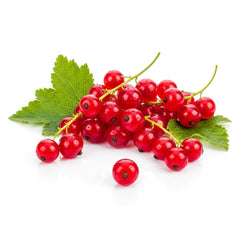
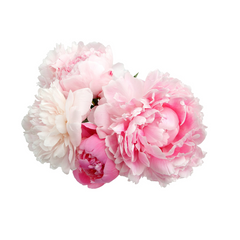
A pomegranate accord is built by blending tart, juicy, and subtly green facets. Typical proportions: Pomegranate Accord 30–35%, Red Currant 20–25%, Peony 20–25%, Musk 20–25%. Each ingredient is selected for its molecular compatibility, supporting the vibrant fruitiness and extending longevity.
Constructed from 3-octen-1-yl acetate, beta-myrcene, and green aldehydes to deliver tart, juicy, and slightly mineral facets.
Provides sharp, tangy acidity via hexanal and (E)-2-hexenal, enhancing the green and tart top notes.
Lends delicate floralcy through phenylethyl alcohol and linalool, bridging fruit and floral facets seamlessly.
Synthetic musks (e.g., galaxolide, muscenone) provide a soft, diffusive base, extending the accord’s longevity and rounding sharp edges.
Pomegranate’s olfactory evolution is defined by rapid evaporation of high-volatility esters in the top, followed by persistent fruity-floral heart notes and a soft, musky base. The scent transitions from tart and bright to warm and subtly earthy over several hours.
The opening is dominated by 3-octen-1-yl acetate and hexanal, producing a sparkling, tart, and juicy impression. These high-volatility compounds evaporate quickly, delivering an immediate burst of freshness and acidity reminiscent of freshly broken pomegranate arils.
As the top notes dissipate, beta-myrcene and linalool emerge, imparting a sweet, fruity, and subtly floral character. The heart is rounded by peony and red currant accords, balancing the tartness with a gentle, juicy sweetness.
The drydown is shaped by synthetic musks and soft woody notes, providing a warm, powdery, and slightly earthy foundation. Low-volatility compounds such as galaxolide and muscenone ensure a lingering softness that complements the initial brightness.
Pomegranate’s journey in perfumery spans from ancient symbolism to a modern synthetic fantasy note, with key milestones in fragrance chemistry and composition.
Pomegranate was revered in ancient Persia, Egypt, and Greece as a symbol of fertility and abundance. The fruit’s aromatic seeds were used in ritual and medicinal preparations, but not yet in perfumery.
Early perfumers experimented with pomegranate macerations and tinctures, but the volatile aroma compounds proved too unstable for commercial use.
GC–MS analysis identified 3-octen-1-yl acetate and beta-myrcene as key contributors to pomegranate’s scent, enabling the first synthetic reconstructions.
Beverley Bayne’s composition established pomegranate as a signature note in modern perfumery, blending it with spice and woods for a new fruity-spicy genre.
Pomegranate appears in a wide range of fragrances, from Versace Bright Crystal to Bvlgari Omnia Coral, and is now a staple in fruity-floral and gourmand compositions.
Understanding how to layer pomegranate is key to creating a multidimensional scent. Its tart, juicy profile bridges citrus, floral, and woody notes through shared esters and aldehydes.
Layering pomegranate with vanilla or tonka bean leverages olfactory masking, as vanillin softens the tart, acidic threshold of pomegranate’s esters. This combination is exemplified in fragrances like Bvlgari Omnia Coral, where vanilla rounds the fruitiness for a creamy finish.
Pairing pomegranate with woody notes such as cedar or patchouli introduces low-volatility molecules that extend the drydown and add structure. Calvin Klein Euphoria demonstrates this synergy, with patchouli grounding the fruit and enhancing longevity.
Combining pomegranate with citrus notes (bergamot, grapefruit) amplifies the sparkling top accord via shared aldehydes like hexanal. Versace Bright Crystal uses this approach, resulting in a luminous, energetic opening.
In cooler months, pomegranate’s tartness is tempered, and the fruity-floral heart becomes more prominent. Lower temperatures slow evaporation, resulting in a softer, more persistent scent. Apply to pulse points and consider layering with warm notes like amber or vanilla for added depth.
Spring’s mild temperatures enhance pomegranate’s natural brightness and juiciness. The note pairs well with peony, rose, and green accords, creating a fresh, uplifting effect. Apply lightly to avoid overwhelming delicate spring florals.
Heat increases the volatility of pomegranate’s esters, making the tart, juicy top notes more pronounced but shorter-lived. For best results, use lighter concentrations (EDT) and reapply as needed. Layer with citrus or aquatic notes for a refreshing summer signature.
Regardless of season, apply pomegranate fragrances to well-moisturized skin to enhance longevity. Adjust application intensity based on climate and personal preference, and experiment with layering to adapt the scent to changing weather.
Strategic application maximizes pomegranate’s projection and longevity, with pulse points and hair offering optimal diffusion.
Applying to the neck leverages body heat to accelerate the release of tart top notes, ensuring a vivid first impression. The proximity to the nose also enhances personal enjoyment of the scent’s evolution.
This area maintains a stable temperature, allowing the fruity-floral heart to persist. The skin’s thinness aids diffusion without overwhelming the senses.
Pulse points on the wrists amplify the volatility of esters, creating a dynamic, evolving scent trail. Avoid rubbing to preserve the integrity of delicate top notes.
Spraying on hair provides a gentle, continuous release of pomegranate’s aroma, as hair fibers trap and slowly emit volatile compounds. Use alcohol-free formulas to prevent dryness.
Layer pomegranate fragrances over unscented moisturizer to lock in moisture and extend longevity. For a customized signature, combine with complementary notes on different pulse points.
These Pomegranate-based fragrances scored highest on the MEI™ Mood Architecture Framework — measuring how a scent may influence your emotional state.
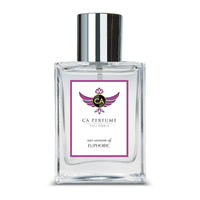
These Pomegranate-based fragrances have the highest product-level HumanSafe™ scores in this ingredient collection.
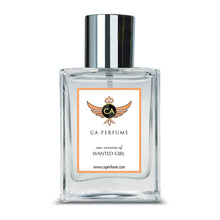
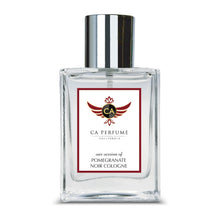
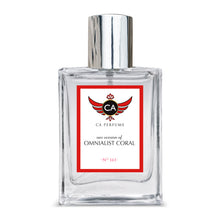
Pomegranate in perfumery is almost always a synthetic reconstruction. No commercial essential oil captures the fruit's volatile profile faithfully — the aroma is too delicate, too fugitive, too reliant on fresh-burst esters that decompose within hours of extraction.
GC-MS analysis of pomegranate juice identifies beta-myrcene, 1-hexanol, and (Z)-3-hexen-1-ol as key aroma-active compounds, with hexanal providing the characteristic green-tart attack.
Pomegranate’s tart, juicy profile is complemented by a range of fruity, floral, and woody notes, each contributing molecular bridges or contrasting textures.
Answers to common questions about pomegranate in perfumery.
Pomegranate in perfume smells tart, juicy, and slightly floral, with a vibrant red fruit character. The scent is constructed from synthetic esters and aldehydes, notably 3-octen-1-yl acetate, which imparts a fresh, sparkling acidity. The overall effect is a balance of sweet and sour, with subtle green and mineral undertones. Notable examples include Jo Malone London Pomegranate Noir and Versace Bright Crystal.
Pomegranate is typically used as a heart note in perfumery, though its high-volatility esters contribute to a vivid top note impression. In most compositions, it bridges the transition from citrus top notes to floral or woody bases, providing a juicy, tart lift in the heart of the fragrance.
Pomegranate is favored in niche perfumery for its ability to introduce a modern, vibrant fruitiness without the cloying sweetness of tropical notes. Its tart, mineral edge adds complexity and freshness, making it a versatile modifier in fruity-floral, spicy, and even woody compositions. The note’s synthetic construction allows for creative flexibility and batch consistency.
Pomegranate fragrance uses often involve pairing with peony, rose, red currant, and musk for a balanced fruity-floral effect. Woody notes like cedar and patchouli add depth, while citrus notes such as bergamot and grapefruit amplify the tart, sparkling top. These combinations are demonstrated in fragrances like Versace Bright Crystal and Calvin Klein Euphoria.
Yes, pomegranate’s tart, juicy profile is well-suited for summer, as heat enhances the volatility of its esters, making the scent more pronounced and refreshing. Lighter concentrations (EDT) and layering with citrus or aquatic notes are recommended for optimal performance in hot weather.
Synthetic pomegranate accords generally last 4–6 hours on skin. The top notes fade within the first hour due to high volatility, while the fruity-floral heart and musky base persist longer. Longevity can be extended by applying to moisturized skin or layering with fixative notes.
Yes, pomegranate layers well with a variety of notes. Its tartness can be softened with vanilla or tonka bean, deepened with woods, or brightened with citrus. Layering enhances complexity and allows for a customized scent signature, as demonstrated in fragrances like Bvlgari Omnia Coral.
Recommended entry points include Versace Bright Crystal for its sparkling, approachable fruitiness, Jo Malone London Pomegranate Noir for a spicy-fruity interpretation, and Demeter Fragrance Library Pomegranate for a photorealistic, single-note experience. Each offers a different perspective on the note’s versatility.
Consider your preferred scent profile—whether you favor tart and sparkling, fruity-floral, or deeper, spiced interpretations. CA Perfume’s collection spans a range of styles inspired by landmark pomegranate fragrances, and the HumanSafe™ platform ensures ingredient transparency and skin safety.
Pomegranate leans tart and juicy, with a subtle sweetness that is balanced by green and mineral facets. The note is less sugary than strawberry or raspberry, offering a refreshing, mouthwatering acidity that distinguishes it from other red fruit accords.
Discover CA Perfume’s curated selection of pomegranate-inspired scents, spanning sparkling fruity-florals to spicy, woody interpretations.
Shop all pomegranate fragrances at CA Perfume →Pomegranate (Punica granatum) is a fruit-bearing shrub native to the region spanning Iran to northern India, and has been cultivated across the Mediterranean, Central Asia, and California. Major producers include Iran, India, Turkey, and Spain, with Iran and India accounting for over 60% of global production (estimated at 3–4 million metric tons annually). In perfumery, the note is not derived from essential oil or absolute, as the volatile aroma compounds of fresh pomegranate are too delicate and fugitive for direct extraction. Attempts at cold-pressing or solvent extraction from seeds yield oils with minimal olfactory resemblance to the fruit, and CO2 extracts are primarily used in flavor rather than fragrance applications. The signature scent is instead constructed via synthetic chemistry. Key molecules such as 3-octen-1-yl acetate, beta-myrcene, linalool, and (Z)-3-hexen-1-ol are blended to recreate the tart, juicy, and slightly green character. High vacuum distillation (HVD) and GC–MS analysis of pomegranate arils have confirmed 3-octen-1-yl acetate as the principal odorant. Natural pomegranate seed oil is used in cosmetics for its antioxidant properties, but has negligible olfactory impact in perfumery. Synthetic pomegranate accords cost $50–200/kg, while natural extracts (where available) can exceed $3,000/kg but are rarely used for scent. Sustainability is not a major concern for synthetic pomegranate, as the key aroma chemicals are produced from widely available precursors. The absence of viable natural extraction means there is no agricultural pressure on pomegranate crops for fragrance use. The HumanSafe™ platform verifies the transparency and traceability of all synthetic pomegranate aroma chemicals used in CA Perfume’s supply chain.
Pomegranate has become a signature note in modern perfumery, particularly in fruity-floral and spicy compositions. Jo Malone London Pomegranate Noir (2005, Beverley Bayne) is perhaps the most iconic, using pomegranate as a dominant note paired with clove, pink pepper, and woody accords to create a spicy, fruit-driven scent. Versace Bright Crystal (2006, Alberto Morillas) features pomegranate as a sparkling, juicy top note, complemented by peony, magnolia, and musk for a fresh, luminous effect. Calvin Klein Euphoria (2005, Dominique Ropion, Carlos Benaïm, Loc Dong) uses pomegranate in the opening, blending it with persimmon and green notes to set a sensual, modern tone. Jo Malone London Pomegranate Noir demonstrates the note’s versatility as both a dominant and bridge note, while Bvlgari Omnia Coral (2012, Alberto Morillas) employs pomegranate to enhance the fruity-floral heart alongside hibiscus and water lily. Demeter Fragrance Library Pomegranate (2000s) offers a photorealistic, single-note interpretation, focusing on the tart and juicy aspects of the fruit. CA Perfume’s pomegranate collection draws inspiration from these landmark fragrances, offering a range of interpretations from sparkling and fresh to spicy and deep.
There is no commercially viable natural pomegranate essential oil or absolute for perfumery. The note is always reconstructed from synthetic aroma chemicals, as the volatile esters and aldehydes responsible for the fruit’s scent are too unstable for direct extraction. Key synthetic molecules include 3-octen-1-yl acetate (CAS 2442-10-6), beta-myrcene (CAS 123-35-3), and (Z)-3-hexen-1-ol (CAS 928-96-1). Linalool (CAS 78-70-6) is also used to impart a floral lift. These synthetics offer superior stability, longevity, and batch-to-batch consistency compared to any natural extract. Performance-wise, synthetic pomegranate accords exhibit moderate diffusion and persistence, typically lasting 4–6 hours on skin. The cost is significantly lower than hypothetical natural extracts, with synthetic blends priced at $50–200/kg. Notable fragrances such as Jo Malone London Pomegranate Noir and Versace Bright Crystal rely entirely on synthetic pomegranate accords. Sustainability is enhanced by the use of renewable feedstocks and reduced agricultural impact. The HumanSafe™ platform ensures all pomegranate aroma chemicals used by CA Perfume are fully traceable and IFRA-compliant.