Where Oakmoss Comes From — Origin & Extraction
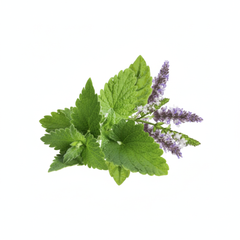
Oakmoss is derived from Evernia prunastri, a lichen that thrives on the bark of oak trees and, less commonly, on other deciduous and coniferous species in temperate forests. The primary harvesting regions are the Balkan Peninsula (notably Macedonia and Bulgaria), with additional production in France and Morocco. Annual global production is estimated at several hundred metric tons, with the Balkans supplying the majority of the market. Harvesting occurs in winter and spring, when the lichen is manually collected from tree bark.
Extraction of oakmoss for perfumery is performed via solvent extraction, typically using volatile solvents such as hexane or ethanol. The process involves soaking the dried lichen in solvent, yielding a concrete, which is then further processed with ethanol to produce oakmoss absolute—a dark green, viscous liquid with a yield of approximately 1 kg absolute from 100 kg raw lichen. The absolute is prized for its fixative properties and complex aroma. In the past, vacuum distillation was also used, producing a lighter, drier extract, but solvent extraction remains the industry standard due to higher aromatic fidelity.
Natural oakmoss absolute is costly, with prices ranging from $500–$1,200 per kg depending on purity and allergen content. Synthetic substitutes, such as Evernyl (methyl 2,4-dihydroxy-3,6-dimethylbenzoate, CAS 4707-47-5), are significantly less expensive at $50–$150 per kg. Since 2017, IFRA regulations have restricted the use of natural oakmoss to less than 100 ppm of atranol and chloroatranol, leading to the development of 'purified' or 'lightened' oakmoss absolutes. Sustainability concerns center on overharvesting and biodiversity; however, the relatively slow growth of Evernia prunastri and manual collection methods have prompted efforts to regulate and certify sustainable harvesting practices.
Famous Fragrances That Define Oakmoss in Perfumery
Oakmoss is a cornerstone of the chypre and fougère fragrance families, serving as a structural base note and fixative. Its role is most famously exemplified in François Coty’s Chypre (1917), which established the classic chypre accord—bergamot, labdanum, and oakmoss. Guerlain Mitsouko (1919, Jacques Guerlain) further refined this structure, pairing oakmoss with peach, rose, and spices to create a fragrance of enduring complexity and longevity. Chanel No. 19 (1970, Henri Robert) uses oakmoss as a green, earthy anchor for iris and galbanum, resulting in a crisp, sophisticated floral-chypre.
In contemporary perfumery, Chloé Nomade (2018, Quentin Bisch) reinterprets the chypre structure with a transparent, modern oakmoss note, blending it with Mirabelle plum and freesia. Rogue Perfumery’s Mousse Illuminee (2017, Manuel Cross) is a niche creation that celebrates the vintage, mossy character of oakmoss using both natural and synthetic forms. These fragrances illustrate oakmoss’s versatility: as a dominant note in Mitsouko, a bridge note in Chanel No. 19, and an accent in Chloé Nomade. CA Perfume’s oakmoss-inspired collection draws on this lineage, offering both classic and contemporary interpretations for modern wearers.
Natural vs Synthetic Oakmoss in Perfumery
Natural oakmoss absolute contains a complex mixture of phenolic compounds, depsides (notably evernic acid), and trace allergens such as atranol (CAS 526-37-4) and chloroatranol (CAS 57074-21-2). These molecules are responsible for the signature earthy, mossy, and slightly bitter aroma, but also for allergenic potential. IFRA regulations now limit natural oakmoss to less than 0.1% in finished fragrances, with further restrictions on atranol and chloroatranol content (<100 ppm).
To address these restrictions, perfumers use purified oakmoss absolutes (with allergens removed) or synthetic substitutes. The most common synthetic is Evernyl (methyl 2,4-dihydroxy-3,6-dimethylbenzoate, CAS 4707-47-5), which mimics the creamy, mossy facets of natural oakmoss but lacks its full complexity. Other aroma chemicals include Veramoss (CAS 4707-47-5, a trade name for Evernyl) and Methyl β-orcinolcarboxylate. Synthetics offer greater stability, batch consistency, and lower cost (typically $50–$150/kg versus $500–$1,200/kg for natural absolute), but may lack the nuanced, earthy depth of the natural extract.
Famous fragrances such as Guerlain Mitsouko and Chanel No. 19 originally relied on natural oakmoss, but have been reformulated with purified or synthetic versions to comply with modern safety standards. Sustainability and supply chain transparency are increasingly important; the HumanSafe™ platform verifies allergen content and sustainable sourcing for both natural and synthetic oakmoss ingredients.