Where French Labdanum Comes From — Origin & Extraction
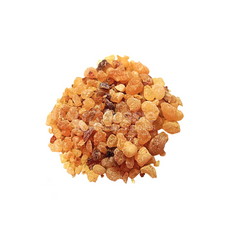
French Labdanum is derived from the resin of the Cistus ladanifer plant, a shrub native to the Mediterranean basin, especially southern France, Spain, and Morocco. The plant thrives in dry, rocky soils typical of Mediterranean climates. The resin, known as labdanum, is secreted by the leaves and stems during the summer months as a protective gum.
The primary production centers include the Andévalo region in Spain (notably Huelva province), southern France near the Estérel massif, and parts of Morocco. Spain accounts for approximately 80% of global labdanum production, with annual harvests around 10,000 tons of raw material.
Extraction methods for French Labdanum include solvent extraction (using hexane or ethanol) to produce the absolute, and supercritical CO2 extraction, which preserves delicate aromatic compounds. Steam distillation is less common due to heat sensitivity of key odorants. The absolute yields are low, typically 1-3% of raw resin weight.
Natural French Labdanum absolute costs range from $3,000 to $6,000 per kilogram, reflecting its labor-intensive harvesting and extraction. Sustainability efforts focus on wild harvesting regulation and cultivation to prevent overexploitation. Synthetic analogues are produced via lab synthesis but lack the full complexity of the natural resin.
Famous Fragrances That Define French Labdanum in Perfumery
French Labdanum has been a cornerstone in numerous iconic fragrances, prized for its warm, resinous, and leathery character that anchors amber and woody accords.
Le Labo's Labdanum 18 (2011, perfumer Fabrice Pellegrin) showcases labdanum as the dominant note, creating a rich amber heart layered with vanilla and musk, epitomizing the resin's sensual depth.
Molinard's Habanita (1921) uses labdanum as a base note, contributing smoky, leathery facets that define its vintage elegance.
Serge Lutens' Ambre Sultan (2000, perfumer Christopher Sheldrake) employs labdanum as a bridge note, blending it with spices and patchouli to create a warm oriental composition.
Giorgio Armani's Acqua di Giò Profondo Parfum (2020, perfumer Alberto Morillas) features labdanum as a supporting note, enhancing the woody and amber nuances.
Yves Saint Laurent's 6 Place Saint Sulpice (2019, perfumer Dominique Ropion) integrates labdanum to add depth and complexity to its amber accord.
These fragrances demonstrate labdanum's versatility across eras and styles, from vintage classics to contemporary masterpieces. CA Perfume's collection honors this lineage by incorporating French Labdanum in accords that emphasize its rich, warm qualities.
Natural vs Synthetic French Labdanum in Perfumery
Natural French Labdanum absolute is a complex mixture of sesquiterpenes, cistuslactones, and other resinous compounds, providing a rich, warm, and variable aroma profile. It is extracted primarily by solvent or supercritical CO2 methods, resulting in a product with nuanced balsamic, amber, and leathery facets. The cost of natural labdanum absolute is approximately $3,000 to $6,000 per kilogram.
Synthetic substitutes focus on aroma chemicals such as safranal (CAS 116-26-7), which replicates the hay-like, metallic facets, and analogues like isophorone and 2,6,6-trimethylcyclohex-2-ene-1,4-dione to mimic leathery and amber notes. These synthetics offer consistency, stability, and cost efficiency, priced between $50 and $200 per kilogram.
Performance-wise, natural labdanum offers greater olfactory complexity and depth but can vary between batches. Synthetic versions provide stable, reproducible scent profiles with longer shelf life and less allergenic potential. Famous fragrances like Le Labo Labdanum 18 use natural absolute, while some mass-market perfumes rely on synthetics for cost and consistency.
The HumanSafe™ platform emphasizes transparency in sourcing and safety, with CA Perfume prioritizing natural French Labdanum for its authentic aromatic qualities while balancing sustainability and ethical considerations.