Where Boronia Comes From — Origin & Extraction
Boronia megastigma, commonly called Brown Boronia, is a shrub native to the southwest of Western Australia and cultivated in Tasmania. Nearly all commercial Boronia absolute is sourced from these regions, with Tasmania accounting for the majority of global production. The plant belongs to the Rutaceae (citrus) family, and its intensely aromatic flowers are cup-shaped, dark brown to purple on the outside and bright yellow inside. Approximately 12.5 million blossoms are required to yield just 1 kilogram of Boronia absolute, with annual production volumes rarely exceeding a few dozen kilograms due to the short harvest window (2–4 weeks in September) and labor-intensive collection.
Extraction is performed via solvent extraction: freshly harvested flowers are first extracted with petroleum ether or hexane to produce a waxy concrete, which is then re-extracted with ethanol to yield Boronia absolute. The process is highly sensitive to environmental conditions, and a critical 48-hour composting phase post-harvest is necessary to maximize beta-ionone content through enzymatic transformation. The resulting absolute is a dark green to brown, viscous liquid with a powerful, multifaceted aroma. Yields are extremely low, and the cost of Boronia absolute ranges from $11,000 to $15,000 per kilogram, making it one of the most expensive natural perfumery materials.
Synthetic substitutes (primarily beta-ionone, CAS 14901-07-6) are sometimes used to replicate Boronia’s violet-raspberry facets, but lack the full complexity of the natural extract. Sustainability concerns are significant: wild populations are vulnerable to overharvesting, and most production now relies on managed plantations with strict quotas. The industry is exploring clonal propagation and improved agronomic practices to ensure long-term viability, but Boronia remains a rare and precious resource in perfumery.
Famous Fragrances That Define Boronia in Perfumery
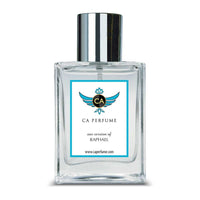
Boronia has appeared in both classic and contemporary fragrances, often as a supporting note but occasionally as a star ingredient. In Diorissimo (Dior, 1956, Edmond Roudnitska), Boronia’s violet and hay-like facets support the iconic lily-of-the-valley accord, enhancing its naturalistic freshness. Ralph (Ralph Lauren, 2000, Alain Alchenberger) uses Boronia to add a fruity-floral lift to its youthful bouquet. DS&Durga’s Radio Bombay (2016, David Seth Moltz) pairs Boronia’s tea and woody notes with sandalwood and spice, creating a modern, atmospheric composition. Goldfield & Banks Southern Bloom (2018, François Merle-Baudoin) is a rare example where Boronia absolute is the central theme, showcasing its full evolution from green to floral to woody. Grandiflora Boronia (2017, Bertrand Duchaufour) explores the note’s complexity with a focus on its green, mossy, and hay-like qualities. These fragrances demonstrate Boronia’s versatility—functioning as a dominant note, bridge, or accent—and its ability to harmonize with florals, woods, and fruits. CA Perfume’s collection draws inspiration from this lineage, offering Boronia-forward compositions that respect the material’s rarity and olfactory depth.
Natural vs Synthetic Boronia in Perfumery
Natural Boronia absolute is chemically complex, containing beta-ionone, alpha-ionone, dodecyl acetate, linalool, and jasmonates, among others. Synthetic versions typically rely on isolated beta-ionone (CAS 14901-07-6), alpha-ionone (CAS 127-41-3), and methyl jasmonate (CAS 39924-52-2) to recreate the floral, fruity, and tea-like aspects of Boronia. While synthetics offer greater consistency, stability, and affordability (beta-ionone costs $100–$300/kg), they lack the nuanced evolution and depth of the natural absolute, which contains hundreds of minor constituents contributing to its unique profile.
Performance-wise, synthetic blends can provide strong projection and longevity, but may feel linear compared to the evolving, layered effect of true Boronia. Notable fragrances using natural Boronia include Goldfield & Banks Southern Bloom and Grandiflora Boronia, while many mainstream compositions employ beta-ionone and related molecules to evoke similar effects at a fraction of the cost. Sustainability and supply chain transparency are critical, as natural Boronia is vulnerable to overharvesting and adulteration. The HumanSafe™ platform is used to verify the provenance and composition of Boronia materials, ensuring ethical sourcing and consumer safety. Overall, natural Boronia is reserved for high-end niche perfumery, while synthetics expand access to its signature scent profile in broader applications.