Ingredient Guide · Floral Woody
Floral Woody Family · Perfumery Note

Black Violet

Lush, dark florals meet earthy intrigue in perfumery’s velvet heart.

Black violet is a heart note in perfumery, prized for its rich, dark floral character and earthy undertones. Its signature scent is shaped by a blend of ionones and supporting green notes, typically used at concentrations below 2%.

Black Violet
Ingredient Profile

Black Violet

Floral Woody Family
Family Floral Woody
Note Position Heart Note
Usage Level <2%
Key Origins France, Italy, United States
Iconic In Black Violet, Black Violet
The Ingredient

What does Black Violet smell like and why is it significant in perfumery?

Black violet is a striking floral ingredient with a scent profile that combines lush, dark florals and subtle earthy nuances. The primary molecular contributors to its aroma are ionones (notably alpha- and beta-ionone), which impart a powdery, woody-floral character, while supporting green notes add freshness and depth. What does black violet smell like? Its fragrance is both rich and compelling—velvety floral, slightly fruity, with an undercurrent of moss and woods. The black violet scent profile is further shaped by trace molecules such as methyl ionone and violet leaf aldehydes, which contribute to its complexity and longevity. In perfumery, black violet is typically classified as a heart note, used at concentrations below 2% of the total composition. Its molecular structure allows it to interact dynamically with skin chemistry: acidic skin can amplify its powdery facets, while alkaline skin may bring out its green, earthy undertones. Black violet in perfumery is valued for its ability to bridge floral and woody accords, imparting sophistication and intrigue to both feminine and unisex fragrances. Notable examples include Tom Ford Black Violet (2007, perfumers Clement Gavarry and Pascal Gaurin), where black violet is paired with citrus, oakmoss, and woods to create a chypre-floral structure, and Alyson Oldoini Black Violet (2013, Benoist Lapouza), which highlights its ozonic, green, and musky qualities. These compositions demonstrate the versatility of black violet in both classic and contemporary perfumery.

1–2 Sprays
A minimal application is sufficient due to black violet’s strong olfactory impact, especially when used as a heart note at concentrations below 2%.
4–6 Hours
Typical longevity for black violet in Eau de Parfum formulations, reflecting the persistence of ionones and supporting woody musks.
<2%
Maximum recommended concentration of black violet absolute or synthetic ionones in finished fragrances, balancing impact and safety.
Origin & Extraction

Where Black Violet Comes From — Origin & Extraction

The scent character of black violet is influenced by its geographic origin, with soil composition, climate, and traditional harvesting methods shaping the aromatic profile. French black violet is noted for its powdery depth, Italian for its floral vibrancy, and US-grown violet for its green, fresh nuance.

Black violet, as used in perfumery, refers to the aromatic profile derived from the flowers of Viola odorata and related species. While natural violet flower absolute is historically prized, it is considered a 'mute' flower—its scent cannot be extracted by traditional distillation. Instead, extraction relies on solvent methods (hexane or ethanol) or supercritical CO₂ to obtain violet absolute from the flowers, though yields are extremely low (less than 0.01% by weight), making it one of the most expensive natural ingredients at $3,000–6,000/kg. The majority of natural violet absolute production historically occurred in France (notably in the Toulouse region), with Italy and the United States also contributing to niche supply chains. France’s output is now limited, with most violet notes in modern perfumery created synthetically. Synthetic violet notes are primarily constructed from ionones (CAS 127-41-3 for alpha-ionone, 14901-07-6 for beta-ionone), methyl ionone (CAS 1335-46-2), and supporting molecules such as safranal (CAS 116-26-7) for earthy nuances. These synthetics are produced at scale by major aroma chemical manufacturers in Europe and the US, with costs ranging from $50–200/kg. The use of synthetics ensures batch consistency, stability, and a reduced environmental footprint compared to natural extraction, which is resource-intensive and unsustainable at scale. Sustainability efforts focus on lab synthesis and upcycling of byproducts to minimize ecological impact, and the HumanSafe™ platform is used for ingredient transparency and safety verification.

FR

France

Toulouse and Grasse regions are renowned for producing violet flower absolute with a pronounced powdery, sweet aroma. The calcareous soils and moderate rainfall yield flowers rich in ionones. French production is now limited, but historically dominated the market.

IT

Italy

Parma and Florence regions cultivate violet with a focus on floral vibrancy and subtle fruitiness. The Mediterranean climate and alluvial soils contribute to a lighter, more nuanced scent. Italy accounts for a small but high-quality share of global production.

US

United States

California and Pacific Northwest growers supply niche perfumery with violet characterized by green, fresh, and slightly ozonic notes. US production is artisanal, with small volumes and a focus on sustainable practices.

Chemistry

Natural vs Synthetic Black Violet in Perfumery

Natural black violet absolute, when available, is extracted via solvent or supercritical CO₂ from Viola odorata flowers, yielding a complex, variable aroma rich in ionones and trace aldehydes. However, due to extremely low yields and high cost ($3,000–6,000/kg), most black violet notes in perfumery are constructed from synthetic molecules. Key synthetics include alpha-ionone (CAS 127-41-3), beta-ionone (CAS 14901-07-6), and methyl ionone (CAS 1335-46-2), which replicate the powdery, woody, and floral facets of natural violet. Safranal (CAS 116-26-7) and violet leaf aldehydes are also used to enhance earthy and green nuances. Performance-wise, synthetics offer greater stability, batch consistency, and improved longevity (4–6 hours typical for heart notes), while natural absolutes can vary significantly by harvest and are less stable. Cost differentials are substantial: synthetics cost $50–200/kg, making them accessible for both niche and mass-market perfumery. Famous fragrances such as Tom Ford Black Violet (2007) and Guerlain Insolence (2006) rely primarily on synthetic ionones for their violet signature. Sustainability and supply chain transparency are addressed through the HumanSafe™ platform, which verifies both natural and synthetic ingredient sourcing and safety. CA Perfume utilizes this approach to ensure responsible formulation and consumer confidence.

Natural
Black Violet Absolute
Cost $3,000–6,000/kg
Method Solvent / CO₂
Character Complex, variable
vs
Synthetic
Safranal & Analogues
Cost $50–200/kg
Method Lab synthesis
Character Consistent, stable
Hall of Fame

Famous Fragrances That Define Black Violet in Perfumery

2007
dominant note

Black Violet

Tom Ford
by Clement Gavarry, Pascal Gaurin
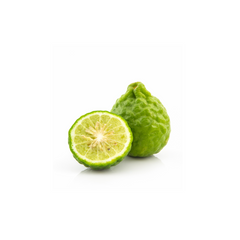
CitrusesBergamotOakmossWoodsy Notes
2013
dominant note

Black Violet

Alyson Oldoini
by Benoist Lapouza
Violet LeafHeliotropeIrisMuskRaspberry
2006
bridge note

Insolence Eau de Parfum

Guerlain
by Maurice Roucel, Sylvaine Delacourte
RaspberryOrange BlossomTonka Bean
2018
accent

Violet Ida

Miller Harris
by Mathieu Nardin
AmberOrrisVanilla
2009
supporting note

Bal d'Afrique

Byredo
by Jérôme Epinette
African MarigoldBergamotVetiverAmber

Black violet has been featured in several landmark fragrances, often as a heart note that bridges floral and woody accords. Tom Ford Black Violet (2007, perfumers Clement Gavarry and Pascal Gaurin) is a quintessential example, blending black violet with citrus, oakmoss, and woods to create a dark, chypre-floral signature. Alyson Oldoini Black Violet (2013, Benoist Lapouza) explores a more ozonic, green, and musky interpretation, pairing violet flower and leaf with heliotrope and iris. Guerlain Insolence Eau de Parfum (2006, Maurice Roucel and Sylvaine Delacourte) employs ionones to create a candied, powdery violet effect, while Miller Harris Violet Ida (2018, Mathieu Nardin) uses violet in a modern, woody context with amber and orris. Byredo Bal d'Afrique (2009, Jérôme Epinette) incorporates violet as an accent to enhance its floral-woody structure, demonstrating the versatility of this note across genres. CA Perfume’s collection draws inspiration from these benchmarks, offering black violet compositions that honor both classic and contemporary approaches.

The Accord

How is a captivating Black Violet accord crafted?

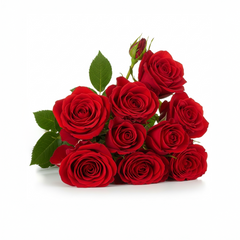
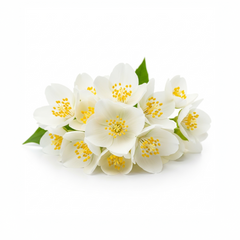
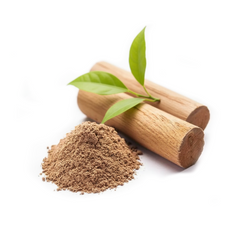
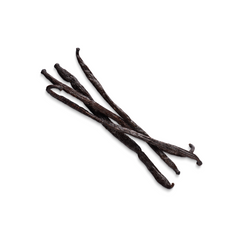
A black violet accord is constructed by blending black violet absolute or ionones (25–30%) with jasmine (20–25%) for floral sweetness, rose (20–25%) for powdery depth, sandalwood (25–30%) for creamy warmth, and a touch of vanilla (20–25%) to round the blend. Jasmine’s indole content amplifies the lushness, rose’s damascenone bridges violet’s powdery facets, sandalwood’s santalols provide a soft, woody base, and vanilla’s vanillin masks sharpness, creating a balanced, multifaceted accord.

30%

Black Violet

25–30% of blend

Provides the core powdery, woody-floral character via ionones and methyl ionone, forming the signature of the accord.

25%

Jasmine

20–25% of blend

Jasmine’s indole and benzyl acetate enhance the floral sweetness and add radiance, complementing violet’s darker facets.

25%

Rose

20–25% of blend

Rose’s damascenone and phenylethyl alcohol bridge the powdery and fruity aspects, deepening the accord’s complexity.

30%

Sandalwood

25–30% of blend

Sandalwood’s santalols provide a creamy, woody base, stabilizing the volatile floral notes and extending the accord’s longevity.

The Olfactory Layers

How Black Violet Evolves on Skin

Black violet fragrances evolve from bright, green-floral top notes to a lush, powdery heart and settle into a woody, mossy base. The olfactory evolution is driven by the volatility of ionones and supporting aldehydes, with top notes dissipating within 15 minutes and heart/base notes persisting for hours.

I
Top notes
0–15 min
Green Floral Spark

The initial impression is a burst of green, dewy florals and subtle citrus, created by high-volatility aldehydes and supporting fruit esters. These compounds evaporate quickly, providing a fleeting freshness that sets the stage for the heart.

GreenDewyCitrus
II
Heart notes
20–60 min
Powdery Velvet

The heart reveals the core black violet character: powdery, woody-floral, and slightly fruity. Alpha- and beta-ionone dominate, supported by methyl ionone and floral indoles from jasmine and rose. This stage is rich, velvety, and multidimensional.

PowderyFloralVelvety
III
Base notes
Several hours
Woody Mossy Depth

As the fragrance dries down, woody and mossy notes emerge, anchored by sandalwood, oakmoss, and musks. These heavier molecules have low volatility, providing longevity and a lingering earthy, slightly sweet finish.

WoodyMossyEarthy
TOP NOTES Green Floral Spark 0–15 minutes HEART NOTES Powdery Velvet 20–60 minutes BASE NOTES Woody Mossy Depth Several hours
Through the Ages

The Story of Black Violet in Perfumery

Black violet’s history in perfumery spans from 19th-century French extraction to modern synthetic innovation, shaping both classic and contemporary fragrance design.

Late 1800s

Violet Absolute Extraction in France

French perfumers in Toulouse and Grasse develop solvent extraction techniques to obtain violet absolute, prized for its powdery, floral aroma. Production remains limited due to low yields.

1938

Charabot’s Fractionated Violet Oil

Charabot refines violet absolute via molecular distillation, producing high-purity extracts used in haute couture perfumery. These rare ingredients define vintage floral compositions.

1960s

Synthetic Ionones Revolutionize Violet Notes

The widespread adoption of alpha- and beta-ionone enables consistent, affordable violet notes in perfumery. Ionones become foundational to modern floral and powdery accords.

2007

Tom Ford Black Violet Launch

Tom Ford releases Black Violet, a chypre-floral fragrance by Clement Gavarry and Pascal Gaurin, showcasing black violet’s dark, woody-floral signature in a contemporary context.

2018

Niche Violet Renaissance

Miller Harris Violet Ida and other niche releases explore new facets of violet, blending natural and synthetic ingredients to create complex, modern interpretations.

The Art of Layering

How to Layer Black Violet

Understanding how to layer black violet involves molecular compatibility—shared ionones, damascenone, and vanillin create seamless transitions between notes.

01

Enhance Sweetness

Layer black violet with vanilla or tonka bean to amplify its powdery, sweet facets. Vanillin and coumarin molecules mask sharpness and increase perceived warmth, as seen in Guerlain Insolence and Miller Harris Violet Ida.

02

Add Depth

Combine black violet with sandalwood or patchouli to accentuate woody and earthy undertones. Santalols and patchoulol molecules stabilize volatile ionones, extending longevity and adding complexity, as demonstrated in Tom Ford Black Violet.

03

Lighten the Glow

Pair black violet with citrus or green notes (bergamot, violet leaf) to emphasize freshness and lift. Limonene and cis-3-hexenol molecules create a crisp, airy effect, ideal for spring and summer layering, as in Byredo Bal d'Afrique.

Wear It Right

How to Wear Black Violet Like a Pro

Seasonal Guide

Fall & Winter

Cool temperatures slow the evaporation of volatile top notes, allowing black violet’s powdery, woody heart to linger. Apply to pulse points for enhanced diffusion, and consider layering with amber or vanilla for added warmth.

Spring

Moderate temperatures and increased humidity accentuate the fresh, green facets of black violet. Pair with citrus or green notes to highlight its dewy, floral character. Apply lightly to avoid overwhelming the senses.

Summer

Heat increases molecular volatility, causing top notes to dissipate rapidly and revealing the heart and base more quickly. Use minimal application and layer with lighter florals or aquatic notes for a refreshing effect.

Year-Round Tip

Adjust application based on climate and personal skin chemistry. In dry conditions, moisturize skin before applying to enhance longevity; in humid conditions, use sparingly to prevent over-projection.

Application Points

Strategic application maximizes black violet’s olfactory impact and longevity.

1

Neck

Pulse points on the neck generate heat, accelerating the release of volatile top notes and enhancing initial projection of black violet’s green, dewy facets.

2

Behind the Ears

This area is slightly cooler, allowing the heart and base notes to develop gradually, emphasizing the powdery, woody-floral character over time.

3

Inner Wrists

The warmth and movement of the wrists promote even evaporation, revealing the full evolution from top to base. Avoid rubbing to preserve molecular integrity.

4

Hair

Hair fibers retain fragrance molecules, providing sustained release of black violet’s floral and woody notes throughout the day. Apply lightly to avoid buildup.

Pro Tip

Layer black violet with complementary notes (rose, jasmine, sandalwood) on different pulse points for a multidimensional scent experience tailored to your skin chemistry.

Mood Architecture™

Top Black Violet Fragrances by Mood Score

These Black Violet-based fragrances scored highest on the MEI™ Mood Architecture Framework — measuring how a scent may influence your emotional state.

Highest MEI Score
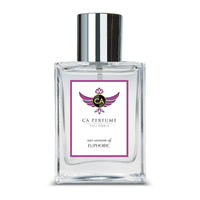
Euphoric — Euphoria Alternative Perfume
7.31
MEI™
Primary Romantic
Secondary Confident
Confidence
7.17
Presence
7.64
Mood Lift
7.53
Identity
7.81
Warmth
7.78
Social Ease
7.17
Energy
3.6
" I am beautiful.
View full mood profile →
Black Saffron — Byredo Black Saffron Alternative Perfume
6.65
MEI™
Primary Romantic
Secondary Confident
Confidence
6.72
Presence
7.22
Mood Lift
7.01
Identity
7.26
Warmth
6.32
Social Ease
6.49
Energy
2.9
" I am beautiful.
View full mood profile →
HumanSafe™

Top Black Violet Fragrances by HumanSafe™ Score

These Black Violet-based fragrances have the highest product-level HumanSafe™ scores in this ingredient collection.

Highest HumanSafe™ Score
Euphoric — Euphoria Alternative Perfume
A-
HumanSafe™ Score Generally Safe
Safest Evaluated Ingredients EDP
AQUA Solvent / Carrier ISS 10.0
1,4-DIOXACYCLOHEPTADECANE-5,17-DIONE Evaluated ingredient ISS 10.0
BENZYL SALICYLATE Evaluated ingredient ISS 9.0
LINALYL ACETATE Evaluated ingredient ISS 7.0
LINALOOL Evaluated ingredient ISS 7.0
View full safety profile →
Black Saffron — Byredo Black Saffron Alternative Perfume
A-
HumanSafe™ Score Generally Safe
Safest Evaluated Ingredients EDP
AQUA Solvent / Carrier ISS 10.0
1,4-DIOXACYCLOHEPTADECANE-5,17-DIONE Evaluated ingredient ISS 10.0
4H-INDEN-4-ONE, 1,2,3,5,6,7-HEXAHYDRO-1,1,2,3,3- Evaluated ingredient ISS 9.0
3-DECEN-5-OL, 4-METHYL- Evaluated ingredient ISS 8.0
ALPHA-CEDRENE Evaluated ingredient ISS 7.0
ALCOHOL DENAT. Solvent / Carrier ISS 7.0
View full safety profile →
Expert Voices

What Masters Say About Black Violet

"Black Violet is a woody spicy violet scent that reminds me a little of Miller Harris Rose en Noir although Black Violet doesn't contain rose. It is loud and kind of astringent in the opening then it settles down to a woody violet scent, to me this is a violet beast! Powerful, woody and slightly powdery."
Fragrantica User Review
Black violet’s signature is defined by the interplay of ionones, which create a powdery, woody-floral effect that bridges classic and modern compositions.
CA Perfume Editorial
Common Questions

Frequently Asked Questions

Answers to common questions about black violet in perfumery.

Black violet in perfume presents a lush, powdery, and woody-floral scent profile, shaped by ionones and supporting aldehydes. It opens with green, dewy freshness, transitions to a velvety, floral heart, and settles into a woody, mossy base. This multifaceted aroma is both elegant and mysterious, as exemplified in Tom Ford Black Violet and Guerlain Insolence.

Black violet is typically used as a heart note in perfumery. Its molecular composition (primarily ionones) gives it moderate volatility, allowing it to bridge the transition from fresh top notes to deeper base notes. It is rarely used as a top or base note due to its specific evaporation profile.

Black violet’s complex, multidimensional scent profile—combining powdery, woody, and floral facets—makes it highly versatile for niche perfumers seeking depth and intrigue. Its ability to harmonize with both floral and woody accords, and its unisex appeal, have made it a staple in modern niche compositions.

Black violet fragrance uses include pairing with rose (damascenone), jasmine (indoles), sandalwood (santalols), and vanilla (vanillin) for a balanced, multidimensional accord. These combinations enhance sweetness, depth, and longevity, as seen in fragrances like Miller Harris Violet Ida and Byredo Bal d'Afrique.

Yes, black violet can be worn in summer, especially when blended with lighter florals, citrus, or green notes. Its fresh, dewy top notes are accentuated in heat, but application should be minimal to prevent overwhelming projection. Layering with aquatic or citrus notes can enhance its suitability for warm weather.

Black violet fragrances generally last 4–6 hours on the skin in Eau de Parfum concentration, reflecting the persistence of ionones and supporting musks. Longevity can vary based on concentration, skin chemistry, and supporting notes.

Absolutely. How to layer black violet: pair with vanilla for sweetness, sandalwood for depth, or citrus for freshness. Shared molecular components (ionones, vanillin, damascenone) ensure compatibility and a seamless olfactory transition.

Recommended entry points include Tom Ford Black Violet (2007) for a classic chypre-floral, Guerlain Insolence for a sweet, powdery violet, and Miller Harris Violet Ida for a modern, woody interpretation. These fragrances showcase black violet’s versatility and appeal.

Explore CA Perfume’s black violet collection by considering your preferred supporting notes—floral, woody, or gourmand. Sample different concentrations and layering options to find the blend that best aligns with your skin chemistry and scent preferences.

Black violet is widely regarded as a unisex note due to its balanced combination of powdery, floral, and woody facets. Its versatility allows it to function in both traditionally feminine and masculine compositions, making it suitable for all genders.

Floral Woody Collection

Explore Our Top Black Violet Fragrances

Discover CA Perfume’s curated black violet collection, featuring classic and modern interpretations that showcase the note’s versatility and depth.

Shop all black violet fragrances at CA Perfume →

Where Black Violet Comes From — Origin & Extraction

Black violet, as used in perfumery, refers to the aromatic profile derived from the flowers of Viola odorata and related species. While natural violet flower absolute is historically prized, it is considered a 'mute' flower—its scent cannot be extracted by traditional distillation. Instead, extraction relies on solvent methods (hexane or ethanol) or supercritical CO₂ to obtain violet absolute from the flowers, though yields are extremely low (less than 0.01% by weight), making it one of the most expensive natural ingredients at $3,000–6,000/kg. The majority of natural violet absolute production historically occurred in France (notably in the Toulouse region), with Italy and the United States also contributing to niche supply chains. France’s output is now limited, with most violet notes in modern perfumery created synthetically. Synthetic violet notes are primarily constructed from ionones (CAS 127-41-3 for alpha-ionone, 14901-07-6 for beta-ionone), methyl ionone (CAS 1335-46-2), and supporting molecules such as safranal (CAS 116-26-7) for earthy nuances. These synthetics are produced at scale by major aroma chemical manufacturers in Europe and the US, with costs ranging from $50–200/kg. The use of synthetics ensures batch consistency, stability, and a reduced environmental footprint compared to natural extraction, which is resource-intensive and unsustainable at scale. Sustainability efforts focus on lab synthesis and upcycling of byproducts to minimize ecological impact, and the HumanSafe™ platform is used for ingredient transparency and safety verification.

Famous Fragrances That Define Black Violet in Perfumery

Black violet has been featured in several landmark fragrances, often as a heart note that bridges floral and woody accords. Tom Ford Black Violet (2007, perfumers Clement Gavarry and Pascal Gaurin) is a quintessential example, blending black violet with citrus, oakmoss, and woods to create a dark, chypre-floral signature. Alyson Oldoini Black Violet (2013, Benoist Lapouza) explores a more ozonic, green, and musky interpretation, pairing violet flower and leaf with heliotrope and iris. Guerlain Insolence Eau de Parfum (2006, Maurice Roucel and Sylvaine Delacourte) employs ionones to create a candied, powdery violet effect, while Miller Harris Violet Ida (2018, Mathieu Nardin) uses violet in a modern, woody context with amber and orris. Byredo Bal d'Afrique (2009, Jérôme Epinette) incorporates violet as an accent to enhance its floral-woody structure, demonstrating the versatility of this note across genres. CA Perfume’s collection draws inspiration from these benchmarks, offering black violet compositions that honor both classic and contemporary approaches.

Natural vs Synthetic Black Violet in Perfumery

Natural black violet absolute, when available, is extracted via solvent or supercritical CO₂ from Viola odorata flowers, yielding a complex, variable aroma rich in ionones and trace aldehydes. However, due to extremely low yields and high cost ($3,000–6,000/kg), most black violet notes in perfumery are constructed from synthetic molecules. Key synthetics include alpha-ionone (CAS 127-41-3), beta-ionone (CAS 14901-07-6), and methyl ionone (CAS 1335-46-2), which replicate the powdery, woody, and floral facets of natural violet. Safranal (CAS 116-26-7) and violet leaf aldehydes are also used to enhance earthy and green nuances. Performance-wise, synthetics offer greater stability, batch consistency, and improved longevity (4–6 hours typical for heart notes), while natural absolutes can vary significantly by harvest and are less stable. Cost differentials are substantial: synthetics cost $50–200/kg, making them accessible for both niche and mass-market perfumery. Famous fragrances such as Tom Ford Black Violet (2007) and Guerlain Insolence (2006) rely primarily on synthetic ionones for their violet signature. Sustainability and supply chain transparency are addressed through the HumanSafe™ platform, which verifies both natural and synthetic ingredient sourcing and safety. CA Perfume utilizes this approach to ensure responsible formulation and consumer confidence.