Ingredient Guide · Floral Aldehydic
Floral Aldehydic Family · Perfumery Note

Aldehydes

The molecular signature behind soapy, sparkling, and iconic scents.

Aldehydes are synthetic and natural molecules in perfumery, renowned for their soapy, sparkling, and waxy character as top or heart notes. Their defining quality is the ability to amplify florals and impart a clean, abstract freshness, often at concentrations below 1%.

Aldehydes
Ingredient Profile

Aldehydes

Floral Aldehydic Family
Family Floral Aldehydic
Note Position Top Note
Usage Level <1%
Key Origins Germany, United States, China
Iconic In Chanel No. 5, Quelques Fleurs
The Ingredient

What does Aldehydes smell like and why are they so significant in perfumery?

Aldehydes in perfumery refer to a broad class of organic compounds containing a terminal carbonyl group (–CHO), with chain lengths and structures that dramatically affect their scent. The aldehydes most associated with fragrance—particularly the so-called 'fatty' or aliphatic aldehydes—are known for their abstract, soapy, waxy, and sparkling qualities. At a molecular level, compounds like undecanal (C-11), dodecanal (C-12), and decanal (C-10) are responsible for the classic aldehydic effect: C-10 imparts orange-zest brightness, C-11 gives a waxy, candle-like note, and C-12 brings metallic, hot-iron facets. These molecules are used at extremely low concentrations (typically 0.1–1% of the formula) due to their high volatility and intensity. The aldehydes scent profile can range from citrusy and fresh (shorter chains) to fatty, waxy, or even metallic (longer chains). In perfumery, aldehydes are most often classified as top notes, though their volatility and impact can also extend into the heart of a composition. Their primary function is to amplify and 'lift' floral bouquets, imparting a sense of radiance and abstraction that is otherwise unattainable with natural materials alone. Aldehydes interact with skin chemistry in complex ways: acidic skin may accentuate their metallic or sharp facets, while warmer or more humid skin can soften their soapy and floral aspects. The result is a note that can feel both vintage and modern, clean and mysterious, depending on the blend and wearer. The archetype of aldehydic perfumery is Chanel No. 5 (1921, perfumer Ernest Beaux), which famously used a blend of C-10, C-11, and C-12 aldehydes to create an abstract, radiant opening. Other notable examples include Byredo Blanche (2009, Jérôme Epinette), which employs aldehydes for a crisp, clean effect, and Maison Martin Margiela Lazy Sunday Morning (2013), where aldehydes evoke the scent of fresh laundry. These fragrances demonstrate the versatility and enduring relevance of aldehydes in perfumery, from classic to contemporary compositions.

<1%
Typical concentration of aldehydes in fine fragrance formulas, as higher levels can overpower and destabilize the composition due to their volatility.
5–7 Hours
Average longevity of aldehydic fragrances, with the sparkling top note lasting 15–30 minutes and the powdery, creamy base persisting for several hours.
$50–200/kg
Approximate cost of synthetic aldehydes (C-10 to C-12) for perfumery use, compared to $10,000+/kg for natural extraction from essential oils.
Origin & Extraction

Where Aldehydes Comes From — Origin & Extraction

The scent character of aldehydes is shaped by their synthetic origin, but natural variants occur in citrus, floral, and spice essential oils. The molecular purity and chain length achieved in industrial synthesis allow for precise olfactory effects, while natural sources contribute subtle nuances.

Aldehydes are a class of organic compounds characterized by the presence of a terminal carbonyl group (–CHO). In perfumery, the most significant aldehydes are synthetic, although many occur naturally in essential oils such as orange rind (octanal, decanal), rose oil (nonanal), and cinnamon bark (cinnamaldehyde). Industrially, aldehydes are produced through chemical synthesis, most commonly via hydroformylation (oxo process), which involves reacting alkenes with carbon monoxide and hydrogen at elevated temperatures (100–150°C) and pressures (10–100 atm) in the presence of a cobalt or rhodium catalyst. This process allows for precise control over chain length and purity, yielding compounds such as undecanal (C-11, CAS 112-44-7) and dodecanal (C-12, CAS 112-54-9). The primary producers of synthetic aldehydes are chemical manufacturers in Europe (notably Germany and Switzerland), the United States, and China. Production volumes for individual aldehydes are typically in the range of several hundred to several thousand metric tons annually, depending on industrial demand. Natural extraction of aldehydes is limited by low yields and high costs; for example, nonanal and decanal can be isolated from citrus oils, but at a cost exceeding $10,000/kg, compared to $50–200/kg for synthetic equivalents. Sustainability considerations favor synthetic production, as it reduces pressure on agricultural resources and allows for consistent quality and supply. The discovery of aldehydes dates to 1835 (Justus von Liebig), with industrial synthesis methods developed in the early 20th century (notably by Georges Darzens in 1903).

DE

Germany

The Rhine-Ruhr region is a hub for industrial aldehyde synthesis, with companies like BASF and Symrise producing high-purity C-10 to C-12 aldehydes. German production is known for strict quality control and supplies a significant share of the global fine fragrance market.

US

United States

Major chemical producers in Texas and Louisiana manufacture aldehydes for both fragrance and industrial use. US production emphasizes scalability and cost efficiency, with a focus on sustainability and regulatory compliance.

CN

China

Eastern China, particularly Jiangsu and Zhejiang provinces, has rapidly expanded aldehyde production for the global market. Chinese manufacturers supply both commodity and specialty aldehydes, often used in mass-market perfumery.

FR

France

While France is renowned for natural raw materials, Grasse-based laboratories also synthesize aldehydes for use in luxury perfumery. French aldehydes are prized for their integration into classic floral bouquets.

Chemistry

Natural vs Synthetic Aldehydes in Perfumery

In perfumery, aldehydes are predominantly synthetic, though many are structurally identical to those found in nature. Key synthetic molecules include undecanal (C-11, CAS 112-44-7), dodecanal (C-12, CAS 112-54-9), and benzaldehyde (CAS 100-52-7). Synthetic aldehydes offer superior consistency, stability, and cost-effectiveness compared to their natural counterparts, which are present in trace amounts in essential oils and are prohibitively expensive to isolate. Performance-wise, synthetic aldehydes provide greater longevity and diffusion, especially in top and heart notes, and are less prone to oxidation than natural extracts. Famous fragrances such as Chanel No. 5 (1921, Ernest Beaux) and Byredo Blanche (2009, Jérôme Epinette) rely on synthetic aldehydes for their signature effects. Natural aldehydes, while present in materials like rose oil and citrus peel, are rarely used in isolation due to cost and variability. Sustainability is a significant advantage of synthetics, as they reduce the environmental impact associated with large-scale agricultural extraction. The HumanSafe™ platform at CA Perfume ensures transparency in sourcing and safety for all aldehyde-containing formulas, with full IFRA compliance. Other notable aroma chemicals in this class include citral (CAS 5392-40-5), cyclamen aldehyde (CAS 103-95-7), and anisaldehyde (CAS 123-11-5), each contributing distinct olfactory nuances.

Natural
Aldehydes Absolute
Cost $3,000–6,000/kg
Method Solvent / CO₂
Character Complex, variable
vs
Synthetic
Safranal & Analogues
Cost $50–200/kg
Method Lab synthesis
Character Consistent, stable
Hall of Fame

Famous Fragrances That Define Aldehydes in Perfumery

1921
dominant note

Chanel No. 5

Chanel
by Ernest Beaux
rosejasmineylang-ylangsandalwood
1912
bridge note

Quelques Fleurs

Houbigant
by Robert Bienaimé
lily of the valleyjasminetuberose
1927
accent

Arpège

Lanvin
by André Fraysse, Paul Vacher
irisrosemusk
2009
dominant note

Blanche

Byredo
by Jérôme Epinette
peonysandalwoodmusk
2013
accent

Lazy Sunday Morning

Maison Martin Margiela
by Louise Turner
peaririswhite musk

Aldehydes have defined some of the most iconic fragrances in perfumery, particularly from the early 20th century onward. Chanel No. 5 (1921, Ernest Beaux) is the quintessential aldehydic floral, using a blend of C-10, C-11, and C-12 aldehydes to create its legendary sparkling, abstract opening. Houbigant Quelques Fleurs (1912, Robert Bienaimé) was among the first to use aldehydes to amplify a floral bouquet, setting the stage for later innovations. Lanvin Arpège (1927, André Fraysse and Paul Vacher) employed aldehydes to give a luminous, powdery lift to its floral heart. In the modern era, Byredo Blanche (2009, Jérôme Epinette) and Maison Martin Margiela Lazy Sunday Morning (2013, Louise Turner) use aldehydes for a clean, fresh-linen effect, while Le Labo Aldehyde 44 (2006, Yann Vasnier) explores the metallic, effervescent side of the note. These fragrances showcase aldehydes as dominant, bridge, or accent notes, often paired with rose, jasmine, iris, or musk. CA Perfume’s aldehydic collection draws inspiration from this lineage, offering contemporary interpretations that balance tradition and innovation.

The Accord

How is a captivating Aldehydes accord crafted?

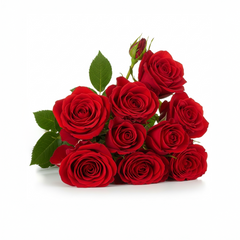
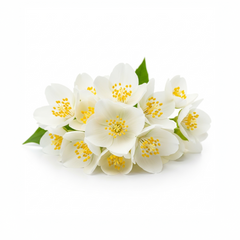
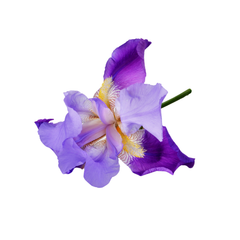
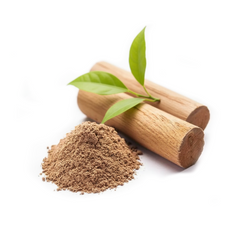
A classic aldehydic accord is built around 20–25% aldehydes (C-10, C-11, C-12), 25–30% rose absolute, 20–25% iris (ionones/irones), and 25–30% sandalwood. Aldehydes provide lift and sparkle, rose offers a molecular bridge via shared damascenone, iris adds powdery, woody depth through ionones, and sandalwood stabilizes the accord with creamy, long-chain lactones.

25%

Aldehydes (C-10, C-11, C-12)

20–25% of blend

Provides the signature sparkling, soapy, and abstract top note via high-volatility molecules like undecanal and dodecanal.

30%

Rose Absolute

25–30% of blend

Acts as a molecular bridge with damascenone, enhancing floralcy and rounding aldehydic sharpness.

25%

Iris (Ionones/Irones)

20–25% of blend

Contributes powdery, woody facets via ionones, complementing aldehydes' abstract qualities.

30%

Sandalwood

25–30% of blend

Stabilizes the accord with creamy, long-chain lactones, prolonging aldehydic lift and providing a soft base.

The Olfactory Layers

How Aldehydes Evolves on Skin

Aldehydic fragrances evolve rapidly, with high-volatility molecules dominating the first 15 minutes before diffusing into floral and woody heart and base notes. The evaporation rate of C-10 to C-12 aldehydes creates a sparkling, effervescent opening that transitions to a powdery, creamy drydown.

I
Top notes
0–15 min
Effervescent Sparkle

The initial impression is dominated by high-volatility aldehydes (C-10, C-11, C-12), which evaporate quickly to create a sparkling, soapy, and citrusy effect. These molecules are responsible for the 'champagne fizz' and clean-linen sensation often described in classic aldehydic perfumes.

SparklingSoapyCitrusy
II
Heart notes
20–60 min
Powdery Florals

As aldehydes dissipate, floral notes (rose, jasmine, iris) emerge, supported by residual aldehydic lift. Ionones and damascenone interact with remaining aldehydes to create a powdery, abstract floral heart, while subtle metallic and waxy undertones persist.

PowderyFloralAbstract
III
Base notes
Several hours
Creamy Softness

The drydown is anchored by creamy sandalwood, musk, and soft woods, with faint traces of aldehydic brightness lingering. Long-chain aldehydes and lactones contribute a smooth, clean finish, enhancing the overall longevity and sillage.

CreamyCleanSoft
TOP NOTES Effervescent Sparkle 0–15 minutes HEART NOTES Powdery Florals 20–60 minutes BASE NOTES Creamy Softness Several hours
Through the Ages

The Story of Aldehydes in Perfumery

Aldehydes have shaped perfumery from the early 20th century to the present, revolutionizing floral compositions and enabling new forms of abstraction.

1835

Discovery of Aldehydes

German chemist Justus von Liebig isolates and names the aldehyde group, laying the foundation for later industrial synthesis and perfumery applications.

1903

First Industrial Synthesis

Georges Darzens develops a laboratory process for synthesizing aldehydes, enabling their use in fragrance and flavor industries.

1912

Quelques Fleurs Launch

Robert Bienaimé uses aldehydes in Houbigant Quelques Fleurs, one of the first modern perfumes to feature these molecules in a floral bouquet.

1921

Chanel No. 5 Revolution

Ernest Beaux creates Chanel No. 5, employing a blend of synthetic aldehydes to achieve an abstract, radiant opening that becomes a hallmark of modern perfumery.

2009–present

Contemporary Aldehydic Fragrances

Modern perfumers revisit aldehydes in minimalist and clean compositions, as seen in Byredo Blanche (2009) and Maison Martin Margiela Lazy Sunday Morning (2013).

The Art of Layering

How to Layer Aldehydes

Understanding how to layer aldehydes is key to creating unique, multidimensional fragrances. Aldehydes pair well with florals, woods, and citrus notes due to molecular compatibility and olfactory masking effects.

01

Amplify Florals

Layering aldehydes with rose or jasmine enhances both notes via shared damascenone and ionone molecules, creating a seamless, radiant floral bouquet. Chanel No. 5 and Lanvin Arpège exemplify this synergy.

02

Add Creamy Depth

Combining aldehydes with sandalwood or musk introduces lactones and macrocyclic musks, which soften sharp aldehydic edges through olfactory masking, resulting in a smoother, more balanced drydown. Byredo Blanche demonstrates this effect.

03

Brighten Citrus

Pairing aldehydes with bergamot or lemon leverages their shared high-volatility compounds, boosting the sparkling, effervescent top note. Maison Martin Margiela Lazy Sunday Morning uses this technique for a clean, uplifting impression.

Wear It Right

How to Wear Aldehydes Like a Pro

Seasonal Guide

Fall & Winter

Cooler temperatures slow the evaporation of aldehydes, resulting in a more subtle, powdery effect. Apply to pulse points and consider layering with creamy or woody notes to enhance warmth and longevity.

Spring

Moderate temperatures allow aldehydes to shine, amplifying their sparkling, floral qualities. Apply lightly to avoid overwhelming the senses, and pair with green or citrus notes for a fresh, uplifting effect.

Summer

Heat increases aldehyde volatility, intensifying their initial impact but potentially shortening their lifespan. Apply sparingly to cooler areas of the body and consider layering with aquatic or citrus accords for a refreshing, clean sensation.

Year-Round Tip

Aldehydic fragrances can be adapted to any season by adjusting application and layering. In humid climates, aldehydes diffuse more readily, while in dry environments, their soapy, clean facets are more pronounced. Experiment with pulse points and layering to achieve the desired effect.

Application Points

Strategic application enhances aldehydic radiance and longevity.

1

Neck

Applying aldehydic fragrances to the neck maximizes projection, as body heat accelerates the diffusion of volatile molecules, creating a radiant, sparkling aura.

2

Behind the Ears

This area retains warmth and moisture, allowing aldehydes to evolve gradually and maintain their soapy, floral lift throughout the day.

3

Inner Wrists

Pulse points on the wrists provide a controlled release of aldehydic notes, enabling you to experience the full olfactory evolution from sparkle to powdery softness.

4

Hair

Spraying aldehydic fragrances lightly on hair extends their longevity, as the molecules cling to hair fibers and release gradually with movement.

Pro Tip

Layer aldehydic scents over unscented moisturizer to slow evaporation and enhance both projection and longevity, especially in dry or cold conditions.

Mood Architecture™

Top Aldehydes Fragrances by Mood Score

These Aldehydes-based fragrances scored highest on the MEI™ Mood Architecture Framework — measuring how a scent may influence your emotional state.

Highest MEI Score
Goddess Girl Fantastic — Good Girl Fantastic Pink Alternative Perfume
8.51
MEI™
Primary Romantic
Secondary Confident
Confidence
7.42
Presence
7.52
Mood Lift
9.5
Identity
8.14
Warmth
9.5
Social Ease
9.41
Energy
4.7
" I am beautiful.
View full mood profile →
New Westin For Him — New West For Him Alternative Cologne
8.18
MEI™
Primary Magnetic
Secondary Confident
Confidence
8.74
Presence
9.44
Mood Lift
7.75
Identity
8.92
Warmth
8.29
Social Ease
7.34
Energy
5.6
" I am bold.
View full mood profile →
Interdiction — L'interdit Alternative Perfume
7.75
MEI™
Primary Romantic
Secondary Confident
Confidence
7.43
Presence
7.79
Mood Lift
8.12
Identity
8.04
Warmth
8.68
Social Ease
7.74
Energy
2.9
" I am beautiful.
View full mood profile →
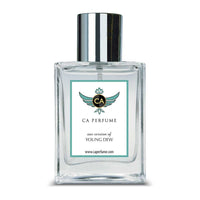
Young Dew — Youth Dew Alternative Perfume
7.6
MEI™
Primary Confident
Secondary Magnetic
Confidence
7.9
Presence
8.55
Mood Lift
7.2
Identity
8.21
Warmth
8.8
Social Ease
6.39
Energy
5.8
" I am confident.
View full mood profile →
HumanSafe™

Top Aldehydes Fragrances by HumanSafe™ Score

These Aldehydes-based fragrances have the highest product-level HumanSafe™ scores in this ingredient collection.

Highest HumanSafe™ Score
Young Dew — Youth Dew Alternative Perfume
A-
HumanSafe™ Score Generally Safe
Safest Evaluated Ingredients EDP
AQUA Solvent / Carrier ISS 10.0
ACETIC ACID, PHENYLMETHYL ESTER Evaluated ingredient ISS 10.0
HEPTANAL, 2-(PHENYLMETHYLENE)- Evaluated ingredient ISS 9.0
BENZYL SALICYLATE EYE IRRITATION - CAT.2B [H320] Evaluated ingredient ISS 9.0
2H-1-BENZOPYRAN-2-ONE Evaluated ingredient ISS 8.0
LINALYL ACETATE Evaluated ingredient ISS 7.0
View full safety profile →
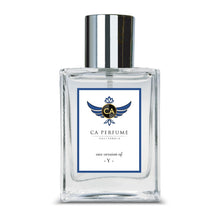
Y — YSL Y Alternative Cologne
#2
Y — YSL Y Alternative Cologne
Starting from $14.99
A-
HumanSafe™ Score Generally Safe
Safest Evaluated Ingredients EDP
AQUA Solvent / Carrier ISS 10.0
1,4-DIOXACYCLOHEPTADECANE-5,17-DIONE Evaluated ingredient ISS 10.0
7-OCTEN-2-OL, 2,6-DIMETHYL- Evaluated ingredient ISS 9.0
2-HEXENE, 6,6-DIMETHOXY-2,5,5-TRIMETHYL- Evaluated ingredient ISS 8.0
LINALYL ACETATE Evaluated ingredient ISS 7.0
LINALOOL Evaluated ingredient ISS 7.0
View full safety profile →
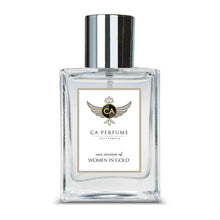
Women in Gold — Women In Gold Alternative Perfume
A-
HumanSafe™ Score Generally Safe
Safest Evaluated Ingredients EDP
AQUA Solvent / Carrier ISS 10.0
3-BUTEN-2-ONE, 3-METHYL-4-(2,6,6-TRIMETHYL-2- Evaluated ingredient ISS 8.0
LINALYL ACETATE Evaluated ingredient ISS 7.0
LINALOOL Evaluated ingredient ISS 7.0
ALCOHOL DENAT. Solvent / Carrier ISS 7.0
3-BUTEN-2-ONE, 4-(2,6,6-TRIMETHYL-1-CYCLOHEXEN-1- Evaluated ingredient ISS 7.0
View full safety profile →
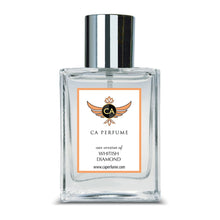
Whitish Diamond — White Diamonds Alternative Perfume
A-
HumanSafe™ Score Generally Safe
Safest Evaluated Ingredients EDP
AQUA Solvent / Carrier ISS 10.0
ACETIC ACID, PHENYLMETHYL ESTER Evaluated ingredient ISS 10.0
BENZYL SALICYLATE EYE IRRITATION - CAT.2B [H320] Evaluated ingredient ISS 9.0
OCTANAL, 2-(PHENYLMETHYLENE)- Evaluated ingredient ISS 8.0
2H-1-BENZOPYRAN-2-ONE Evaluated ingredient ISS 8.0
LINALYL ACETATE Evaluated ingredient ISS 7.0
View full safety profile →
Expert Voices

What Masters Say About Aldehydes

Aldehydes act as amplifiers, giving a fragrance a carbonated, sparkling top and transforming florals into something abstract and radiant.
CA Perfume Editorial
Chanel No. 5 was not the first fragrance to contain synthetic ingredients, but it was the first to become an icon thanks to its use of aliphatic aldehydes.
CA Perfume Editorial
Common Questions

Frequently Asked Questions

Answers to common questions about aldehydes in perfumery.

Aldehydes in perfume typically smell soapy, sparkling, and waxy, with nuances ranging from citrusy and fresh to metallic and powdery. The exact scent depends on the molecular structure: C-10 (decanal) is orange-zesty, C-11 (undecanal) is waxy and candle-like, and C-12 (dodecanal) is metallic and hot-iron-like. Classic examples include Chanel No. 5 and Byredo Blanche.

Aldehydes are primarily used as top notes due to their high volatility, but their impact can extend into the heart of a fragrance. They provide an initial sparkling, clean effect that gradually transitions to powdery and creamy nuances as the fragrance evolves.

Aldehydes are favored in niche perfumery for their ability to create abstract, radiant effects and amplify floral bouquets. Their versatility allows perfumers to craft unique, modern, or vintage-inspired compositions that stand out from conventional natural blends.

Aldehydes fragrance uses include pairing with florals (rose, jasmine, iris), woods (sandalwood, cedar), and citrus (bergamot, lemon). These combinations leverage molecular affinities and olfactory masking to create balanced, multidimensional scents.

Aldehydic fragrances can be worn in summer, but their volatility means they project more intensely in heat and may dissipate faster. Applying sparingly and layering with citrus or aquatic notes can enhance freshness and longevity in hot weather.

Aldehydic fragrances generally last 5–7 hours, with the sparkling top note persisting for 15–30 minutes and the powdery, creamy base lingering for several hours. Longevity depends on concentration, skin chemistry, and environmental conditions.

Yes, aldehydes can be layered with florals, woods, and citrus notes to create unique effects. Their molecular structure allows them to amplify and harmonize with a wide range of ingredients, making them ideal for creative layering.

Beginner-friendly aldehydic fragrances include Byredo Blanche, Maison Martin Margiela Lazy Sunday Morning, and Chanel No. 5 L’Eau. These scents showcase aldehydes in approachable, modern contexts, balancing sparkle with softness.

Consider your preference for sparkling, clean, or powdery effects, and explore CA Perfume’s aldehydic collection for options that balance tradition and modernity. Sampling is recommended to find the aldehydic profile that best suits your skin chemistry and style.

Aldehydes can evoke both vintage and modern impressions, depending on the blend. Classic aldehydic florals like Chanel No. 5 feel timeless and elegant, while contemporary compositions use aldehydes for minimalist, clean effects. The versatility of aldehydes allows for a wide range of olfactory expressions.

Floral Aldehydic Collection

Explore Our Top Aldehydes Fragrances

Discover CA Perfume’s curated selection of aldehydic scents, from classic florals to modern, clean interpretations. Each fragrance highlights the unique sparkle and abstraction of aldehydes.

Shop all aldehydes fragrances at CA Perfume →

Where Aldehydes Comes From — Origin & Extraction

Aldehydes are a class of organic compounds characterized by the presence of a terminal carbonyl group (–CHO). In perfumery, the most significant aldehydes are synthetic, although many occur naturally in essential oils such as orange rind (octanal, decanal), rose oil (nonanal), and cinnamon bark (cinnamaldehyde). Industrially, aldehydes are produced through chemical synthesis, most commonly via hydroformylation (oxo process), which involves reacting alkenes with carbon monoxide and hydrogen at elevated temperatures (100–150°C) and pressures (10–100 atm) in the presence of a cobalt or rhodium catalyst. This process allows for precise control over chain length and purity, yielding compounds such as undecanal (C-11, CAS 112-44-7) and dodecanal (C-12, CAS 112-54-9). The primary producers of synthetic aldehydes are chemical manufacturers in Europe (notably Germany and Switzerland), the United States, and China. Production volumes for individual aldehydes are typically in the range of several hundred to several thousand metric tons annually, depending on industrial demand. Natural extraction of aldehydes is limited by low yields and high costs; for example, nonanal and decanal can be isolated from citrus oils, but at a cost exceeding $10,000/kg, compared to $50–200/kg for synthetic equivalents. Sustainability considerations favor synthetic production, as it reduces pressure on agricultural resources and allows for consistent quality and supply. The discovery of aldehydes dates to 1835 (Justus von Liebig), with industrial synthesis methods developed in the early 20th century (notably by Georges Darzens in 1903).

Famous Fragrances That Define Aldehydes in Perfumery

Aldehydes have defined some of the most iconic fragrances in perfumery, particularly from the early 20th century onward. Chanel No. 5 (1921, Ernest Beaux) is the quintessential aldehydic floral, using a blend of C-10, C-11, and C-12 aldehydes to create its legendary sparkling, abstract opening. Houbigant Quelques Fleurs (1912, Robert Bienaimé) was among the first to use aldehydes to amplify a floral bouquet, setting the stage for later innovations. Lanvin Arpège (1927, André Fraysse and Paul Vacher) employed aldehydes to give a luminous, powdery lift to its floral heart. In the modern era, Byredo Blanche (2009, Jérôme Epinette) and Maison Martin Margiela Lazy Sunday Morning (2013, Louise Turner) use aldehydes for a clean, fresh-linen effect, while Le Labo Aldehyde 44 (2006, Yann Vasnier) explores the metallic, effervescent side of the note. These fragrances showcase aldehydes as dominant, bridge, or accent notes, often paired with rose, jasmine, iris, or musk. CA Perfume’s aldehydic collection draws inspiration from this lineage, offering contemporary interpretations that balance tradition and innovation.

Natural vs Synthetic Aldehydes in Perfumery

In perfumery, aldehydes are predominantly synthetic, though many are structurally identical to those found in nature. Key synthetic molecules include undecanal (C-11, CAS 112-44-7), dodecanal (C-12, CAS 112-54-9), and benzaldehyde (CAS 100-52-7). Synthetic aldehydes offer superior consistency, stability, and cost-effectiveness compared to their natural counterparts, which are present in trace amounts in essential oils and are prohibitively expensive to isolate. Performance-wise, synthetic aldehydes provide greater longevity and diffusion, especially in top and heart notes, and are less prone to oxidation than natural extracts. Famous fragrances such as Chanel No. 5 (1921, Ernest Beaux) and Byredo Blanche (2009, Jérôme Epinette) rely on synthetic aldehydes for their signature effects. Natural aldehydes, while present in materials like rose oil and citrus peel, are rarely used in isolation due to cost and variability. Sustainability is a significant advantage of synthetics, as they reduce the environmental impact associated with large-scale agricultural extraction. The HumanSafe™ platform at CA Perfume ensures transparency in sourcing and safety for all aldehyde-containing formulas, with full IFRA compliance. Other notable aroma chemicals in this class include citral (CAS 5392-40-5), cyclamen aldehyde (CAS 103-95-7), and anisaldehyde (CAS 123-11-5), each contributing distinct olfactory nuances.