Ingredient Guide · Green Floral
Green Floral Family · Perfumery Note

Violet Leaves

A crisp, dewy green note with natural vibrancy

Violet Leaves are a heart note in perfumery, derived from the leaves of Viola odorata, offering a fresh, green, cucumber-like scent. Their key molecule, (2E,6Z)-2,6-nonadienal, defines their sharp, aquatic character.

Violet Leaves
Ingredient Profile

Violet Leaves

Green Floral Family
Family Green Floral
Note Position Heart Note
Usage Level 0.09%
Key Origins Egypt, France, Italy
Iconic In Green Irish Tweed, Fahrenheit
The Ingredient

What does Violet Leaves smell like and why are they cherished?

Violet Leaves come from the foliage of the violet plant, Viola odorata, and are prized in perfumery for their distinct fresh, green, and slightly sweet aroma. The scent profile is dominated by the molecule (2E,6Z)-2,6-nonadienal, also known as violet leaf aldehyde or cucumber aldehyde, which imparts a sharp, aquatic, and waxy green character reminiscent of crushed cucumber skin and freshly mown grass. This contrasts markedly with the powdery, floral scent of violet flowers, which are rarely used directly due to low extract yields. In perfumery, violet leaves function primarily as a heart note, used at concentrations typically below 5%. Their potent green freshness enhances floral and woody accords, providing a naturalistic vibrancy and a cool, metallic edge. The absolute is extracted via solvent methods from fresh leaves, preserving the delicate volatile compounds responsible for its unique scent. Violet leaves interact with skin chemistry by evolving from an initially sharp green to a softer, earthy suede-like drydown. Notable fragrances featuring violet leaves include Creed's Green Irish Tweed (1985), where it bridges fresh citrus and woody notes, and Dior's Fahrenheit (1988), which uses violet leaf to add a green, leathery facet to its aromatic fougère structure. Valentino Uomo Born in Roma (2019) also showcases violet leaves as a green accent within a warm, woody composition.

0.09%
Approximate yield of violet leaf concrete from fresh leaves via solvent extraction, indicating the low extraction efficiency and high raw material requirement.
2,300 kg
Amount of fresh violet leaves needed to produce 1 kg of violet leaf absolute, reflecting the labor-intensive nature of production.
<5%
Typical maximum usage level of violet leaf absolute in fragrance formulations to avoid overpowering vegetal or metallic notes.
Origin & Extraction

Where Violet Leaves Come From — Origin & Extraction

Violet Leaves' scent character is influenced by the terroir of their growing regions, where soil composition, climate, and harvesting methods impact aroma nuances. The temperate climates of Egypt, France, Italy, and the UK yield leaves with distinct profiles, from intense and leathery to clean and grassy.

Violet Leaves absolute is derived from the leaves of Viola odorata, a perennial herbaceous plant native to temperate regions of Europe and Asia. The primary production centers are Egypt, which supplies approximately 90% of the global market, with smaller quantities from Grasse, France, and Italy. The leaves are harvested fresh from May through December in Egypt, with multiple cuttings spaced about 70 days apart. Extraction is performed via solvent extraction, typically using hexane or petroleum ether. Fresh leaves undergo two extraction passes of about two hours each to yield a dark green concrete with a yield of approximately 0.09% relative to fresh leaf weight. This concrete is then dissolved in ethanol, chilled to precipitate waxes, filtered, and vacuum-concentrated to produce the absolute. Roughly 2,300 kilograms of fresh leaves are required to produce 1 kilogram of absolute, reflecting the labor-intensive and low-yield nature of the process. French-origin violet leaves tend to have a cleaner, grassier aroma, while Egyptian material is more intense with a distinct leathery undertone. The absolute is a dark green viscous liquid to semi-solid at room temperature, requiring careful handling and dilution for perfumery use. Natural violet leaf absolute commands prices in the range of $3,000 to $6,000 per kilogram, significantly higher than synthetic substitutes which cost between $50 and $200 per kilogram. Sustainability considerations include the labor-intensive harvesting and the need for fresh leaf processing to maintain quality.

EG

Egypt

The Nile Delta region produces approximately 90% of global violet leaf absolute. The warm climate and fertile alluvial soils contribute to an intense, leathery green aroma. Leaves are harvested fresh from May to December, with multiple cuttings per season, supporting high yield but labor-intensive harvesting.

FR

France

The Grasse region, particularly Tourrettes-sur-Loup, offers violet leaves with a cleaner, grassier scent profile. The Mediterranean climate and limestone-rich soils influence the aromatic compounds, producing a refined absolute. Harvesting occurs between May and July, with same-day processing to preserve freshness.

IT

Italy

Italian violet leaves, cultivated in temperate Mediterranean zones, are noted for their vibrant and rich aroma. The combination of mild climate and well-drained soils contributes to a balanced green and floral character, favored in regional perfumery traditions.

GB

United Kingdom

UK-grown violet leaves carry a traditional charm with a fresh, green, and slightly floral scent. Cooler climate and moist soils yield a softer aroma, often associated with classic and heritage fragrance styles.

Chemistry

Natural vs Synthetic Violet Leaves in Perfumery

Natural violet leaf absolute is a complex mixture of volatile compounds dominated by (2E,6Z)-2,6-nonadienal (violet leaf aldehyde) and related alcohols such as trans-2,cis-6-nonadienol, which provide the characteristic green, cucumber-like, and aquatic facets. Additional components include cis-3-hexenol and cis-3-hexenyl acetate, which reinforce the freshly cut grass impression. Synthetic substitutes focus on replicating the key green and aquatic facets, with molecules such as methyl 2-octynoate providing a related violet leaf effect, though lacking the waxy naturalism of the absolute. Ionones (alpha-ionone CAS 127-41-3 and beta-ionone CAS 14901-07-6) are used to recreate the powdery floral aspects of violet flowers but are distinct from the leaf scent. Performance-wise, natural violet leaf absolute offers superior complexity, diffusion, and authenticity but is more costly and less stable than synthetics. Synthetic molecules provide consistency and cost efficiency, making them prevalent in mass-market fragrances. Famous fragrances like Creed Green Irish Tweed and Dior Fahrenheit utilize natural violet leaf absolute, while many contemporary compositions blend natural and synthetic materials for balance. The HumanSafe™ platform ensures transparency regarding allergen content and IFRA restrictions, with violet leaf absolute subject to limitations due to components like D-limonene and benzyl alcohol.

Natural
Violet Leaves Absolute
Cost $3,000–6,000/kg
Method Solvent / CO₂
Character Complex, variable
vs
Synthetic
Safranal & Analogues
Cost $50–200/kg
Method Lab synthesis
Character Consistent, stable
Hall of Fame

Famous Fragrances That Define Violet Leaves in Perfumery

1985
dominant note

Green Irish Tweed

Creed
by Ernest Daltroff
LemonIrisAmbergris
1988
accent

Fahrenheit

Dior
by Jean-Louis Sieuzac, Michel Almairac
LavenderNutmegLeather
2007
top note accent

Daisy

Marc Jacobs
by Alberto Morillas
StrawberryJasmineViolet
2016
bridge note

Tuxedo

Yves Saint Laurent
by Sonia Constant
SpicesPatchouliWoody Notes
2017
supporting note

La Vie est Belle L'Elixir

Lancôme
by Olivier Polge
IrisVanillaAmber

Violet leaves have been integral to many landmark fragrances, often serving as a green, fresh heart note that bridges citrus top notes and woody or musky bases. Creed's Green Irish Tweed (1985), crafted by perfumer Ernest Daltroff, is a seminal example where violet leaves provide a crisp, ozonic freshness alongside lemon and iris, creating a timeless fougère. Dior's Fahrenheit (1988), by Jean-Louis Sieuzac and Michel Almairac, uses violet leaf to add a green, leathery nuance within its aromatic fougère structure, complementing lavender, nutmeg, and leather. Marc Jacobs' Daisy (2007), by Alberto Morillas, features violet leaf as a bright, green top note paired with strawberry and jasmine, contributing to its youthful and airy character. Yves Saint Laurent's Tuxedo (2016), by Sonia Constant, employs violet leaf as a bridge between spicy and woody accords, enhancing the fragrance's sophistication. Lancôme's La Vie est Belle L'Elixir (2017), by Olivier Polge, incorporates violet leaf to add a fresh green facet that contrasts with its rich floral and gourmand notes. These fragrances exemplify violet leaves' versatility across gender and olfactory families, from fresh fougères to floral gourmands. CA Perfume's collection honors this lineage by including compositions that highlight violet leaves' natural green vibrancy without overshadowing complementary notes.

The Accord

How is a captivating Violet Leaves accord crafted?

A Violet Leaves accord balances the lush green freshness with complementary floral and woody notes to create a vibrant and refreshing heart note. Typically, Violet Leaves constitute 15-20% of the accord, providing the signature green, cucumber-like facet. Jasmine (20-25%) adds a soft floral sweetness that harmonizes with the green notes through shared volatile compounds. Sandalwood (25-30%) contributes creamy, woody depth, complementing the waxy undertones of violet leaves at a molecular level. White Honey (25-30%) introduces a subtle sweet warmth that masks any harsh green edges, enhancing overall smoothness and longevity.

20%

Violet Leaves

15–20% of blend

Provides the fresh, green, cucumber-like character through (2E,6Z)-2,6-nonadienal and related aldehydes, essential for the accord's signature vibrancy.

25%

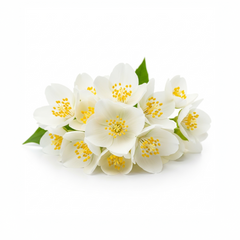
Jasmine

20–25% of blend

Adds a soft floral sweetness with compounds like benzyl acetate, which molecularly bridge with violet leaf aldehydes to create harmony.

30%

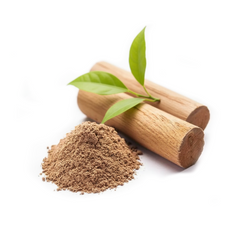
Sandalwood

25–30% of blend

Contributes creamy, woody depth through α-santalol and β-santalol, complementing violet leaves' waxy facets and extending drydown.

30%

White Honey

25–30% of blend

Introduces subtle sweet warmth that masks green harshness via olfactory masking, enhancing smoothness and accord longevity.

The Olfactory Layers

How Violet Leaves Evolves on Skin

Violet Leaves unfold primarily as a heart note, with their olfactory evolution marked by an initial sharp green burst followed by a softening into earthy and suede-like undertones over several hours. The key molecules, including (2E,6Z)-2,6-nonadienal, exhibit moderate volatility, contributing to the note's persistence and gradual transformation on skin.

I
Top notes
0–15 min
Sharp Green Freshness

While violet leaves are primarily a heart note, their initial impression includes a fresh, sharp green facet dominated by high-volatility aldehydes like (2E,6Z)-2,6-nonadienal. This creates a crisp, cucumber-like freshness with a metallic edge that is immediately perceptible.

FreshSharpGreen
II
Heart notes
20–60 min
Waxy and Earthy Green

The heart phase reveals the full character of violet leaves, where the green sharpness softens into a waxy, vegetal aroma with subtle earthy and leathery undertones. The aldehydes' volatility decreases, allowing the softer alcohols and esters to emerge, creating a naturalistic green bouquet.

WaxyEarthyVegetal
III
Base notes
Several hours
Suede-Like Green Residue

In the base, violet leaves leave a faint suede-like green residue with muted earthiness. The molecular components with lower volatility, such as fatty alcohols and long-chain aldehydes, linger, providing a subtle green-woody drydown that supports the overall fragrance structure.

Suede-likeEarthyWoody
TOP NOTES Sharp Green Freshness 0–15 minutes HEART NOTES Waxy and Earthy Green 20–60 minutes BASE NOTES Suede-Like Green Residue Several hours
Through the Ages

The Story of Violet Leaves in Perfumery

The history of violet leaves in perfumery spans centuries, from ancient symbolic uses to modern extraction and synthetic recreation, marking key milestones in botanical sourcing and fragrance chemistry.

4th century BC

Ancient Greek Symbolism

Violets were revered in ancient Greece, symbolizing fertility and associated with the myth of Io. The violet flower and leaves were noted for their fragrance and cultural significance.

1867

Violet Cultivation in Grasse

Violet fields were established in Grasse, France, marking the beginning of commercial violet cultivation for perfumery, with enfleurage used to extract flower scents.

Early 20th century

Shift to Leaf Extraction

Due to the low yield and high cost of violet flower absolute, perfumers began focusing on solvent extraction of violet leaves, yielding a potent green absolute.

1893

Synthesis of Ionones

Ferdinand Tiemann and Wilhelm Krüger synthesized alpha- and beta-ionones, enabling synthetic violet flower accords and reducing reliance on natural flower extracts.

1980s–Present

Modern Perfumery Usage

Violet leaf absolute became a key ingredient in iconic fragrances like Creed Green Irish Tweed (1985) and Dior Fahrenheit (1988), cementing its role in contemporary perfumery.

The Art of Layering

How to Layer Violet Leaves

Understanding how to layer violet leaves at a molecular level allows perfumers and enthusiasts to craft balanced, complex fragrances. The green aldehydes in violet leaves synergize with citrus terpenes like limonene, enhancing brightness through shared volatile profiles. Pairing violet leaves with floral notes such as jasmine or rose leverages common aromatic esters, creating seamless olfactory bridges. Woody notes like sandalwood contribute creamy sesquiterpenes that mask any vegetal harshness via olfactory masking, smoothing the overall scent. How to layer violet leaves effectively involves selecting notes that complement or modulate its sharp green facets, ensuring harmony and longevity.

01

Enhance Brightness with Citrus

Layering violet leaves with citrus notes such as bergamot or lemon introduces limonene and other terpenes that share volatility and freshness, amplifying the green and dewy facets. This molecular synergy creates a vibrant, uplifting opening, as seen in fragrances like Creed Green Irish Tweed.

02

Add Floral Complexity

Combining violet leaves with jasmine or rose exploits shared aromatic esters and ionones, producing a smooth transition between green and floral notes. This layering softens the metallic edge of violet leaves while enriching the bouquet, exemplified in Marc Jacobs Daisy.

03

Introduce Woody Depth

Pairing violet leaves with sandalwood or vetiver adds creamy sesquiterpenes that mask vegetal sharpness through olfactory masking. This molecular interaction extends drydown and balances freshness with warmth, as utilized in Yves Saint Laurent Tuxedo.

Wear It Right

How to Wear Violet Leaves Like a Pro

Seasonal Guide

Fall & Winter

Cooler temperatures preserve violet leaves' green and earthy facets, allowing longer-lasting freshness. Layer with warm woods and spices to balance the crispness and enhance sillage.

Spring

Spring's moderate climate complements violet leaves' dewy and vibrant character. Pair with fresh florals and light citrus for an uplifting, garden-inspired scent.

Summer

Heat accelerates evaporation, which can sharpen violet leaves' green facets, sometimes making them more metallic or harsh. Use in lighter concentrations or with cooling aquatic notes to maintain balance.

Year-Round Tip

Adjust application quantity and layering partners seasonally to optimize violet leaves' freshness and longevity, ensuring a harmonious scent experience throughout the year.

Application Points

Strategic application enhances violet leaves' fresh green character and longevity.

1

Neck

Pulse points on the neck provide warmth that gently diffuses violet leaves' green aldehydes, enhancing projection and evolution.

2

Behind the Ears

This area offers moderate heat and subtle movement, ideal for a natural, intimate release of violet leaves' fresh facets.

3

Inner Wrists

High blood flow warms the scent, accelerating evaporation and revealing the heart note's green and waxy nuances.

4

Hair

Hair fibers retain fragrance oils, allowing violet leaves' scent to linger softly and diffuse with natural movement.

Pro Tip

Layer violet leaves with complementary citrus or floral notes on clothing or scarves to extend scent life and create personalized accords.

HumanSafe™

Violet Leaves Safety Profile in Our Fragrances

No ingredient collection was found for violet-leaves.

Create or connect a collection with the same handle as this ingredient, then add products that contain this ingredient.

Expert Voices

What Masters Say About Violet Leaves

Violet leaf absolute is central to green-floral and chypre families, bridging citrus openings and mossy bases. It must be used sparingly, as above 0.5% it becomes unpleasantly vegetal.
Olfactive Studio, Perfume Experts
Violet leaves provide a fresh, green, cucumber-like scent dominated by (2E,6Z)-2,6-nonadienal, distinct from the powdery floral violet flower note. This absolute is a potent natural green material available to perfumers.
CA Perfume Editorial
Common Questions

Frequently Asked Questions

Frequently asked questions about violet leaves in perfumery, addressing scent, usage, and layering.

Violet leaves smell fresh, green, and cucumber-like in perfume, dominated by the molecule (2E,6Z)-2,6-nonadienal. Unlike violet flowers, which are powdery and floral, violet leaves offer a sharp, aquatic green scent reminiscent of crushed cucumber skin and freshly mown grass. This note is used primarily as a heart note to add naturalistic vibrancy and freshness.

Violet leaves are primarily used as a heart note in fragrance compositions. Their volatility and scent profile position them in the middle of the olfactory pyramid, where they provide fresh green character and bridge between bright top notes and deeper woody or musky bases.

Violet leaves are favored in niche perfumery for their complex, naturalistic green aroma that adds authenticity and freshness to compositions. Their ability to bridge floral and woody notes with a crisp, aquatic facet makes them versatile and prized for creating sophisticated, layered fragrances.

Violet leaves fragrance uses include pairing with citrus notes like bergamot and lemon for brightness, floral notes such as jasmine and rose for softness, and woody notes like sandalwood and vetiver for depth. These combinations work at a molecular level through shared or complementary volatile compounds, enhancing harmony and longevity.

Yes, violet leaves are well-suited for summer fragrances due to their fresh, dewy, and invigorating green scent. However, heat can increase volatility, sometimes sharpening the green facets. Using violet leaves in lighter concentrations or blending with cooling aquatic or citrus notes helps maintain balance in hot weather.

Violet leaves-based fragrances typically last 4 to 6 hours, depending on concentration and supporting notes. The aldehydes responsible for the green freshness evaporate relatively quickly, but the waxy and earthy undertones provide a subtle lingering presence.

Yes, layering violet leaves perfume with other fragrances is effective. Pairing with citrus notes enhances brightness, florals add complexity, and woody bases provide depth. Layering techniques that consider molecular compatibility optimize scent harmony and longevity.

For beginners, fragrances like Creed Green Irish Tweed, Marc Jacobs Daisy, and Dior Fahrenheit offer accessible introductions to violet leaves. These blends showcase the note's fresh green character balanced with familiar floral and woody accords.

Choosing the right violet leaves fragrance involves considering your preference for green freshness, floral softness, or woody depth. CA Perfume offers a curated selection that highlights violet leaves' natural vibrancy, allowing you to explore compositions that suit your style and occasion.

Violet leaves primarily smell fresh and green with a cucumber-like aquatic facet rather than sweet or spicy. Any sweetness is subtle and usually comes from complementary floral or honey notes in the composition.

Green Floral Collection

Explore Our Top Violet Leaves Fragrances

Discover a curated selection of fragrances that showcase the fresh green character of violet leaves in diverse olfactory compositions.

Shop all violet-leaves fragrances at CA Perfume →

Where Violet Leaves Come From — Origin & Extraction

Violet Leaves absolute is derived from the leaves of Viola odorata, a perennial herbaceous plant native to temperate regions of Europe and Asia. The primary production centers are Egypt, which supplies approximately 90% of the global market, with smaller quantities from Grasse, France, and Italy. The leaves are harvested fresh from May through December in Egypt, with multiple cuttings spaced about 70 days apart. Extraction is performed via solvent extraction, typically using hexane or petroleum ether. Fresh leaves undergo two extraction passes of about two hours each to yield a dark green concrete with a yield of approximately 0.09% relative to fresh leaf weight. This concrete is then dissolved in ethanol, chilled to precipitate waxes, filtered, and vacuum-concentrated to produce the absolute. Roughly 2,300 kilograms of fresh leaves are required to produce 1 kilogram of absolute, reflecting the labor-intensive and low-yield nature of the process. French-origin violet leaves tend to have a cleaner, grassier aroma, while Egyptian material is more intense with a distinct leathery undertone. The absolute is a dark green viscous liquid to semi-solid at room temperature, requiring careful handling and dilution for perfumery use. Natural violet leaf absolute commands prices in the range of $3,000 to $6,000 per kilogram, significantly higher than synthetic substitutes which cost between $50 and $200 per kilogram. Sustainability considerations include the labor-intensive harvesting and the need for fresh leaf processing to maintain quality.

Famous Fragrances That Define Violet Leaves in Perfumery

Violet leaves have been integral to many landmark fragrances, often serving as a green, fresh heart note that bridges citrus top notes and woody or musky bases. Creed's Green Irish Tweed (1985), crafted by perfumer Ernest Daltroff, is a seminal example where violet leaves provide a crisp, ozonic freshness alongside lemon and iris, creating a timeless fougère. Dior's Fahrenheit (1988), by Jean-Louis Sieuzac and Michel Almairac, uses violet leaf to add a green, leathery nuance within its aromatic fougère structure, complementing lavender, nutmeg, and leather. Marc Jacobs' Daisy (2007), by Alberto Morillas, features violet leaf as a bright, green top note paired with strawberry and jasmine, contributing to its youthful and airy character. Yves Saint Laurent's Tuxedo (2016), by Sonia Constant, employs violet leaf as a bridge between spicy and woody accords, enhancing the fragrance's sophistication. Lancôme's La Vie est Belle L'Elixir (2017), by Olivier Polge, incorporates violet leaf to add a fresh green facet that contrasts with its rich floral and gourmand notes. These fragrances exemplify violet leaves' versatility across gender and olfactory families, from fresh fougères to floral gourmands. CA Perfume's collection honors this lineage by including compositions that highlight violet leaves' natural green vibrancy without overshadowing complementary notes.

Natural vs Synthetic Violet Leaves in Perfumery

Natural violet leaf absolute is a complex mixture of volatile compounds dominated by (2E,6Z)-2,6-nonadienal (violet leaf aldehyde) and related alcohols such as trans-2,cis-6-nonadienol, which provide the characteristic green, cucumber-like, and aquatic facets. Additional components include cis-3-hexenol and cis-3-hexenyl acetate, which reinforce the freshly cut grass impression. Synthetic substitutes focus on replicating the key green and aquatic facets, with molecules such as methyl 2-octynoate providing a related violet leaf effect, though lacking the waxy naturalism of the absolute. Ionones (alpha-ionone CAS 127-41-3 and beta-ionone CAS 14901-07-6) are used to recreate the powdery floral aspects of violet flowers but are distinct from the leaf scent. Performance-wise, natural violet leaf absolute offers superior complexity, diffusion, and authenticity but is more costly and less stable than synthetics. Synthetic molecules provide consistency and cost efficiency, making them prevalent in mass-market fragrances. Famous fragrances like Creed Green Irish Tweed and Dior Fahrenheit utilize natural violet leaf absolute, while many contemporary compositions blend natural and synthetic materials for balance. The HumanSafe™ platform ensures transparency regarding allergen content and IFRA restrictions, with violet leaf absolute subject to limitations due to components like D-limonene and benzyl alcohol.