Where Musk Woodsy Notes Come From — Origin & Extraction
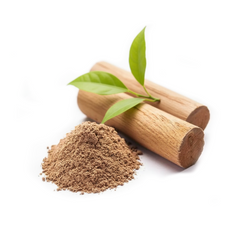
Musk Woodsy Notes are a composite accord, typically built from synthetic musks and woody aroma chemicals. Historically, natural musk was obtained from the gland of the male musk deer (Moschus moschiferus), primarily in the mountain forests of Tibet, China, and Siberia. However, due to ethical, legal, and sustainability concerns, natural musk extraction has been banned globally since the 1970s. Today, the musk component is synthesized in laboratories, with key molecules including muscone (macrocyclic musk), ambrettolide (from Abelmoschus moschatus seeds), and polycyclic musks like Galaxolide (CAS 1222-05-5). Woody notes are derived from both natural sources—such as Santalum album (sandalwood) and Cedrus atlantica (cedarwood)—and synthetic molecules like Iso E Super and Cashmeran.
The primary producers of synthetic musks are chemical companies in Switzerland, Germany, and the United States, with Firmenich, Givaudan, and IFF leading the market. Macrocyclic musks such as muscone and ambrettolide are produced via multi-step organic synthesis, with yields of 60–80% depending on the process. Iso E Super is synthesized from citronellal via a Diels-Alder reaction, while Cashmeran is produced from cyclopentadecanone derivatives. The cost of synthetic musks varies: muscone can reach $500–600/kg, while Galaxolide and Iso E Super are more affordable at $20–50/kg. Natural sandalwood oil, by contrast, can exceed $2,000/kg due to limited supply and overharvesting.
Sustainability is a central concern. Synthetic musks and woody molecules are favored for their consistent quality, ethical sourcing, and reduced environmental impact compared to animal-derived or endangered wood materials. Macrocyclic musks are biodegradable and considered safer for aquatic environments than older polycyclic types. The HumanSafe™ platform at CA Perfume verifies all musk and woody ingredients for ethical sourcing and transparency, ensuring compliance with global regulations and IFRA standards.
Famous Fragrances That Define Musk Woodsy Notes in Perfumery
Musk Woodsy Notes have shaped the character of numerous iconic fragrances, serving as both foundational base notes and signature accords. Narciso Rodriguez For Her (2003, Christine Nagel and Francis Kurkdjian) is a benchmark, blending clean musks and woody notes to create a soft, intimate aura. Le Labo Another 13 (2010, Nathalie Lorson) exemplifies the minimalist, woody-musk trend, using ambroxan and musks for a transparent, skin-like effect. Byredo Bal d’Afrique (2009, Jérôme Epinette) employs a creamy musk-woody base to support vibrant florals and citrus, while Glossier You (2017, Frank Voelkl and Dora Baghriche) is celebrated for its “your skin but better” musk-woody character. Diptyque L’Eau Papier (2023, Fabrice Pellegrin) explores the interplay of musks and woods for a soft, powdery finish. These fragrances demonstrate the versatility of Musk Woodsy Notes, functioning as dominant notes, bridge notes, or supporting bases depending on the composition. CA Perfume’s collection draws inspiration from this lineage, offering musk-woody profiles that honor both tradition and innovation.
Natural vs Synthetic Musk Woodsy Notes in Perfumery
Natural musk, once derived from the musk deer, is now prohibited due to conservation and ethical concerns. Modern perfumery relies on synthetic musks, with key molecules including muscone (CAS 541-91-3), ambrettolide (CAS 3738-68-3), and Galaxolide (CAS 1222-05-5). Macrocyclic musks (muscone, ambrettolide) are prized for their clean, skin-like scent and excellent biodegradability, while polycyclic musks (Galaxolide, Tonalide) offer strong diffusion but are less environmentally friendly. Woody notes are similarly synthesized: Iso E Super (CAS 54464-57-2) provides a transparent, cedar-like aroma, and Cashmeran (CAS 33704-61-9) imparts a musky-woody, slightly spicy character.
Performance-wise, synthetic musks and woody molecules offer superior longevity (8–24 hours) and stability, with minimal batch variation. Cost is a significant factor: macrocyclic musks can cost $400–600/kg, while polycyclic musks and woody synthetics are generally $20–50/kg. Notable fragrances using synthetic musks include Narciso Rodriguez For Her, Juliette Has a Gun Not a Perfume (100% Cetalox/Ambroxan), and Le Labo Another 13. Natural sandalwood and cedar are still used, but synthetic analogues dominate for sustainability and consistency.
CA Perfume’s HumanSafe™ platform ensures all musks and woody molecules are IFRA-compliant, cruelty-free, and traceable. The shift to synthetics has improved environmental outcomes and broadened creative possibilities, allowing perfumers to craft clean, long-lasting musk-woody accords without ethical compromise.