Where Mastic Comes From — Origin & Extraction
Mastic is a natural resin obtained from Pistacia lentiscus, a shrub native to the Mediterranean basin. The most renowned mastic comes from the southern region of Chios, Greece, where the trees are cultivated under Protected Designation of Origin (PDO) status. Chios mastic accounts for the majority of global production, with annual yields ranging from 60 to 400 grams per tree and a total output of several hundred metric tons per year. Other significant sources include regions in Turkey (notably the Aegean coast) and Cyprus, with smaller-scale production in Morocco and the South of France.
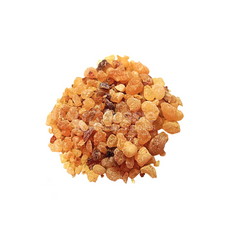
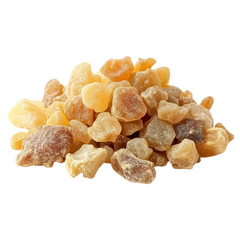
Extraction of mastic resin involves scoring the bark of mature trees during the dry summer months, allowing the resin to exude and solidify into translucent 'tears.' The raw resin is collected manually, cleaned, and sorted by size and clarity. For perfumery, mastic absolute is typically obtained via solvent extraction (using hexane or ethanol) or supercritical CO₂ extraction. Steam distillation is used primarily for mastic leaf oil, which is more herbaceous and green, but less prized for its fixative properties. Extraction yields are relatively low, contributing to the high cost of natural mastic absolute—typically $3,000–6,000 per kg. In contrast, synthetic analogues such as safranal or terpenic blends can be produced for $50–200 per kg, offering consistency but less olfactory complexity.
Sustainability is a key consideration in mastic production. Chios mastic is harvested using traditional, low-impact methods, and the PDO system ensures traceability and ecological stewardship. However, climate change and disease (notably the 2012 wildfires in Chios) have threatened supply, prompting research into disease-resistant cultivars and improved harvesting practices. Synthetic substitutes help relieve pressure on wild populations, but the unique terroir of Chios remains irreplaceable for high-grade mastic in perfumery.
Famous Fragrances That Define Mastic in Perfumery
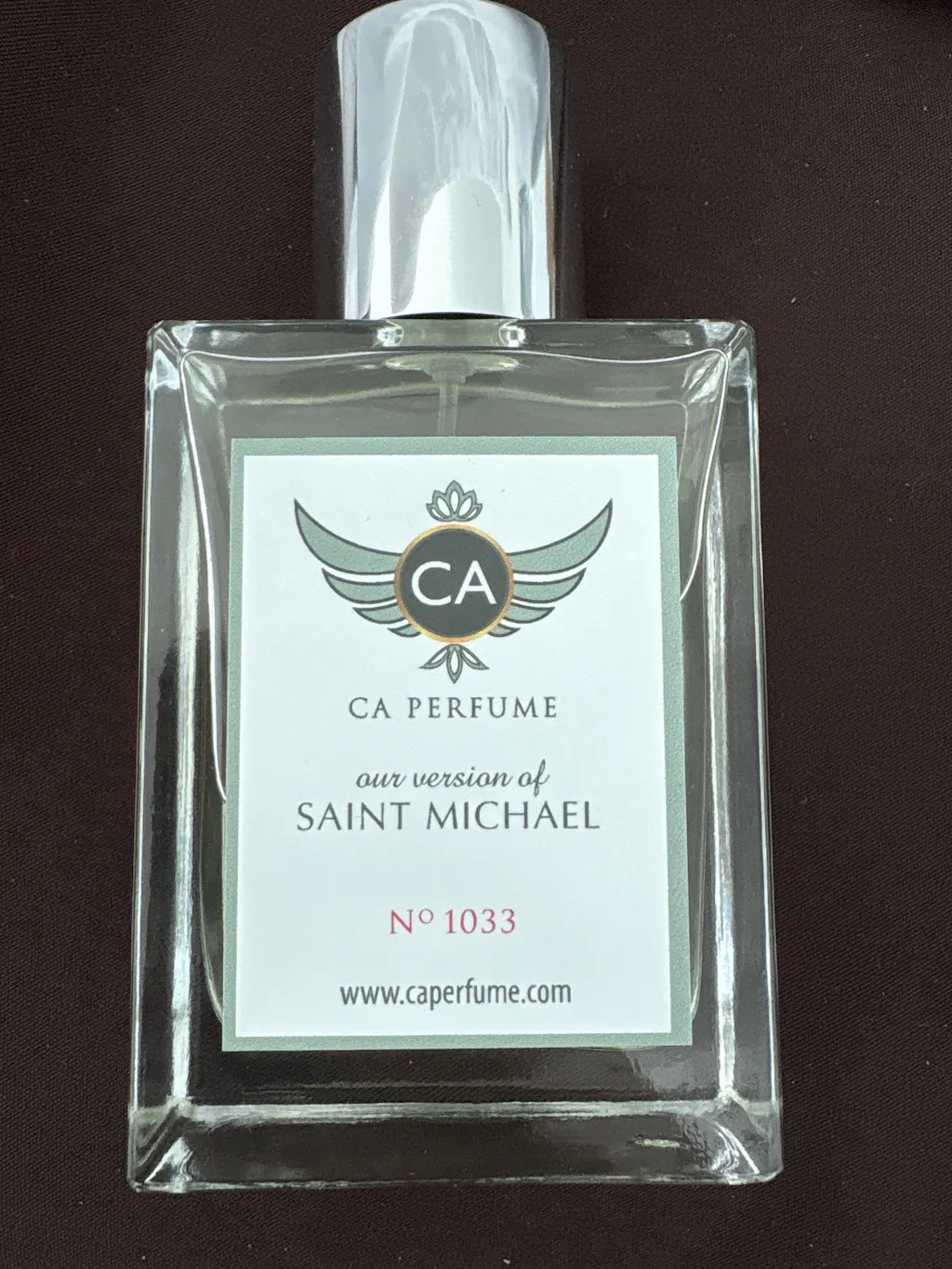
Mastic has played a subtle yet influential role in both niche and mainstream perfumery. In Giorgio Armani’s Acqua di Giò Profondo (2020, perfumer Alberto Morillas), mastic is used to reinforce the mineral, aquatic heart, blending seamlessly with marine notes and patchouli. Tom Ford’s Noir Extreme (2015, Sonia Constant) employs mastic as a bridge between spicy cardamom and creamy sandalwood, lending a balsamic undertone. Prada’s Infusion d’Iris (2007, Daniela Andrier) features mastic as a fixative and green accent, supporting iris and neroli. Parfum d’Empire’s Corsica Furiosa (2014, Marc-Antoine Corticchiato) is a modern showcase of mastic’s dominant, wild herbal character, paired with tomato leaf and galbanum to evoke the Corsican maquis. Molinard’s Habanita Eau de Parfum (2012 reformulation, Thomas Fontaine) uses mastic for its fixative and slightly smoky, resinous qualities, enhancing the blend of vetiver, leather, and vanilla. CA Perfume’s collection draws inspiration from these landmark uses, offering both classic and contemporary interpretations of mastic’s Mediterranean signature.
Natural vs Synthetic Mastic in Perfumery
Natural mastic absolute is a complex mixture of monoterpenes and sesquiterpenes, including α-pinene (CAS 80-56-8), β-myrcene (CAS 123-35-3), and limonene (CAS 138-86-3). These molecules provide the characteristic piney, balsamic, and slightly sweet aroma. Natural mastic is prized for its variability and depth, but this complexity also leads to batch-to-batch variation and potential allergenicity.
Synthetic mastic substitutes are typically constructed from key aroma chemicals such as safranal (CAS 116-26-7), verbenone (CAS 1196-01-6), and isophorone (CAS 78-59-1). These synthetics offer greater consistency, stability, and cost-effectiveness—$50–200/kg compared to $3,000–6,000/kg for natural absolute. Performance-wise, synthetics can provide longer-lasting, more linear diffusion, but may lack the nuanced evolution and fixative power of genuine mastic resin. Notable fragrances using synthetic mastic analogues include Escentric Molecules Escentric 05 and various mainstream designer scents where cost and IFRA compliance are priorities.
Sustainability and transparency are central to CA Perfume’s approach, with all mastic-containing formulas verified through the HumanSafe™ platform. This ensures traceable sourcing, allergen disclosure, and a balance between natural and synthetic components to minimize ecological impact while preserving olfactory authenticity.