Ingredient Guide · Spicy
Spicy Family · Perfumery Note

Saffron

Ancient spice, modern signature — the bittersweet heart of niche perfumery.

Saffron is a prized spice note in perfumery, renowned for its bittersweet, leathery, and slightly metallic character. Its defining aroma is driven by safranal and crocin, and it is typically used at 0.1–0.5% concentration to impart a distinctive warmth and complexity.

Saffron
Ingredient Profile

Saffron

Spicy Family
Family Spicy
Note Position Heart Note
Usage Level 0.1–0.5%
Key Origins Iran, Spain, India
Iconic In Baccarat Rouge 540, Black Saffron
The Ingredient

What does saffron smell like and why is it so prized in perfumery?

Saffron, derived from the stigmas of Crocus sativus, is one of perfumery’s most distinctive and complex spice notes. The primary odorant molecule, safranal (2,6,6-trimethylcyclohexa-1,3-dien-1-carboxaldehyde), is responsible for saffron’s signature leathery, bittersweet, and slightly metallic aroma. Crocin and picrocrocin add subtle floral, honeyed, and hay-like nuances, while phenolic undertones evoke hints of iodine and tobacco. This molecular complexity makes saffron’s scent profile both instantly recognizable and difficult to replicate with synthetics alone. In perfumery, saffron is classified as a heart or base note, depending on the composition. Its volatility is moderate, allowing it to bridge the transition from top to base notes and anchor a fragrance with warmth and depth. Saffron in perfumery is typically dosed at 0.1–0.5% of the concentrate, as higher concentrations can overwhelm other notes or trigger IFRA restrictions due to potential sensitization. The way saffron interacts with skin chemistry is notable: on acidic skin, its leathery and metallic facets are amplified, while on more alkaline skin, the honeyed and hay-like aspects become more prominent, resulting in a personalized olfactory signature. Saffron’s versatility is showcased in landmark fragrances such as Maison Francis Kurkdjian Baccarat Rouge 540 (2015), where Francis Kurkdjian uses saffron as a defining heart note, pairing it with ambergris and cedar for a mineral, radiant effect. Byredo Black Saffron (2012) demonstrates saffron’s ability to bridge floral and leather notes, while Initio Oud for Greatness (2018) leverages saffron’s spicy warmth to harmonize oud and patchouli. These examples illustrate how saffron in perfumery can define an entire scent profile or serve as a nuanced accent.

0.1–0.5%
Typical concentration of saffron absolute in fine fragrance formulas. Higher levels risk overwhelming the blend or exceeding IFRA safety limits due to sensitization potential.
150,000–200,000
Number of Crocus sativus flowers required to produce 1 kg of dried saffron stigmas. This labor-intensive process underpins saffron’s status as the world’s most expensive spice.
5–8 hours
Average longevity of saffron-forward fragrances on skin, depending on concentration and fixatives. Synthetic saffron notes can extend wear time to 10+ hours.
Origin & Extraction

Where Saffron Comes From — Origin & Extraction

Saffron’s scent character is shaped by regional terroir: Iranian saffron is prized for its high safranal and crocin content, Spanish saffron for its intense aroma and color, and Kashmiri saffron for its floral, honeyed nuances. Soil, altitude, and climate all influence the final aromatic profile.

Saffron is obtained from the dried stigmas of Crocus sativus, a sterile triploid species in the Iridaceae family. Each flower yields only three crimson stigmas, requiring manual harvesting at dawn to preserve volatile compounds. Iran dominates global production, accounting for approximately 90% of the world’s supply (estimated 400 metric tons annually), followed by Spain, India (notably Kashmir), and Greece. Spanish saffron from La Mancha and Kashmiri saffron from Pampore are prized for their high crocin content, which enhances both color and aroma. Extraction for perfumery primarily involves solvent extraction (using hexane or ethanol) to produce saffron absolute, as steam distillation is avoided due to thermal degradation of safranal and picrocrocin above 60°C. Supercritical CO2 extraction is increasingly favored for its ability to yield a more complete aromatic profile with minimal thermal stress. Yields are extremely low: approximately 150,000–200,000 flowers are needed to produce 1 kg of dried saffron, translating to a yield of 0.02%. Natural saffron absolute commands prices of $3,000–6,000 per kg, while synthetic aroma chemicals such as safranal (CAS 116-26-7) and Safraleine™ (Givaudan) cost $50–200 per kg. Sustainability concerns focus on labor intensity, land use, and adulteration risks. Saffron farming is largely manual, with little mechanization possible due to the fragility of the stigmas. Synthetic substitutes help reduce pressure on crocus cultivation, but traceability and authenticity remain critical. The HumanSafe™ platform is used to verify saffron origin and ensure compliance with IFRA and environmental standards.

IR

Iran

Khorasan province produces over 90% of global saffron (approx. 400 metric tons/year). High-altitude fields (1,200–1,800m), calcareous soils, and arid climate yield stigmas with exceptional safranal and crocin content. Iranian saffron is considered the global standard for potency and purity.

ES

Spain

La Mancha region is renowned for its PDO-certified saffron, with annual production around 1.5–2 metric tons. The region’s clay-limestone soils and Mediterranean climate produce stigmas with intense color and a slightly earthier, hay-like aroma.

IN

India

Kashmir’s Pampore region yields saffron with a distinctive floral-honeyed scent and high crocin levels. Annual production is 5–7 metric tons, but quality is highly variable due to weather and traditional drying methods.

GR

Greece

Kozani region produces saffron with a delicate, slightly sweet aroma and vibrant color. Greek saffron is protected by PDO status and is harvested using traditional hand-picking methods, with annual output under 1 metric ton.

Chemistry

Natural vs Synthetic Saffron in Perfumery

Natural saffron absolute is rich in safranal, crocin, and picrocrocin, delivering a multidimensional aroma with leathery, honeyed, and hay-like nuances. However, its high cost, low yield, and IFRA restrictions (due to potential allergenicity) limit its widespread use. Most modern perfumery relies on synthetic saffron notes, with key molecules including safranal (CAS 116-26-7), Safraleine™ (CAS 65418-17-5, Givaudan), and isophorone (CAS 78-59-1). Safraleine™ is especially valued for its tobacco-leathery warmth and stability in formulations. Performance-wise, synthetic saffron molecules offer superior consistency, longevity, and batch-to-batch reproducibility compared to natural extracts, which can vary with terroir and harvest conditions. Synthetic forms are also more sustainable, reducing pressure on crocus cultivation and minimizing environmental impact. Notable fragrances using natural saffron include L’Artisan Parfumeur Safran Troublant (2002), while Baccarat Rouge 540 and Byredo Black Saffron rely on a blend of natural and synthetic aroma chemicals. The cost differential is dramatic: natural saffron absolute at $3,000–6,000/kg versus synthetics at $50–200/kg. CA Perfume uses the HumanSafe™ platform to ensure ingredient transparency, traceability, and compliance with IFRA guidelines, favoring sustainable synthetic saffron molecules for safety and environmental stewardship.

Natural
Saffron Absolute
Cost $3,000–6,000/kg
Method Solvent / CO₂
Character Complex, variable
vs
Synthetic
Safranal & Analogues
Cost $50–200/kg
Method Lab synthesis
Character Consistent, stable
Hall of Fame

Famous Fragrances That Define Saffron in Perfumery

2015
dominant note

Baccarat Rouge 540

Maison Francis Kurkdjian
by Francis Kurkdjian
ambergriscedarjasmine
2012
bridge note

Black Saffron

Byredo
by Jérôme Epinette
leatherjuniper berryraspberryviolet
2018
accent

Oud for Greatness

Initio Parfums Privés
oudpatchoulinutmeglavender
2002
dominant note

Safran Troublant

L’Artisan Parfumeur
by Olivia Giacobetti
rosevanillasandalwood
2007
supporting note

Noir de Noir

Tom Ford
by Harry Fremont
rosetrufflepatchoulivanilla

Saffron’s rise in modern perfumery is marked by several landmark fragrances. Maison Francis Kurkdjian Baccarat Rouge 540 (2015, perfumer: Francis Kurkdjian) is perhaps the most influential, where saffron’s metallic, mineral warmth forms the heart of a composition that bridges ambergris, cedar, and jasmine. Byredo Black Saffron (2012, perfumer: Jérôme Epinette) uses saffron as a bridge between leather and floral notes, creating a contemporary, unisex signature. Initio Oud for Greatness (2018) demonstrates saffron’s ability to harmonize oud, patchouli, and nutmeg, providing a spicy, radiant lift to a woody base. L’Artisan Parfumeur Safran Troublant (2002, perfumer: Olivia Giacobetti) is an early niche example, pairing natural saffron with rose and vanilla for a gourmand, creamy effect. Tom Ford’s Noir de Noir (2007, perfumer: Harry Fremont) uses saffron as a supporting note to accentuate rose, truffle, and patchouli, adding complexity and a subtle metallic edge. These fragrances illustrate saffron’s versatility: as a dominant note (Baccarat Rouge 540), a bridge (Black Saffron), or an accent (Noir de Noir). CA Perfume’s collection draws inspiration from this lineage, offering saffron-forward scents that highlight both the natural and synthetic facets of this complex spice.

The Accord

How is a captivating Saffron accord crafted?

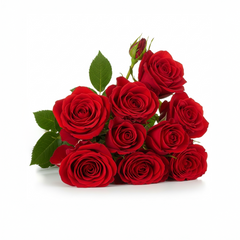
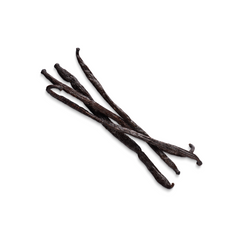
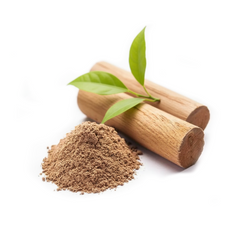
A classic saffron accord balances 20–25% saffron absolute (for leathery, spicy warmth), 20–25% rose absolute (sharing damascenone for molecular synergy), 25–30% sandalwood (rich in santalol, providing creamy support), and 25–30% vanilla (vanillin softens metallic edges via olfactory masking). This blend creates a seamless, multifaceted heart.

25%

Saffron

20–25% of blend

Provides the leathery, bittersweet, and slightly metallic core, driven by safranal and crocin. Essential for the accord’s signature warmth.

25%

Rose

20–25% of blend

Rose absolute contains damascenone, which molecularly bridges saffron’s floral and spicy facets, enhancing complexity and smoothness.

30%

Sandalwood

25–30% of blend

Santalol in sandalwood provides a creamy, woody base that stabilizes saffron’s volatility and rounds off sharp edges.

30%

Vanilla

25–30% of blend

Vanillin acts as an olfactory mask, softening saffron’s metallic notes and amplifying its sweet, gourmand qualities.

The Olfactory Layers

How Saffron Evolves on Skin

Saffron’s olfactory evolution unfolds over hours: initial volatility reveals spicy, metallic facets (driven by safranal), followed by a heart of bittersweet, leathery warmth, and a drydown of honeyed, earthy undertones. Evaporation rates and molecular weight determine each stage’s prominence.

I
Top notes
0–15 min
Metallic Spice

The opening is marked by high-volatility molecules like safranal and isophorone, producing a sharp, metallic, and slightly medicinal impression. These compounds evaporate quickly, creating an immediate, attention-grabbing effect that signals saffron’s presence.

metallicspicysharp
II
Heart notes
20–60 min
Bittersweet Leather

As volatility decreases, crocin and picrocrocin emerge, imparting bittersweet, leathery, and hay-like nuances. These molecules interact with floral and woody notes, forming the core of saffron’s scent profile and anchoring the fragrance’s warmth.

leatherybittersweetwarm
III
Base notes
Several hours
Honeyed Earth

The drydown features heavier, less volatile molecules, resulting in a soft, honeyed, and earthy aroma. Residual safranal and supporting fixatives (e.g., sandalwood, amber) extend longevity, while subtle tobacco and suede facets linger on skin and fabric.

honeyedearthysuede
TOP NOTES Metallic Spice 0–15 minutes HEART NOTES Bittersweet Leather 20–60 minutes BASE NOTES Honeyed Earth Several hours
Through the Ages

The Story of Saffron in Perfumery

Saffron’s journey in perfumery spans millennia, from ancient rituals to modern niche icons. Its role has evolved from single-note perfumes in antiquity to a defining signature in contemporary luxury fragrances.

Antiquity

Saffron in Ancient Rituals

Saffron was used in ancient Egypt, Greece, and Rome for perfuming baths, temples, and garments. Roman banquets featured saffron-scented floors, and it was a key ingredient in kyphi, the earliest known perfume blend.

7th Century CE

Introduction to Europe

Crocus sativus was introduced to Spain after the Moorish conquest. By the 16th century, English saffron from Saffron Walden was considered the finest in Europe, prized for both culinary and aromatic uses.

2002

Niche Perfumery Embraces Saffron

L’Artisan Parfumeur Safran Troublant, composed by Olivia Giacobetti, brings natural saffron to the forefront of modern niche perfumery, showcasing its gourmand and floral facets.

2012

Saffron as a Bridge Note

Byredo Black Saffron, created by Jérôme Epinette, demonstrates saffron’s ability to connect leather, floral, and fruit notes in a contemporary, unisex composition.

2015

Baccarat Rouge 540 Redefines Saffron’s Role

Francis Kurkdjian’s Baccarat Rouge 540 uses saffron as a dominant heart note, paired with ambergris and cedar, setting a new standard for saffron’s use in luxury perfumery.

2018

Oud for Greatness and Modern Saffron Accords

Initio Oud for Greatness leverages saffron’s spicy warmth to harmonize oud and patchouli, illustrating saffron’s continued evolution as a key note in complex, woody compositions.

The Art of Layering

How to Layer Saffron

Understanding how to layer saffron is rooted in molecular compatibility: saffron’s key molecules (safranal, crocin) interact synergistically with florals, woods, and resins, creating new olfactory dimensions.

01

Enhance Sweetness

Layer saffron with vanilla or tonka bean fragrances. Vanillin and coumarin molecules mask saffron’s metallic edge, amplifying its honeyed and gourmand facets. Example: L’Artisan Parfumeur Safran Troublant blends saffron with vanilla for a creamy, dessert-like effect.

02

Add Depth

Pair saffron with oud, patchouli, or amber. Shared phenolic and resinous compounds create a seamless molecular bridge, intensifying leathery and woody undertones. Initio Oud for Greatness demonstrates this synergy, where saffron and oud form a complex, long-lasting base.

03

Lighten the Glow

Combine saffron with rose or jasmine. Damascenone in rose and indole in jasmine soften saffron’s sharpness, highlighting its floral and hay-like aspects. Byredo Black Saffron exemplifies this pairing, balancing spice with floral brightness.

Wear It Right

How to Wear Saffron Like a Pro

Seasonal Guide

Fall & Winter

Cooler temperatures suppress volatility, allowing saffron’s leathery and honeyed facets to linger. Apply to pulse points and under clothing for a cozy, enveloping effect. Layer with amber or oud for added depth.

Spring

Moderate warmth enhances saffron’s floral and hay-like nuances. Pair with rose or citrus notes to highlight freshness. Apply lightly to avoid overpowering lighter spring scents.

Summer

High heat increases volatility, amplifying saffron’s metallic and spicy top notes but shortening longevity. Apply sparingly to cooler areas (e.g., inner elbows) and avoid direct sun exposure to prevent rapid evaporation.

Year-Round Tip

Adjust application based on climate: use higher concentrations in cold weather, lighter formats in heat. Layer with complementary notes (e.g., sandalwood, vanilla) to modulate projection and persistence.

Application Points

Strategic application maximizes saffron’s projection, longevity, and olfactory evolution.

1

Neck

Pulse points on the neck generate heat, accelerating saffron’s top-note volatility and enhancing initial projection. Ideal for immediate impact and sillage.

2

Behind the Ears

This area maintains warmth and moisture, allowing saffron’s heart and base notes to develop gradually. Subtle diffusion enhances the fragrance’s intimate facets.

3

Inner Wrists

Frequent movement and warmth promote even evaporation, revealing saffron’s full olfactory evolution from metallic to honeyed suede.

4

Hair

Hair fibers retain scent molecules, providing a slow, sustained release of saffron’s earthy and leathery notes. Avoid direct application to prevent dryness.

★

Pro Tip

Layer saffron fragrance over unscented moisturizer to enhance longevity and prevent rapid evaporation, especially in dry climates.

Mood Architecture™

Top Saffron Fragrances by Mood Score

These Saffron-based fragrances scored highest on the MEI™ Mood Architecture Framework — measuring how a scent may influence your emotional state.

Highest MEI Score
Red Tobacco — Mancera Red Tobacco Alternative Perfume
8.0
MEI™
Primary Romantic
Secondary Confident
Confidence
7.9
Presence
7.8
Mood Lift
8.12
Identity
7.2
Warmth
9.5
Social Ease
7.66
Energy
3.45
" I am beautiful.
View full mood profile →
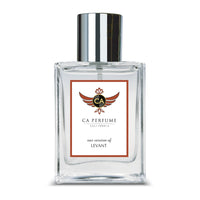
Levant — Penhaligon's Levantium Alternative Perfume
8.0
MEI™
Primary Romantic
Secondary Confident
Confidence
8.06
Presence
7.95
Mood Lift
8.1
Identity
7.75
Warmth
9.5
Social Ease
7.44
Energy
3.67
" I am beautiful.
View full mood profile →
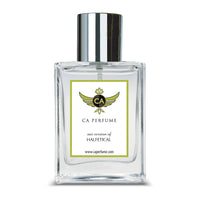
Halfetical — Halfeti Alternative Perfume
8.0
MEI™
Primary Confident
Secondary Romantic
Confidence
8.23
Presence
8.05
Mood Lift
8.03
Identity
7.75
Warmth
9.5
Social Ease
7.44
Energy
3.6
" I am unstoppable.
View full mood profile →
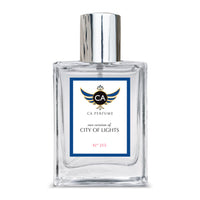
City Of Lights — Manhattan Alternative Perfume
7.8
MEI™
Primary Romantic
Secondary Confident
Confidence
7.2
Presence
7.95
Mood Lift
8.03
Identity
7.8
Warmth
9.5
Social Ease
7.44
Energy
3.94
" I am beautiful.
View full mood profile →
HumanSafe™

Top Saffron Fragrances by HumanSafe™ Score

These Saffron-based fragrances have the highest product-level HumanSafe™ scores in this ingredient collection.

Highest HumanSafe™ Score
White Suede — Tom Ford White Suede Alternative Perfume
A-
HumanSafe™ Score Generally Safe
Safest Evaluated Ingredients EDP
AQUA Solvent / Carrier ISS 10.0
AMBROXID Evaluated ingredient ISS 10.0
1,4-DIOXACYCLOHEPTADECANE-5,17-DIONE Evaluated ingredient ISS 10.0
3-BUTEN-2-ONE, 3-METHYL-4-(2,6,6-TRIMETHYL-2- Evaluated ingredient ISS 8.0
2H-1-BENZOPYRAN-2-ONE Evaluated ingredient ISS 8.0
LINALOOL Evaluated ingredient ISS 7.0
View full safety profile →
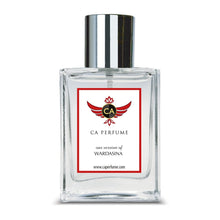
Wardasina Perfume Spray — Wardasina Alternative Perfume
A-
HumanSafe™ Score Generally Safe
Safest Evaluated Ingredients EDP
AQUA Solvent / Carrier ISS 10.0
2-BUTEN-1-OL, 2-METHYL-4-(2,2,3-TRIMETHYL-3-CYCLOPENTEN- Evaluated ingredient ISS 10.0
4H-INDEN-4-ONE, 1,2,3,5,6,7-HEXAHYDRO-1,1,2,3,3- Evaluated ingredient ISS 9.0
1H-3A,7-METHANOAZULENE, OCTAHYDRO-6-METHOXY-3,6,8,8- Evaluated ingredient ISS 9.0
3-CYCLOPENTENE-1-BUTANOL, .ALPHA.,.BETA.,2,2,3- Evaluated ingredient ISS 8.0
3-BUTEN-2-ONE, 3-METHYL-4-(2,6,6-TRIMETHYL-2- Evaluated ingredient ISS 8.0
View full safety profile →
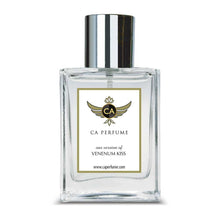
567- Venenum Kiss Perfume Spray
#3
567- Venenum Kiss Perfume Spray
Starting from $12.99
A-
HumanSafe™ Score Generally Safe
Safest Evaluated Ingredients EDP
AQUA Solvent / Carrier ISS 10.0
BENZYL SALICYLATE Evaluated ingredient ISS 9.0
4H-INDEN-4-ONE, 1,2,3,5,6,7-HEXAHYDRO-1,1,2,3,3- Evaluated ingredient ISS 9.0
3-CYCLOPENTENE-1-ACETALDEHYDE, 2,2,3-TRIMETHYL-, Evaluated ingredient ISS 9.0
LINALYL ACETATE Evaluated ingredient ISS 7.0
LINALOOL Evaluated ingredient ISS 7.0
View full safety profile →
Tuscan Leather — Tom Ford Tuscan Leather Alternative Cologne
A-
HumanSafe™ Score Generally Safe
Safest Evaluated Ingredients EDP
OXACYCLOHEPTADEC-10-EN-2-ONE Evaluated ingredient ISS 10.0
AQUA Solvent / Carrier ISS 10.0
1,4-DIOXACYCLOHEPTADECANE-5,17-DIONE Evaluated ingredient ISS 10.0
LINALOOL Evaluated ingredient ISS 7.0
ALCOHOL DENAT. Solvent / Carrier ISS 7.0
1,3,4,6,7,8-HEXAHYDRO-4,6,6,7,8,8- Evaluated ingredient ISS 7.0
View full safety profile →
Expert Voices

What Masters Say About Saffron

“
Saffron’s own spicy qualities are intensified by a contrasting combination of cool cardamom and warm black pepper, and powdery cinnamon for a nice texture. The phenolic leather nuance is masked by delicate suede and floral references.
Fragrantica Editorial
“
Saffron’s scent profile comes primarily from safranal, which produces the distinctive dry, hay-like, slightly metallic character. In perfumery, saffron absolute is used at concentrations of 0.1–0.5%.
CA Perfume Editorial
Common Questions

Frequently Asked Questions

Answers to common questions about saffron’s scent, usage, and performance in perfumery.

Saffron in perfume is characterized by a bittersweet, leathery, and slightly metallic aroma, primarily driven by the molecule safranal. It opens with a sharp, spicy-metallic note, evolves into a warm, leathery heart, and dries down to honeyed, earthy suede. The scent profile is complex, with subtle floral, hay, and tobacco nuances, and can vary based on skin chemistry and concentration.

Saffron is most commonly used as a heart or base note in perfumery due to its moderate volatility and molecular weight. It bridges the transition from top to base notes, anchoring a fragrance with warmth and complexity. In some compositions, saffron’s metallic facet is featured in the opening, but its main impact is in the heart and drydown.

Saffron’s unique molecular complexity, rarity, and ability to impart both warmth and metallic brightness make it a favorite in niche perfumery. Its versatility allows it to bridge florals, woods, and resins, creating signature accords that stand out in a crowded market. Iconic niche fragrances like Baccarat Rouge 540 and Black Saffron have cemented its status as a modern perfumery staple.

Saffron fragrance uses often involve pairing with rose (sharing damascenone), vanilla (vanillin for sweetness), sandalwood (santalol for creamy depth), oud (phenolic resonance), and amber. These combinations create molecular bridges, enhancing complexity and smoothing saffron’s metallic edge. Notable examples include saffron-rose in Safran Troublant and saffron-oud in Oud for Greatness.

Saffron’s volatility increases in heat, amplifying its metallic and spicy top notes but shortening overall longevity. In summer, it’s best used in lighter concentrations (EDT or body mist) and applied sparingly. Pairing with citrus or floral notes can help lighten the profile for warm weather wear.

Saffron-forward fragrances generally last 5–8 hours on skin, depending on concentration and fixatives. Synthetic saffron notes can extend longevity to 10+ hours. Longevity is influenced by skin chemistry, application method, and environmental conditions.

Yes, saffron layers well with florals (rose, jasmine), woods (sandalwood, oud), and gourmands (vanilla, tonka bean). Molecular compatibility—such as shared damascenone or vanillin—creates harmonious blends. Layering can enhance sweetness, add depth, or lighten saffron’s metallic edge, as seen in fragrances like Black Saffron and Safran Troublant.

For those new to saffron, Byredo Black Saffron and L’Artisan Parfumeur Safran Troublant offer accessible, balanced takes on the note. Baccarat Rouge 540 is a modern classic, while Tom Ford Noir de Noir provides a more complex, floral-woody interpretation. Sampling is recommended to find the right balance of spice, sweetness, and warmth.

Consider your preferred scent profile (spicy, floral, woody, or gourmand) and desired concentration (EDP for richness, EDT for lightness). CA Perfume’s saffron collection includes options that highlight different facets of the note, from metallic-spicy to creamy-gourmand. Use the HumanSafe™ platform for ingredient transparency and safety information.

Saffron’s scent in fragrance is both spicy and bittersweet. The initial impression is often sharp and metallic (spicy), evolving into a warm, leathery, and subtly sweet (honeyed, hay-like) heart. The balance of sweetness and spice depends on the formula, concentration, and pairing notes.

Spicy Collection

Explore Our Top Saffron Fragrances

Discover the most sought-after saffron-forward scents in the CA Perfume collection, each showcasing the spice’s unique warmth and complexity.

Shop all saffron fragrances at CA Perfume →

Where Saffron Comes From — Origin & Extraction

Saffron is obtained from the dried stigmas of Crocus sativus, a sterile triploid species in the Iridaceae family. Each flower yields only three crimson stigmas, requiring manual harvesting at dawn to preserve volatile compounds. Iran dominates global production, accounting for approximately 90% of the world’s supply (estimated 400 metric tons annually), followed by Spain, India (notably Kashmir), and Greece. Spanish saffron from La Mancha and Kashmiri saffron from Pampore are prized for their high crocin content, which enhances both color and aroma. Extraction for perfumery primarily involves solvent extraction (using hexane or ethanol) to produce saffron absolute, as steam distillation is avoided due to thermal degradation of safranal and picrocrocin above 60°C. Supercritical CO2 extraction is increasingly favored for its ability to yield a more complete aromatic profile with minimal thermal stress. Yields are extremely low: approximately 150,000–200,000 flowers are needed to produce 1 kg of dried saffron, translating to a yield of 0.02%. Natural saffron absolute commands prices of $3,000–6,000 per kg, while synthetic aroma chemicals such as safranal (CAS 116-26-7) and Safraleine™ (Givaudan) cost $50–200 per kg. Sustainability concerns focus on labor intensity, land use, and adulteration risks. Saffron farming is largely manual, with little mechanization possible due to the fragility of the stigmas. Synthetic substitutes help reduce pressure on crocus cultivation, but traceability and authenticity remain critical. The HumanSafe™ platform is used to verify saffron origin and ensure compliance with IFRA and environmental standards.

Famous Fragrances That Define Saffron in Perfumery

Saffron’s rise in modern perfumery is marked by several landmark fragrances. Maison Francis Kurkdjian Baccarat Rouge 540 (2015, perfumer: Francis Kurkdjian) is perhaps the most influential, where saffron’s metallic, mineral warmth forms the heart of a composition that bridges ambergris, cedar, and jasmine. Byredo Black Saffron (2012, perfumer: Jérôme Epinette) uses saffron as a bridge between leather and floral notes, creating a contemporary, unisex signature. Initio Oud for Greatness (2018) demonstrates saffron’s ability to harmonize oud, patchouli, and nutmeg, providing a spicy, radiant lift to a woody base. L’Artisan Parfumeur Safran Troublant (2002, perfumer: Olivia Giacobetti) is an early niche example, pairing natural saffron with rose and vanilla for a gourmand, creamy effect. Tom Ford’s Noir de Noir (2007, perfumer: Harry Fremont) uses saffron as a supporting note to accentuate rose, truffle, and patchouli, adding complexity and a subtle metallic edge. These fragrances illustrate saffron’s versatility: as a dominant note (Baccarat Rouge 540), a bridge (Black Saffron), or an accent (Noir de Noir). CA Perfume’s collection draws inspiration from this lineage, offering saffron-forward scents that highlight both the natural and synthetic facets of this complex spice.

Natural vs Synthetic Saffron in Perfumery

Natural saffron absolute is rich in safranal, crocin, and picrocrocin, delivering a multidimensional aroma with leathery, honeyed, and hay-like nuances. However, its high cost, low yield, and IFRA restrictions (due to potential allergenicity) limit its widespread use. Most modern perfumery relies on synthetic saffron notes, with key molecules including safranal (CAS 116-26-7), Safraleine™ (CAS 65418-17-5, Givaudan), and isophorone (CAS 78-59-1). Safraleine™ is especially valued for its tobacco-leathery warmth and stability in formulations. Performance-wise, synthetic saffron molecules offer superior consistency, longevity, and batch-to-batch reproducibility compared to natural extracts, which can vary with terroir and harvest conditions. Synthetic forms are also more sustainable, reducing pressure on crocus cultivation and minimizing environmental impact. Notable fragrances using natural saffron include L’Artisan Parfumeur Safran Troublant (2002), while Baccarat Rouge 540 and Byredo Black Saffron rely on a blend of natural and synthetic aroma chemicals. The cost differential is dramatic: natural saffron absolute at $3,000–6,000/kg versus synthetics at $50–200/kg. CA Perfume uses the HumanSafe™ platform to ensure ingredient transparency, traceability, and compliance with IFRA guidelines, favoring sustainable synthetic saffron molecules for safety and environmental stewardship.