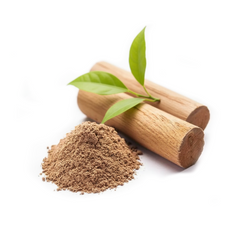
Where Fir Resin Comes From — Origin & Extraction
Fir resin is sourced from several species within the Abies genus, notably Abies balsamea (balsam fir, native to Canada and the northeastern United States), Abies sibirica (Siberian fir, Russia), and Abies alba (silver fir, Central Europe). Canada produces significant quantities of balsam fir oleoresin, known as Canada balsam, with annual outputs of several hundred metric tons. Russia’s Siberian fir contributes approximately 50 tonnes of essential oil per year, while European production is centered in Austria, Germany (Black Forest), and France (Vosges, Jura).
Extraction methods vary by material. The oleoresin is harvested by tapping bark blisters, yielding a viscous, pale yellow to greenish substance. This oleoresin can be used as-is or processed into an absolute via solvent extraction (typically with ethanol or hexane). Fir needle oil is obtained by steam distillation of fresh needles and twigs at temperatures of 100–120°C, with yields ranging from 0.2–0.5% by weight. Canada balsam oil, steam-distilled from the oleoresin, yields 15–25%. Cold expression is not used for any Abies product. The defining molecule, bornyl acetate, ranges from 9–45% depending on species and provenance (CAS numbers: 8021-29-2 for Siberian fir, 8024-15-5 for balsam fir, 8021-28-1 for Canada balsam oleoresin).
Natural fir resin absolute costs $400–1,200/kg, depending on origin and purity, while synthetic substitutes (see below) are available for $50–200/kg. Sustainability is generally favorable, as fir trees are not endangered and are often harvested from managed forests, but overharvesting of wild populations can threaten local ecosystems. Synthetic alternatives reduce pressure on natural resources and offer consistent quality.
Famous Fragrances That Define Fir Resin in Perfumery
Fir resin has played a pivotal role in both classic and contemporary perfumery, serving as a bridge between green, woody, and resinous accords. Serge Lutens Fille en Aiguilles (2009, perfumer Christopher Sheldrake) is widely regarded as a benchmark, using fir resin as the dominant note to evoke a smoky, coniferous forest atmosphere, paired with pine, incense, and dried fruits. Maison Francis Kurkdjian Baccarat Rouge 540 (2015, Francis Kurkdjian) employs a synthetic fir resin accord to impart a crystalline, woody transparency that underpins the amber and saffron heart. Armaf Club de Nuit Untold (2022) utilizes a modern fir resin note as a bridge between citrus top notes and woody-amber base, demonstrating the material’s versatility in contemporary compositions.
Annick Goutal Encens Flamboyant (2007, Isabelle Doyen and Camille Goutal) features natural fir balsam absolute as a supporting note, enhancing the incense and pine heart with a sweet, balsamic warmth. Calvin Klein Dark Obsession for Men (2013, Jean-Marc Chaillan and IFF team) uses fir resin as an accent in the base, paired with vanilla, guarana, and suede for a modern, gourmand-woody effect. Baccarat Rouge 540, Fille en Aiguilles, and Encens Flamboyant exemplify fir resin’s ability to function as both a dominant and supporting note, while Club de Nuit Untold and Dark Obsession illustrate its integration into mainstream and niche perfumery alike. CA Perfume’s collection draws on this lineage, offering fir resin-centered fragrances that honor both tradition and innovation.
Natural vs Synthetic Fir Resin in Perfumery
Natural fir resin is a complex mixture dominated by bornyl acetate (CAS 76-49-3), beta-pinene (CAS 127-91-3), and delta-3-carene (CAS 13466-78-9). Synthetic fir resin notes are typically constructed from a blend of these isolated aroma chemicals, along with supporting molecules such as camphene (CAS 79-92-5) and limonene (CAS 138-86-3). Synthetic versions offer greater consistency, improved stability, and lower cost, but may lack the nuanced, evolving character of the natural material.
Performance-wise, synthetic fir resin accords tend to have stronger diffusion and longer-lasting projection, as they are engineered for stability and resistance to oxidation. Natural fir resin, while more complex, can be less stable and more variable depending on harvest and extraction conditions. Notable fragrances using natural fir resin include Serge Lutens Fille en Aiguilles and Annick Goutal Encens Flamboyant, while Baccarat Rouge 540 and Armaf Club de Nuit Untold rely on synthetic fir resin accords for their crystalline, woody signatures. The cost differential is significant: natural fir resin absolute can reach $1,200/kg, while synthetic blends are often below $200/kg.
Sustainability is a key consideration. Synthetic production reduces pressure on wild fir populations and allows for traceable, HumanSafe™-verified supply chains. At CA Perfume, all fir resin notes are transparently sourced and verified through the HumanSafe™ platform, ensuring both environmental responsibility and consumer safety.