Where Clary Sage Comes From — Origin & Extraction
Clary sage (Salvia sclarea) is a biennial herb indigenous to the northern Mediterranean and Central Asia, now cultivated extensively in France (notably Haute-Provence and Drôme), Bulgaria, Russia, Hungary, Italy, China, and the United States. France and Bulgaria are the primary producers, with France’s Haute-Provence region yielding approximately 100–150 metric tons of essential oil annually. The plant thrives in poor, calcareous soils at altitudes of 600–1,200 meters, where the dry climate and strong mistral winds increase essential oil concentration and protect against fungal diseases.
Extraction of clary sage essential oil is performed via steam distillation of freshly harvested flowering tops and upper leaves. Typical yields range from 0.1–0.4% based on fresh plant weight, with high-altitude, low-fertility soils producing the most aromatically concentrated oils (average yield: 0.15%). Clary sage absolute is obtained through solvent extraction (hexane followed by ethanol wash), resulting in a green, waxy paste with a high sclareol content (30–50%), compared to trace amounts in the distilled oil. Supercritical CO2 extraction is also employed for a cleaner, high-sclareol product. Wholesale prices for clary sage essential oil range from $120–$250/kg (2025), while the absolute, due to its higher sclareol content and fixative value, can reach $400–$600/kg. Synthetic sclareol, used as a precursor for Ambroxan, is less expensive but lacks the complex aromatic profile of the natural oil.
Sustainability considerations include the crop’s adaptability to low-input agriculture and its role in supporting pollinator biodiversity. Clary sage is not listed as threatened, and its cultivation is considered environmentally sustainable when practiced in rotation with other aromatic crops. The plant’s high sclareol content is also critical for the sustainable production of Ambroxan, reducing reliance on animal-derived ambergris.
Famous Fragrances That Define Clary Sage in Perfumery
Clary sage has played a pivotal role in both classic and contemporary perfumery, particularly within the fougère and aromatic families. In Chanel Egoïste Platinum (1993, Jacques Polge), clary sage forms the aromatic heart, bridging lavender, geranium, and oakmoss to create a crisp, green signature. Drakkar Noir by Guy Laroche (1982, Pierre Wargnye) is another landmark, with clary sage anchoring the fougère accord and lending a musky, herbal warmth that defines its masculine character. Hermès Equipage (1970, Guy Robert) utilizes clary sage to impart a green, spicy nuance to its chypre structure, while Yves Saint Laurent Jazz (1988, Jean-François Latty) employs it as a bridge between fresh citrus and woody base notes.
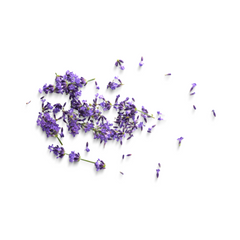
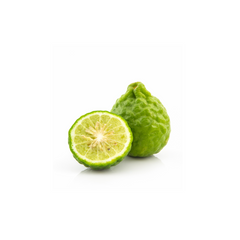
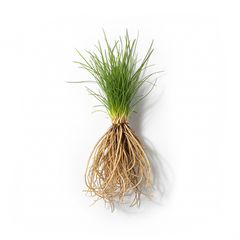
In contemporary perfumery, Issey Miyake L’Eau d’Issey pour Homme Vetiver (2023) and Elizabeth Arden White Tea (2017) demonstrate clary sage’s versatility in both masculine and unisex compositions, adding a clean, herbal freshness and subtle musky undertone. These fragrances often pair clary sage with bergamot, lavender, vetiver, and amber, highlighting its ability to enhance both floral and woody elements. CA Perfume’s collection honors this lineage by offering clary sage-forward fragrances that balance tradition with modern aromatic complexity.
Natural vs Synthetic Clary Sage in Perfumery
Natural clary sage oil is dominated by linalyl acetate (CAS 115-95-7), linalool (CAS 78-70-6), and sclareol (CAS 515-03-7). Synthetic analogues are used to replicate or enhance specific facets of the clary sage scent profile, particularly for cost, consistency, or allergen reduction. Key synthetic molecules include linalyl acetate (nature-identical), sclareol (semi-synthetic, often derived from clary sage biomass or synthesized from other terpenes), and Ambroxan (CAS 6790-58-5), a widely used ambergris substitute synthesized from sclareol.
Performance-wise, natural clary sage oil offers a nuanced, evolving scent with moderate longevity (24–48 hours on a blotter), while synthetics provide greater consistency, stability, and batch-to-batch reproducibility. Synthetic linalyl acetate and linalool are less costly ($20–$50/kg) compared to natural oil ($120–$250/kg), and Ambroxan, as a sclareol derivative, is now produced at industrial scale for $100–$200/kg. Notable fragrances using natural clary sage include Chanel Egoïste Platinum and Hermès Equipage, while Ambroxan (from sclareol) is central to modern compositions like Maison Francis Kurkdjian Baccarat Rouge 540 (2015).
Sustainability and supply chain transparency are increasingly prioritized, with the HumanSafe™ platform verifying the origin and purity of both natural and synthetic clary sage derivatives. CA Perfume utilizes HumanSafe™ verified clary sage sources, ensuring traceability and compliance with IFRA standards.