Where Brazilian Rosewood Comes From — Origin & Extraction
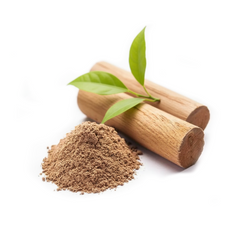
Brazilian Rosewood essential oil is derived from Aniba rosaeodora, a large tree native to the Amazon basin, particularly in Brazil’s Amazonas and Pará states. The tree can reach 30–50 meters in height and requires 40–50 years to mature. Historically, Brazil supplied up to 90% of the world’s rosewood oil, with production peaking at 300–480 metric tons per year in the mid-20th century. Extraction was traditionally performed by felling mature trees and steam-distilling the heartwood, yielding 0.7–1.2% oil by mass. Modern sustainable practices increasingly focus on harvesting leaves and branches, which can yield up to 2.4% oil, with linalool content as high as 90% (compared to 80–87% in wood oil).
Primary producing countries include Brazil (Amazonas, Pará), Colombia (Amazonian regions), and, to a lesser extent, Peru and French Guiana. The cost of natural Brazilian Rosewood oil is $3,000–6,000/kg, reflecting its scarcity and the labor-intensive extraction process. Synthetic linalool and analogues cost $50–200/kg. Sustainability is a critical concern: Aniba rosaeodora is listed under CITES Appendix II due to overharvesting. Current best practices involve managed plantations, selective pruning, and distillation of renewable biomass, reducing pressure on wild populations.
Famous Fragrances That Define Brazilian Rosewood in Perfumery
Brazilian Rosewood has played a pivotal role in perfumery, especially during the 20th century. The original Chanel No. 5 (1921, Ernest Beaux) used natural rosewood oil to impart a soft, woody-floral backbone, enhancing the aldehydic and jasmine notes. Tom Ford Oud Wood (2007, Richard Herpin) employs synthetic rosewood to create a creamy, spicy-woody heart, paired with oud and cardamom. Dior Hypnotic Poison (1998, Annick Menardo) features rosewood as a bridge note, blending with almond, vanilla, and musk for a lush, enveloping effect. Versace Man Eau Fraiche (2006, Olivier Cresp) uses rosewood to add a fresh, woody accent to citrus and aquatic notes, while Jean Charles Brosseau Ombre Rose (1981, Françoise Caron) relies on rosewood for its powdery, floral-woody signature. In all these cases, Brazilian Rosewood functions as a heart or bridge note, often paired with sandalwood, jasmine, vanilla, and spices. CA Perfume’s collection draws inspiration from this lineage, offering both classic and modern interpretations with full ingredient transparency.
Natural vs Synthetic Brazilian Rosewood in Perfumery
Natural Brazilian Rosewood oil is composed primarily of linalool (CAS 78-70-6), with minor components such as α-terpineol (CAS 98-55-5), geraniol (CAS 106-24-1), and nerol (CAS 106-25-2). Natural oil offers a nuanced, evolving scent profile with subtle batch-to-batch variations, but is expensive and subject to supply constraints due to CITES regulations. Synthetic alternatives, including nature-identical linalool and analogues like tetrahydrolinalool and 1,3,3-trimethyl-2-oxabicyclo[2.2.2]octan-6-ol, provide consistent quality, greater stability, and lower cost ($50–200/kg). Synthetic rosewood notes are used in most modern fragrances, including Tom Ford Oud Wood and Versace Man Eau Fraiche, due to sustainability and regulatory pressures.
Performance-wise, synthetics offer longer shelf life and batch uniformity, while naturals may exhibit greater olfactory complexity and skin interaction. CA Perfume’s HumanSafe™ platform ensures full transparency on sourcing and synthetic/natural ratios, prioritizing environmental stewardship and IFRA compliance. The shift to synthetics supports biodiversity and reduces illegal logging, but some artisanal perfumers still seek the depth of natural oil for niche compositions.