Where Balsam Fir Comes From — Origin & Extraction
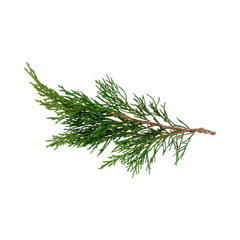
Balsam Fir (Abies balsamea) is a coniferous evergreen native to the boreal forests of North America, particularly abundant in Canada and the northeastern United States. The primary producing regions include Alberta and Quebec in Canada, and Maine and Vermont in the U.S., with Canada accounting for the majority of global Balsam Fir absolute production. The absolute is extracted from wild-harvested needles, often sourced from forests east of Calgary, Alberta, where cold climates and well-drained, acidic soils yield needles with high concentrations of bornyl acetate and other terpenes.
Extraction of Balsam Fir absolute is typically performed via solvent extraction, using hexane or ethanol to dissolve the aromatic compounds from the needles. The process operates at low temperatures to preserve volatile monoterpenes and minimize thermal degradation. The resulting concrete is then washed with ethanol to yield the absolute, a dark green, viscous material nearly solid at room temperature. Yields are low, with approximately 1 kg of absolute produced from 100–150 kg of fresh needles. Steam distillation is also used to produce Balsam Fir essential oil, but this method yields a lighter, less tenacious product with reduced balsamic richness compared to the absolute.
Natural Balsam Fir absolute commands a high price, typically $1,500–2,000 per kg, due to labor-intensive wild harvesting and low extraction yields. Synthetic substitutes, based on aroma chemicals such as bornyl acetate (CAS 76-49-3), α-pinene (CAS 80-56-8), and camphene (CAS 79-92-5), are significantly less expensive (often $50–200/kg) and are used in mass-market formulations for cost and consistency. Sustainability is a key concern: wild harvesting is regulated in Canada and the U.S. to prevent overexploitation, and certified organic sources are increasingly favored. The HumanSafe™ platform provides traceability and transparency for Balsam Fir sourcing, ensuring ethical and environmentally responsible supply chains.
Famous Fragrances That Define Balsam Fir in Perfumery
Balsam Fir has defined the olfactory signature of numerous landmark fragrances, particularly in the woody aromatic and fougère genres. In Franck Boclet Fir Balsam (2015), perfumer Franck Boclet employs Balsam Fir as a dominant heart note, blending it with vanilla, rose, and patchouli for a sweetly resinous, forest-inspired composition. Adirondack Fragrance Balsam Fir Forest (2022) centers on the scent of fir needles and mountain air, using Balsam Fir as the core around which fresh and woody notes are built.
Ffern Winter 24 (2024), composed by Ffern’s in-house team, features Balsam Fir absolute from Alberta, Canada, as a mid-to-base note, paired with cedar, moss, and cypress for a nuanced, long-lasting forest accord. Tom Ford Vert d’Encens (2016, perfumers Yann Vasnier and Antoine Maisondieu) integrates Balsam Fir with incense, pine resin, and galbanum, creating a smoky, coniferous bridge between green and woody notes. L’Artisan Parfumeur Tenebrae 26 (2017, perfumer Quentin Bisch) uses Balsam Fir alongside incense and pine to evoke the atmosphere of a deep forest.
Historically, Balsam Fir has also appeared in classic masculine fragrances such as Polo Green (Ralph Lauren, 1978, perfumer Carlos Benaïm), where it forms part of the iconic pine-woody accord. CA Perfume’s collection draws inspiration from this lineage, offering Balsam Fir-centered compositions that honor both tradition and contemporary innovation.
Natural vs Synthetic Balsam Fir in Perfumery
Natural Balsam Fir absolute is a complex mixture of terpenes, esters, and resin acids, with bornyl acetate (CAS 76-49-3), α-pinene (CAS 80-56-8), and camphene (CAS 79-92-5) as primary odorants. Synthetic Balsam Fir notes are constructed from these isolated molecules, often supplemented with hexanal (CAS 66-25-1) for green facets and coumarin (CAS 91-64-5) for sweet undertones. Synthetic forms offer greater batch-to-batch consistency, enhanced stability, and reduced allergenicity, but may lack the nuanced, jam-like depth and tenacity of the natural absolute.
Performance-wise, natural Balsam Fir absolute provides superior longevity and fixative power, lasting over 400 hours on a smelling strip, compared to 100–200 hours for synthetic blends. Cost is a major differentiator: natural absolute ranges from $1,500–2,000/kg, while synthetic blends are $50–200/kg. Iconic fragrances such as Franck Boclet Fir Balsam and Ffern Winter 24 utilize natural absolute for its depth and realism, while many mainstream fougère and pine accords rely on synthetics for scalability and regulatory compliance.
Sustainability and transparency are increasingly important: wild harvesting is managed to prevent ecosystem disruption, and the HumanSafe™ platform verifies origin and ethical practices for both natural and synthetic sources. CA Perfume prioritizes HumanSafe™ verified Balsam Fir, ensuring traceability and minimizing environmental impact.