Where Woodsy Notes Come From — Origin & Extraction
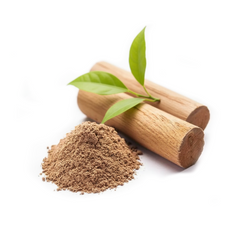
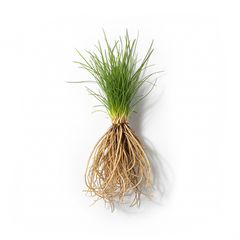
Woodsy notes in perfumery are derived from a diverse array of botanical and synthetic sources. Key natural contributors include sandalwood (Santalum album, primarily from India and Australia), cedarwood (Juniperus virginiana, Cedrus atlantica, and Cedrus deodara, with major production in the US, Morocco, and India), vetiver (Chrysopogon zizanioides, cultivated in Haiti, Indonesia, and India), and patchouli (Pogostemon cablin, mainly from Indonesia). For example, India and Australia together supply over 80% of the world's sandalwood oil, while Haiti produces approximately 50–60 metric tons of vetiver oil annually, accounting for more than half the global market.
Extraction methods vary by material. Sandalwood and vetiver oils are typically obtained via steam distillation: sandalwood heartwood is chipped and distilled at 100–120°C for 24–36 hours, yielding 3–5% oil by weight; vetiver roots are cleaned, dried, and distilled for up to 24 hours, with yields of 1–2.5%. Cedarwood oil is also steam distilled, while patchouli is often extracted by steam or solvent, depending on the desired profile. Synthetic woodsy notes, such as Iso E Super (CAS 54464-57-2, discovered by International Flavors & Fragrances in 1973), are produced via multi-step organic synthesis from petrochemical precursors, with costs as low as $20–50/kg, compared to $1,500–5,000/kg for natural sandalwood oil.
Sustainability is a critical concern for woodsy notes. Overharvesting of Santalum album led to CITES regulation and a shift to plantation-grown sandalwood in Australia. Vetiver cultivation in Haiti is threatened by soil erosion and political instability, prompting efforts for fair-trade certification. Synthetic substitutes reduce pressure on endangered species but raise questions about biodegradability and supply chain transparency. The HumanSafe™ platform is used to verify sourcing and environmental impact for both natural and synthetic woodsy materials.
Famous Fragrances That Define Woodsy Notes in Perfumery
Woodsy notes have shaped the identity of countless iconic fragrances, serving as both the backbone and the signature of many compositions. In the 1980s, Chanel Antaeus (1981, Jacques Polge) established a new standard for masculine woody chypres, blending oakmoss, patchouli, and sandalwood for a robust, earthy base. Terre d’Hermès Parfum (2009, Jean-Claude Ellena) is a modern benchmark, using vetiver and cedarwood to create a mineral, rooty woodiness that lingers for hours. Le Labo Santal 33 (2011, Frank Voelkl) popularized the creamy, musky sandalwood accord, combining natural sandalwood with synthetic Javanol and Iso E Super for a skin-like, diffusive effect. Maison Louis Marie No.04 Bois de Balincourt (2014) is celebrated for its soft, sweet sandalwood and vetiver blend, often cited as a reference for approachable woody scents. Jo Malone London Wood Sage & Sea Salt (2014, Christine Nagel) innovatively pairs woodsy notes with mineral and marine accords, demonstrating the versatility of woods beyond traditional masculine or oriental contexts.
These fragrances illustrate the diversity of woodsy notes in perfumery—ranging from dry and austere to creamy and sweet, from smoky and earthy to transparent and modern. CA Perfume’s collection draws inspiration from this lineage, offering woodsy compositions that reflect both classic and contemporary interpretations.
Natural vs Synthetic Woodsy Notes in Perfumery
Natural woodsy notes are complex mixtures of terpenoids, alcohols, and ketones—such as santalol (sandalwood), cedrol (cedarwood), and vetivone (vetiver)—which evolve on skin and provide nuanced, multi-layered scent profiles. However, natural sources are costly and subject to ecological constraints. Synthetic woodsy notes, including Iso E Super (CAS 54464-57-2), Cashmeran (CAS 33704-61-9), and Javanol (CAS 199067-91-3), offer consistent quality, improved stability, and broader creative possibilities. Iso E Super, for example, imparts a transparent, cedar-like woodiness with a subtle amber nuance and is used at concentrations up to 20% in some modern compositions.
Performance-wise, synthetics often have greater diffusion and stability, with less batch-to-batch variation than naturals. For instance, Cashmeran provides a musky-woody warmth that persists for 8–12 hours, while natural sandalwood oil can vary in longevity and intensity depending on harvest conditions. Cost differences are significant: natural sandalwood oil can exceed $4,000/kg, while Iso E Super is available for under $50/kg. Many contemporary fragrances blend both types for optimal effect—Le Labo Santal 33 (2011, Frank Voelkl) uses both natural sandalwood and synthetic Javanol for a creamy, long-lasting base.
Sustainability and transparency are increasingly important. Synthetic molecules reduce pressure on endangered woods but may have environmental impacts in their manufacture. The HumanSafe™ platform at CA Perfume provides ingredient traceability, ensuring both natural and synthetic woodsy notes meet safety and ethical standards.