Where Mineral Notes Come From — Origin & Extraction
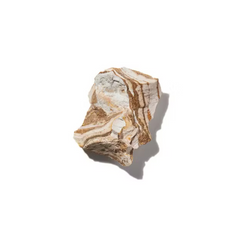
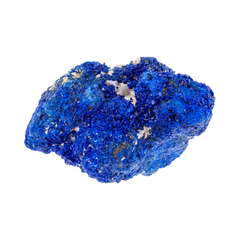
Mineral Notes do not originate from a single botanical or geological source; instead, they are a fantasy accord developed through modern fragrance chemistry. The term 'mineral' in perfumery refers to the olfactory impression of stone, salt, wet pavement, or metallic air, rather than a literal extract. Since it is impossible to distill or extract the scent of rock, perfumers rely on synthetic aroma molecules to recreate these sensations. Key molecules include Calone (CAS 28940-11-6), which imparts a marine, ozonic, and slightly green freshness; Ambroxan (CAS 6790-58-5), which mimics the dry, woody, and slightly salty facets of ambergris; Iso E Super (CAS 54464-57-2), for a smooth, abstract woodiness; and Norlimbanol (CAS 65113-99-7), providing extreme dryness and a desiccated wood-amber effect.
These compounds are manufactured by leading fragrance ingredient companies such as Firmenich, IFF, and Givaudan, primarily in Europe and the United States. Production volumes are proprietary, but global demand for Calone and Ambroxan exceeds several hundred metric tons annually, driven by their use in both fine fragrance and personal care. The cost of these synthetics is significantly lower than natural extracts, with Calone and Iso E Super typically priced at $40–$120/kg, while Ambroxan can range from $200–$400/kg depending on purity. In contrast, natural ambergris (now rarely used due to ethical and legal restrictions) can exceed $20,000/kg.
Sustainability is a key advantage: synthetic mineral notes reduce pressure on natural resources and enable consistent supply with minimal environmental impact. There are no IFRA restrictions specific to these molecules at standard usage levels, though some (e.g., Calone) may have concentration limits in certain product types. The HumanSafe™ platform provides full transparency on the sourcing and safety of these synthetics, ensuring traceability and regulatory compliance.
Famous Fragrances That Define Mineral Notes in Perfumery
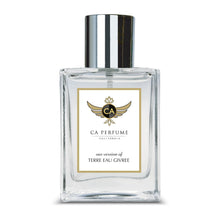
Mineral Notes have become a defining feature of modern perfumery, particularly in the last two decades. One of the earliest and most influential examples is Hermès Terre d’Hermès (2006), composed by Jean-Claude Ellena, which introduced a flint (silex) accord built from Iso E Super, mineral aldehydes, and vetiver, evoking the scent of wet earth and stone. Giorgio Armani Acqua di Giò Profondo (2020, Alberto Morillas) further popularized mineral notes by blending marine Calone with aromatic and woody elements, creating a deep, saline freshness. Marc-Antoine Barrois Ganymede (2019, Quentin Bisch) uses mineral notes as a dominant, abstract signature, pairing them with suede and violet leaf for a futuristic, metallic effect. Maison Alhambra Minérale (2025) features mineral notes in the base, contrasted with saffron, osmanthus, and suede, demonstrating the versatility of the accord. DedCool Mineral Milk (2022) combines salt, amber, and sandalwood for a creamy, aquatic-mineral effect. These fragrances illustrate the range and adaptability of mineral notes, from transparent and airy to dense and metallic. CA Perfume’s collection includes several mineral-inspired compositions, reflecting this contemporary lineage and offering accessible interpretations of the mineral trend.
Natural vs Synthetic Mineral Notes in Perfumery
Mineral Notes are inherently synthetic, as there is no direct natural source for the scent of stone, wet pavement, or metallic air. The core molecules used to construct mineral accords include Calone (CAS 28940-11-6), Ambroxan (CAS 6790-58-5), and Iso E Super (CAS 54464-57-2). Calone, discovered by Pfizer in 1966, is a marine aldehyde that delivers a fresh, watery, and slightly melon-like aroma, forming the backbone of many aquatic and mineral fragrances. Ambroxan, a synthetic analog of natural ambergris, imparts dry, woody, musky, and saline facets, while Iso E Super provides a smooth, abstract woodiness and enhances diffusion. Norlimbanol (CAS 65113-99-7) is another key molecule, contributing a dry, mineral-amber character.
Compared to natural materials, these synthetics offer superior consistency, stability, and longevity. Calone and Ambroxan are highly stable under light and heat, ensuring the mineral effect persists throughout the fragrance's evolution. The cost differential is substantial: natural ambergris, once used for its mineral-saline nuance, is prohibitively expensive and ethically problematic, while Ambroxan and Calone are affordable and scalable. Notable fragrances using these synthetics include Terre d’Hermès (Hermès, 2006), where a flint accord is built from Iso E Super and mineral aldehydes, and Juliette Has a Gun Not A Perfume (2009), which uses Cetalox (a form of Ambroxan) as its sole note.
Sustainability and supply chain transparency are central to the use of mineral notes. Synthetic production minimizes environmental impact and avoids the ethical issues associated with animal-derived materials. The HumanSafe™ platform verifies the sourcing and safety of all mineral note ingredients, providing full disclosure for consumers and formulators. In summary, mineral notes in perfumery are a triumph of synthetic chemistry, enabling the recreation of abstract, nature-inspired sensations with precision and reliability.