Ingredient Guide · Woody Aromatic
Woody Aromatic Family · Perfumery Note

Fir

A coniferous note bridging forest freshness and balsamic warmth.

Fir is a woody aromatic note in perfumery, prized for its green, resinous, and balsamic character. Its defining quality is a high concentration of bornyl acetate (up to 45%), which imparts a sweet-camphoraceous, forest-like aroma.

Fir
Ingredient Profile

Fir

Woody Aromatic Family
Family Woody Aromatic
Note Position Heart Note
Usage Level <2% in Formula
Key Origins Russia, Canada, Austria
Iconic In Fille en Aiguilles, Baccarat Rouge 540
The Ingredient

What does Fir smell like and why is it prized in perfumery?

Fir, derived from various Abies species, is renowned in perfumery for its fresh, green, and balsamic scent profile. The primary molecular contributor is bornyl acetate (C12H20O2), which imparts a sweet, camphoraceous, and slightly fruity aroma. Additional terpenes such as alpha-pinene, beta-pinene, and camphene contribute to its crisp, coniferous character, distinguishing fir from sharper pine or denser spruce oils. The overall effect is a realistic evocation of crushed needles, sticky resin, and cool forest air—what does fir smell like if not the archetype of evergreen clarity? In perfumery, fir is typically classified as a heart note, though its volatility allows it to function across the top-to-heart range depending on the extraction and species. Concentrations in fine fragrance formulas range from trace amounts up to 5% for fir needle oil and up to 2% for fir balsam absolute, as higher levels can dominate a blend. Fir in perfumery interacts with skin chemistry by amplifying green and resinous facets on warmer, more acidic skin, while cooler, drier skin may emphasize its woody and balsamic undertones. Its medium odor strength and moderate diffusion make it a versatile structural note in both masculine and unisex compositions. Fir’s versatility is demonstrated in fragrances such as Maison Francis Kurkdjian Baccarat Rouge 540 (2015), where it lends a subtle, crystalline green accent to the amber-woody base, and Serge Lutens Fille en Aiguilles (2009), where fir absolute is used as a dominant note, paired with pine, incense, and dried fruit to evoke a dense, aromatic forest.

1–2 Sprays
Fir’s high terpene content means a little goes a long way. One to two sprays deliver a vivid green burst without overwhelming the senses.
4–6 Hours
Fir-based fragrances typically last 4–6 hours, with top notes fading in 30 minutes and balsamic heart/base persisting longer due to bornyl acetate.
<2% in Formula
Fir needle oil is rarely used above 2% in fine fragrance formulas, as higher concentrations can overpower and destabilize the blend.
Origin & Extraction

Where Fir Comes From — Origin & Extraction

Fir’s scent profile is profoundly shaped by its geographic origin. Soil mineral content, altitude, and climate affect the balance of terpenes and esters, resulting in distinctive olfactory nuances from each region.

Fir used in perfumery is primarily sourced from the needles, twigs, and resin of Abies species, most notably Abies sibirica (Siberian fir), Abies balsamea (balsam fir), and Abies alba (silver fir). Major producing regions include Siberia (Russia), Quebec and Ontario (Canada), the Tyrol region of Austria, and the Black Forest in Germany. Russia produces approximately 50 metric tons of Siberian fir oil annually, while Canada is a leading supplier of balsam fir oleoresin. Extraction methods vary by material. Fir needle oil is obtained via steam distillation of fresh needles and twigs at temperatures below 100°C to preserve volatile terpenes. Fir balsam absolute is produced by solvent extraction (typically hexane or ethanol) of the oleoresin exuded from the bark, yielding a viscous, dark green paste with high fixative properties. Supercritical CO2 extraction is increasingly used for its ability to capture delicate top notes without thermal degradation. Typical yields are 0.1–0.3% by weight for needle oil and up to 5% for balsam absolute from raw resin. Natural fir balsam absolute commands prices of $3,000–6,000/kg, while synthetic substitutes (e.g., bornyl acetate, CAS 76-49-3; camphene, CAS 79-92-5) cost $50–200/kg. Sustainability is generally favorable, as firs are not endangered and are often harvested from managed forests, but overharvesting of wild balsam can impact local ecosystems. Synthetic alternatives reduce pressure on natural stands and offer batch-to-batch consistency.

RU

Russia

Siberian fir (Abies sibirica) from the Altai and Ural regions yields oil high in bornyl acetate (29–45%), producing a sweeter, more camphoraceous aroma. Annual output is roughly 50 metric tons, with sustainable wild harvesting practices.

CA

Canada

Quebec and Ontario’s balsam fir (Abies balsamea) is rich in beta-pinene (15–40%) and delta-3-carene, imparting a sharper, greener profile. Canada supplies a significant portion of global balsam oleoresin, with strict forestry management.

AT

Austria

Tyrol’s silver fir (Abies alba) is steam-distilled from needles and twigs, yielding a clear, sweet, and heady oil. Montenegrin and Austrian oils vary in bornyl acetate content (9–30%), influenced by altitude and rainfall.

DE

Germany

The Black Forest produces Abies alba oil with a balanced green-balsamic character. Local PDO standards ensure sustainable harvesting and high purity, with small-scale artisanal distillation.

Chemistry

Natural vs Synthetic Fir in Perfumery

Natural fir extracts—fir needle oil and fir balsam absolute—are chemically complex, containing bornyl acetate (up to 45%), camphene (10–20%), alpha-pinene (5–15%), and beta-pinene (up to 40%), among other terpenes. Synthetic fir notes are constructed using aroma chemicals such as bornyl acetate (CAS 76-49-3), vertofix coeur (CAS 68155-66-8), and cis-3-hexenyl acetate (CAS 3681-71-8) to mimic the green, balsamic, and slightly fruity facets of natural fir. Performance-wise, synthetic fir notes offer superior stability, longevity, and batch consistency, with typical shelf lives exceeding five years, compared to 1–2 years for natural oils. Synthetic versions are less prone to oxidation and color change. Cost is a major differentiator: natural fir balsam absolute is $3,000–6,000/kg, while synthetics range from $50–200/kg. Notable fragrances using natural fir include Serge Lutens Fille en Aiguilles (2009) and Orto Parisi Viride (2014); synthetic fir notes are prevalent in mass-market fougères and modern woody aromatics. Sustainability and transparency are increasingly important. The HumanSafe™ platform enables traceability of both natural and synthetic fir sources, ensuring responsible harvesting and full disclosure of allergen content. CA Perfume leverages HumanSafe™ verified ingredients to balance olfactory authenticity with environmental stewardship.

Natural
Fir Absolute
Cost $3,000–6,000/kg
Method Solvent / CO₂
Character Complex, variable
vs
Synthetic
Safranal & Analogues
Cost $50–200/kg
Method Lab synthesis
Character Consistent, stable
Hall of Fame

Famous Fragrances That Define Fir in Perfumery

2009
dominant note

Fille en Aiguilles

Serge Lutens
by Christopher Sheldrake
pineincensedried fruitspices
2015
accent note

Baccarat Rouge 540

Maison Francis Kurkdjian
by Francis Kurkdjian
saffronambergriscedarwood
2014
bridge note

Viride

Orto Parisi
by Alessandro Gualtieri
muskearthy notesherbs
2004
heart note

Eau des Merveilles

Hermès
by Ralf Schwieger, Nathalie Feisthauer
elemi resinlemonambervetiver
2017
supporting note

Fucking Fabulous

Tom Ford
by Rodrigo Flores-Roux
leathertonka beanclary sage

Fir has shaped the olfactory signature of both classic and contemporary perfumery. In Serge Lutens Fille en Aiguilles (2009, perfumer Christopher Sheldrake), fir absolute dominates the composition, paired with pine, incense, and dried fruit for a dense, resinous forest effect. Maison Francis Kurkdjian Baccarat Rouge 540 (2015, Francis Kurkdjian) employs fir as a crystalline, green accent, supporting saffron and ambergris. Orto Parisi Viride (2014, Alessandro Gualtieri) uses fir needle to create a bracing, coniferous opening that evolves into a musky, earthy base. Hermès Eau des Merveilles (2004, Ralf Schwieger and Nathalie Feisthauer) features fir resin in the heart, bridging citrus top notes with amber and vetiver. Tom Ford Fucking Fabulous (2017, Rodrigo Flores-Roux) incorporates fir balsam for a green, resinous undertone beneath leather and tonka bean. CA Perfume’s collection draws inspiration from these landmark uses, offering fir-forward compositions that honor this lineage.

The Accord

How is a captivating Fir accord crafted?

A fir accord is built by blending 25–30% fir balsam absolute for its sweet-balsamic, resinous core; 20–25% pine needle oil for sharper green facets; 20–25% vetiver for earthy depth and rooty dryness; and 25–30% citrus (bergamot or grapefruit) for a bright, volatile top. Fir’s high bornyl acetate content bridges the pine’s alpha-pinene and the citrus’s limonene, while vetiver’s sesquiterpenes anchor the blend.

30%

Fir Balsam Absolute

25–30% of blend

Provides the sweet, balsamic, and resinous heart of the accord, rich in bornyl acetate for camphoraceous warmth.

25%

Pine Needle Oil

20–25% of blend

Adds sharp, green, and terpenic top notes via high alpha-pinene content, enhancing freshness and lift.

25%

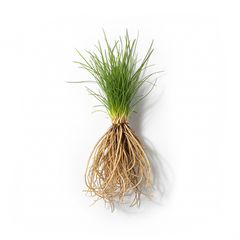
Vetiver

20–25% of blend

Contributes earthy, rooty, and smoky undertones through vetiverol and vetivone, grounding the accord.

30%

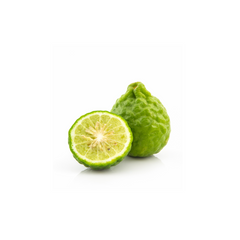
Bergamot

25–30% of blend

Delivers bright, citrusy volatility with limonene, balancing fir’s resinous density and enhancing diffusion.

The Olfactory Layers

How Fir Evolves on Skin

Fir’s olfactory evolution begins with a burst of volatile monoterpenes, transitions to a sweet, resinous heart, and settles into a quiet, woody-balsamic base. The evaporation rate of bornyl acetate and pinene fractions determines the time course.

I
Top notes
0–15 min
Crushed Needle Burst

The opening is dominated by alpha-pinene and limonene, producing a crisp, green, and slightly citrusy impression. These high-volatility compounds evaporate rapidly, delivering an immediate sense of crushed needles and fresh sap.

greencrispcitrus
II
Heart notes
20–60 min
Balsamic Resin Veil

Bornyl acetate emerges as the dominant molecule, imparting a sweet, camphoraceous, and balsamic character. The heart is rounded and soft, with subtle fruity and resinous undertones, bridging the top’s freshness to the woody base.

balsamicsweetcamphoraceous
III
Base notes
Several hours
Woody-Earthy Drydown

The drydown is marked by persistent, low-volatility terpenes and resin acids, leaving a clean, woody, and slightly earthy residue. Sillage is moderate, with a subtle, forest-like warmth that lingers close to the skin.

woodyresinousearthy
TOP NOTES Crushed Needle Burst 0–15 minutes HEART NOTES Balsamic Resin Veil 20–60 minutes BASE NOTES Woody-Earthy Drydown Several hours
Through the Ages

The Story of Fir in Perfumery

Fir has a storied history in perfumery, evolving from medicinal balsams to a modern structural note in both niche and designer fragrances.

Antiquity

Fir Resin in Ancient Rituals

Fir resin was burned as incense in ancient Eurasian and Mediterranean cultures for its purifying aroma and medicinal properties, predating its use in perfumery.

19th Century

Steam Distillation of Fir Needle Oil

The development of steam distillation enabled the commercial extraction of fir needle oil in Austria and Germany, expanding its use from folk remedies to fragrance.

1930s

Fir Balsam Absolute in Classic Fougères

Fir balsam absolute became a key fixative and green accent in early fougère and chypre perfumes, valued for its tenacity and balsamic sweetness.

2004

Hermès Eau des Merveilles Launch

Ralf Schwieger and Nathalie Feisthauer used fir resin to bridge citrus and amber in Eau des Merveilles, setting a benchmark for modern woody-amber compositions.

2015

Baccarat Rouge 540 and the Niche Renaissance

Francis Kurkdjian’s Baccarat Rouge 540 leveraged fir as a crystalline accent, inspiring a wave of fir-forward niche fragrances in the following decade.

The Art of Layering

How to Layer Fir

Understanding how to layer fir is key to customizing its olfactory impact. Molecular compatibility with citrus, florals, and resins enables nuanced blends.

01

Enhance Freshness

Layer fir with bergamot or grapefruit to amplify its green, citrusy facets. Limonene in citrus shares volatility with fir’s alpha-pinene, creating a seamless, uplifting top. Hermès Eau des Merveilles demonstrates this synergy with fir resin and lemon.

02

Add Depth

Combine fir with vetiver or patchouli to deepen its earthy, woody base. Vetiverol and patchoulol interact with fir’s resin acids, enhancing longevity and grounding the composition. Serge Lutens Fille en Aiguilles exemplifies this pairing.

03

Soften the Edge

Blend fir with rose or tonka bean to mellow its camphoraceous sharpness. Rose’s damascenone and tonka’s coumarin provide olfactory masking, rounding fir’s green bite into a smoother, more wearable accord. Baccarat Rouge 540 uses this approach subtly.

Wear It Right

How to Wear Fir Like a Pro

Seasonal Guide

Fall & Winter

Cool temperatures slow the evaporation of fir’s volatile terpenes, enhancing longevity and projection. Fir’s balsamic warmth and resinous depth are ideal for cold air, evoking the comfort of evergreen forests. Apply to pulse points and clothing for sustained diffusion.

Spring

Spring’s moderate temperatures balance fir’s green freshness with its sweet, resinous heart. The scent remains vibrant without becoming overwhelming. Layer with citrus or floral notes to highlight fir’s uplifting qualities.

Summer

Heat increases fir’s volatility, causing the green top notes to evaporate quickly and reducing overall longevity. Use sparingly, focusing on lighter EDT concentrations and layering with citrus or aquatic notes for a refreshing effect.

Year-Round Tip

Adjust application based on humidity: high humidity amplifies sillage, while dry air shortens projection. For consistent performance, apply fir-based fragrances to well-moisturized skin and consider layering with fixative-rich bases.

Application Points

Strategic application enhances fir’s olfactory evolution and projection. Target pulse points and hair for optimal diffusion.

1

Neck

The neck’s warmth accelerates the release of fir’s top notes, creating an immediate green burst. Ideal for maximizing the initial freshness.

2

Behind the Ears

This area retains scent longer due to lower sebaceous activity, allowing fir’s heart and base notes to linger subtly throughout the day.

3

Inner Wrists

Pulse points on the wrists enhance volatility, providing a dynamic evolution from green to balsamic as body heat interacts with the fragrance.

4

Hair

Hair fibers trap fir’s volatile molecules, enabling a gentle, sustained release of green and woody notes with movement.

Pro Tip

Layer fir-based fragrances over unscented moisturizer to slow evaporation and increase longevity, especially in dry or cold conditions.

Mood Architecture™

Top Fir Fragrances by Mood Score

These Fir-based fragrances scored highest on the MEI™ Mood Architecture Framework — measuring how a scent may influence your emotional state.

Highest MEI Score
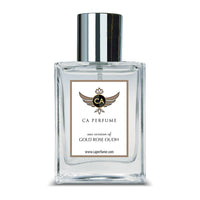
Gold Rose Oudh — Tiziana Terenzi Gold Rose Oudh Alternative Perfume
7.81
MEI™
Primary Romantic
Secondary Confident
Confidence
7.81
Presence
8.58
Mood Lift
7.95
Identity
8.66
Warmth
8.9
Social Ease
6.99
Energy
2.9
" I am beautiful.
View full mood profile →
Drakkar Dark — Drakkar Noir Alternative Cologne
7.57
MEI™
Primary Magnetic
Secondary Confident
Confidence
7.43
Presence
8.19
Mood Lift
7.92
Identity
7.68
Warmth
7.51
Social Ease
7.3
Energy
6.0
" I am bold.
View full mood profile →
Fierceful — Fierce Alternative Cologne
7.38
MEI™
Primary Fresh
Secondary Confident
Confidence
7.22
Presence
7.6
Mood Lift
7.9
Identity
7.42
Warmth
7.66
Social Ease
7.03
Energy
5.1
" I am radiant.
View full mood profile →
Hugh — Hugo Alternative Cologne
#4
Hugh — Hugo Alternative Cologne
Starting from $14.99
6.87
MEI™
Primary Fresh
Secondary Energizing
Confidence
6.21
Presence
6.38
Mood Lift
8.48
Identity
5.65
Warmth
6.45
Social Ease
7.13
Energy
4.6
" I am radiant.
View full mood profile →
HumanSafe™

Top Fir Fragrances by HumanSafe™ Score

These Fir-based fragrances have the highest product-level HumanSafe™ scores in this ingredient collection.

Highest HumanSafe™ Score
Divine Whispers Perfume Spray
#1
Divine Whispers Perfume Spray
Starting from $89.99
A
HumanSafe™ Score Very Safe
Safest Evaluated Ingredients EDP
WATER Solvent / Carrier ISS 10.0
METHYLDIHYDROJASMONATE Fragrance ingredient ISS 10.0
DIHYDRO PENTAMETHYLINDANONE Fragrance ingredient ISS 9.0
Sweet Orange Oil Fragrance ingredient ISS 7.0
METHYL DIHYDROXY-DIMETHYLBENZOATE Fragrance ingredient ISS 7.0
Limonene Fragrance ingredient ISS 7.0
View full safety profile →
Hugh — Hugo Alternative Cologne
#2
Hugh — Hugo Alternative Cologne
Starting from $14.99
A-
HumanSafe™ Score Generally Safe
Safest Evaluated Ingredients EDP
AQUA Solvent / Carrier ISS 10.0
BENZYL SALICYLATE Evaluated ingredient ISS 9.0
7-OCTEN-2-OL, 2,6-DIMETHYL- Evaluated ingredient ISS 9.0
4H-INDEN-4-ONE, 1,2,3,5,6,7-HEXAHYDRO-1,1,2,3,3- Evaluated ingredient ISS 9.0
3-BUTEN-2-ONE, 3-METHYL-4-(2,6,6-TRIMETHYL-2- Evaluated ingredient ISS 8.0
View full safety profile →
Havana — Aramis Havana Alternative Cologne
A-
HumanSafe™ Score Generally Safe
Safest Evaluated Ingredients EDP
AQUA Solvent / Carrier ISS 10.0
2-BUTEN-1-OL, 2-METHYL-4-(2,2,3-TRIMETHYL-3- EYE IRRITATION - CAT.2A [H319] Evaluated ingredient ISS 10.0
BENZYL SALICYLATE EYE IRRITATION - CAT.2B [H320] Evaluated ingredient ISS 9.0
7-OCTEN-2-OL, 2,6-DIMETHYL- CAT. 3 Evaluated ingredient ISS 9.0
1H-3A,7-METHANOAZULENE, OCTAHYDRO-6-METHOXY- Evaluated ingredient ISS 9.0
2H-1-BENZOPYRAN-2-ONE Evaluated ingredient ISS 8.0
View full safety profile →
Gold Rose Oudh — Tiziana Terenzi Gold Rose Oudh Alternative Perfume
A-
HumanSafe™ Score Generally Safe
Safest Evaluated Ingredients EDP
BENZENEMETHANOL, .ALPHA.-(TRICHLOROMETHYL)-, ACETATE Evaluated ingredient ISS 10.0
AQUA Solvent / Carrier ISS 10.0
1,4-DIOXACYCLOHEPTADECANE-5,17-DIONE Evaluated ingredient ISS 10.0
LINALOOL Evaluated ingredient ISS 7.0
CITRONELLOL Evaluated ingredient ISS 7.0
View full safety profile →
Expert Voices

What Masters Say About Fir

Bornyl acetate is the molecule responsible for the 'Christmas tree' association in Western olfactory memory. In Siberian fir, bornyl acetate is the single largest constituent.
CA Perfume Editorial
Fir absolute is a sweet balsamic, aromatic green spicy fragrance.
Fragrantica Editorial
Common Questions

Frequently Asked Questions

Answers to the most common questions about fir in perfumery, covering scent, usage, and technical details.

Fir in perfume smells fresh, green, and balsamic, with a sweet-camphoraceous quality from bornyl acetate and a crisp, coniferous edge from alpha- and beta-pinene. The scent evokes crushed needles, sticky resin, and cool forest air. Notable examples include Serge Lutens Fille en Aiguilles and Maison Francis Kurkdjian Baccarat Rouge 540, where fir provides either a dominant or accent note.

Fir is most commonly used as a heart note, but its volatility allows it to function as a top note (fir needle oil) or even a base note (fir balsam absolute) depending on extraction and formulation. Fir needle oil’s monoterpenes evaporate quickly, while fir balsam’s resin acids provide fixative properties in the base.

Fir is favored in niche perfumery for its ability to evoke natural landscapes and add complexity to woody, aromatic, and fougère compositions. Its unique balance of green freshness and balsamic warmth, along with its molecular compatibility with both citrus and resinous notes, makes it a versatile structural element.

Fir fragrance uses include pairing with citrus (bergamot, grapefruit), woods (cedar, sandalwood), resins (amber, labdanum), and florals (rose, jasmine). These combinations leverage shared terpenes or complementary volatiles to create harmonious, multidimensional accords.

Fir can be worn in summer, especially in lighter EDT concentrations or when paired with citrus and aquatic notes. However, high temperatures increase volatility, causing the green top notes to dissipate rapidly. For best results, use sparingly and layer with fresh, bright ingredients.

Fir-based fragrances generally last 4–6 hours. The green, terpenic top notes fade within 30 minutes, while the balsamic heart and woody base persist due to bornyl acetate and resin acids. Longevity is enhanced in Parfum formats or when layered over moisturized skin.

Yes, fir layers well with citrus, woods, and resins. For example, layering with bergamot amplifies freshness, while pairing with vetiver or patchouli deepens the woody base. Layering science relies on molecular compatibility—shared volatiles and fixatives ensure a smooth evolution.

Recommended entry points include Hermès Eau des Merveilles (fir resin as a heart note), Serge Lutens Fille en Aiguilles (fir absolute as dominant note), and Maison Francis Kurkdjian Baccarat Rouge 540 (fir as an accent). These fragrances showcase fir’s versatility across different styles.

Explore CA Perfume’s fir-forward collection by considering the desired balance of green freshness and balsamic warmth. Lighter EDTs highlight fir’s top notes, while richer Parfums emphasize its resinous depth. Use the HumanSafe™ platform for ingredient transparency and allergen information.

Fir typically smells clean, green, and balsamic rather than smoky. Its high bornyl acetate content imparts a sweet-camphoraceous clarity. However, when paired with smoky notes like incense or vetiver, fir can contribute to a more complex, forest-fire effect, as seen in some niche compositions.

Woody Aromatic Collection

Explore Our Top Fir Fragrances

Discover CA Perfume’s most popular fir-based scents, each showcasing the note’s unique balance of green freshness and balsamic warmth.

Shop all fir fragrances at CA Perfume →

Where Fir Comes From — Origin & Extraction

Fir used in perfumery is primarily sourced from the needles, twigs, and resin of Abies species, most notably Abies sibirica (Siberian fir), Abies balsamea (balsam fir), and Abies alba (silver fir). Major producing regions include Siberia (Russia), Quebec and Ontario (Canada), the Tyrol region of Austria, and the Black Forest in Germany. Russia produces approximately 50 metric tons of Siberian fir oil annually, while Canada is a leading supplier of balsam fir oleoresin. Extraction methods vary by material. Fir needle oil is obtained via steam distillation of fresh needles and twigs at temperatures below 100°C to preserve volatile terpenes. Fir balsam absolute is produced by solvent extraction (typically hexane or ethanol) of the oleoresin exuded from the bark, yielding a viscous, dark green paste with high fixative properties. Supercritical CO2 extraction is increasingly used for its ability to capture delicate top notes without thermal degradation. Typical yields are 0.1–0.3% by weight for needle oil and up to 5% for balsam absolute from raw resin. Natural fir balsam absolute commands prices of $3,000–6,000/kg, while synthetic substitutes (e.g., bornyl acetate, CAS 76-49-3; camphene, CAS 79-92-5) cost $50–200/kg. Sustainability is generally favorable, as firs are not endangered and are often harvested from managed forests, but overharvesting of wild balsam can impact local ecosystems. Synthetic alternatives reduce pressure on natural stands and offer batch-to-batch consistency.

Famous Fragrances That Define Fir in Perfumery

Fir has shaped the olfactory signature of both classic and contemporary perfumery. In Serge Lutens Fille en Aiguilles (2009, perfumer Christopher Sheldrake), fir absolute dominates the composition, paired with pine, incense, and dried fruit for a dense, resinous forest effect. Maison Francis Kurkdjian Baccarat Rouge 540 (2015, Francis Kurkdjian) employs fir as a crystalline, green accent, supporting saffron and ambergris. Orto Parisi Viride (2014, Alessandro Gualtieri) uses fir needle to create a bracing, coniferous opening that evolves into a musky, earthy base. Hermès Eau des Merveilles (2004, Ralf Schwieger and Nathalie Feisthauer) features fir resin in the heart, bridging citrus top notes with amber and vetiver. Tom Ford Fucking Fabulous (2017, Rodrigo Flores-Roux) incorporates fir balsam for a green, resinous undertone beneath leather and tonka bean. CA Perfume’s collection draws inspiration from these landmark uses, offering fir-forward compositions that honor this lineage.

Natural vs Synthetic Fir in Perfumery

Natural fir extracts—fir needle oil and fir balsam absolute—are chemically complex, containing bornyl acetate (up to 45%), camphene (10–20%), alpha-pinene (5–15%), and beta-pinene (up to 40%), among other terpenes. Synthetic fir notes are constructed using aroma chemicals such as bornyl acetate (CAS 76-49-3), vertofix coeur (CAS 68155-66-8), and cis-3-hexenyl acetate (CAS 3681-71-8) to mimic the green, balsamic, and slightly fruity facets of natural fir. Performance-wise, synthetic fir notes offer superior stability, longevity, and batch consistency, with typical shelf lives exceeding five years, compared to 1–2 years for natural oils. Synthetic versions are less prone to oxidation and color change. Cost is a major differentiator: natural fir balsam absolute is $3,000–6,000/kg, while synthetics range from $50–200/kg. Notable fragrances using natural fir include Serge Lutens Fille en Aiguilles (2009) and Orto Parisi Viride (2014); synthetic fir notes are prevalent in mass-market fougères and modern woody aromatics. Sustainability and transparency are increasingly important. The HumanSafe™ platform enables traceability of both natural and synthetic fir sources, ensuring responsible harvesting and full disclosure of allergen content. CA Perfume leverages HumanSafe™ verified ingredients to balance olfactory authenticity with environmental stewardship.